Diving is an exciting and challenging sport that allows individuals to explore the depths of the ocean, interact with marine life, and discover hidden underwater landscapes. However, as exhilarating as diving can be, it also comes with its own set of challenges, particularly when it comes to visibility. Whether it's exploring underwater caves, navigating murky waters, or simply diving at night, having the right equipment is crucial to ensuring safety and success. One of the most essential pieces of gear for a professional diver is a diving flashlight.
Unlike regular flashlights, which are typically designed for everyday use, diving flashlights are specifically engineered to withstand the harsh conditions of underwater environments. These flashlights provide consistent, bright illumination to help divers see clearly in low-light or dark conditions, navigate safely, and improve their overall diving experience. For professional divers, having a high-quality diving flashlight is not just a convenience—it’s a necessity.
In this article, we’ll explore why diving flashlights are indispensable for professional divers, including the features that make them stand out from regular flashlights and how they contribute to the safety and efficiency of diving operations. We’ll also discuss how to choose the right diving flashlight and why it’s a good investment for anyone serious about underwater exploration.
Key Features of Diving Flashlights
A diving flashlight isn’t just an ordinary light. It is a specialized tool designed to meet the specific demands of underwater environments. Here are some of the features that make diving flashlights stand out:
1. Waterproof Construction
The most obvious and crucial feature of a diving flashlight is its ability to function underwater. Diving flashlights are built with sealed, waterproof designs that prevent water from entering the light, ensuring that it operates effectively even when fully submerged. Waterproof flashlights are usually rated by their maximum depth tolerance, often referred to as the IP rating (Ingress Protection). High-quality diving flashlights can withstand depths of up to 100 meters or more.
IP Rating | Description |
IPX7 | Can be submerged in water up to 1 meter for 30 minutes. |
IPX8 | Suitable for continuous immersion under water, with a depth rating of more than 1 meter. |
IP68 | Can endure prolonged exposure to water at significant depths. |
2. High Brightness and Focused Beam
Diving flashlights are designed to provide high levels of brightness to illuminate the underwater environment. Whether diving in clear waters or murky depths, the lumen output of a diving flashlight is critical for visibility. Professional divers require flashlights that emit bright, focused beams to help them navigate, communicate with team members, and identify objects or marine life.
Many diving flashlights come with adjustable beam focus, allowing divers to switch between a wide floodlight and a more focused spotlight. This versatility is essential for different diving conditions, whether illuminating large areas or pinpointing specific objects in the distance.
3. Long Battery Life
The last thing any diver wants is a flashlight that runs out of power during a dive. Diving flashlights are equipped with high-capacity, rechargeable batteries designed to last through long underwater expeditions. Some diving flashlights feature long-lasting LED bulbs and low-power modes that help extend battery life, ensuring divers have enough light to complete their tasks. In addition, many diving flashlights allow for easy recharging after use, with options like USB charging ports or specialized battery packs.
4. Durability and Resistance to Impact
Underwater conditions are often tough and unpredictable. Flashlights used for diving need to be durable enough to withstand pressure, impacts, and environmental stress. Diving flashlights are typically made from rugged materials like aluminum alloys, which offer both lightness and strength. Additionally, many flashlights are shock-resistant, which helps protect the internal components from damage if dropped or bumped against hard surfaces like rocks or coral.
5. Compact and Ergonomic Design
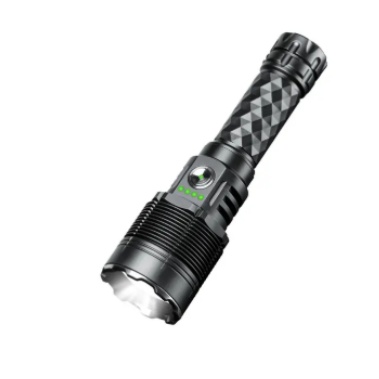
Diving requires equipment that is easy to carry and operate in challenging conditions. Many diving flashlights are designed to be compact and lightweight, making them easy to hold or attach to diving gear. The ergonomic design ensures that the flashlight is comfortable to use for extended periods, especially during night dives or long underwater explorations.
Why Professional Divers Need Diving Flashlights
1. Improved Safety
Safety is the top priority for any professional diver. Diving in low-visibility conditions can be dangerous, especially when navigating deep, dark, or murky waters. A reliable diving flashlight ensures that divers can see their surroundings clearly and avoid potential hazards. A bright, focused beam can help divers spot dangers like underwater rocks, coral reefs, or other divers, preventing accidents and improving overall safety.
2. Essential for Night Diving
Night diving or cave diving presents unique challenges, and having a diving flashlight is crucial for these types of dives. With no natural light available, divers must rely on their flashlights to navigate, communicate, and perform tasks underwater. Without adequate lighting, divers may become disoriented, miss important cues, or even get separated from their dive groups, putting themselves at risk.
3. Communication and Navigation
Professional divers often need to communicate with their dive team, especially in complex or deep-water dives. A diving flashlight with a strobe function can be used as a signaling tool, helping divers catch the attention of team members in low-light conditions. Moreover, a flashlight can help guide divers through intricate environments like caves or wrecks, where visibility is limited and orientation can be difficult.
4. Underwater Exploration and Scientific Research
For professional divers involved in underwater exploration, scientific research, or photography, a high-quality diving flashlight is essential. Whether they are exploring shipwrecks, conducting marine life studies, or capturing underwater photos, having the right lighting equipment makes the job much easier and safer. Diving flashlights with adjustable brightness and beam focus are particularly useful for these specialized tasks.
Choosing the Right Diving Flashlight
When selecting a diving flashlight, it’s essential to carefully consider various factors that will influence the flashlight’s performance underwater. One of the most important aspects is the depth rating. This refers to how deep the flashlight can be safely submerged before water infiltrates the light. Flashlights that are designed for diving will typically have a high IP (Ingress Protection) rating, indicating their ability to resist water pressure. For professional divers, choosing a flashlight with a depth rating that exceeds their expected dive depth is crucial for ensuring safety and reliability throughout the dive.
Another key factor to consider is the brightness of the flashlight. Underwater visibility can be dramatically reduced due to murky water, limited natural light, or the depth of the dive. Therefore, a flashlight with high lumen output is necessary to provide bright and clear illumination. Depending on the type of dive, divers may need a flashlight with adjustable brightness settings or a focused beam to navigate dark waters, highlight specific objects, or signal other divers. High-lumen flashlights also help with underwater photography or videography, as they illuminate the scene without introducing too much distortion.
Battery life is another critical factor, especially for long dives. Diving flashlights are typically powered by rechargeable lithium-ion batteries, which offer long runtimes compared to traditional disposable batteries. Some advanced models also feature low-power modes that conserve battery life, allowing divers to extend their flashlight’s operation time. Divers should always consider how long they will need the flashlight to last on a single charge, particularly for long expeditions or night dives. The ability to recharge the flashlight via USB ports or solar power is also a convenient feature for divers on extended trips or those operating in remote areas where access to power outlets may be limited.
At Shenzhen Tuliang Technology Co., Ltd., we specialize in providing high-quality diving flashlights that meet the demanding needs of professional divers. Our flashlights are built with rugged construction, ensuring durability even in the harshest underwater conditions. With high-capacity rechargeable batteries, bright LED lighting, and advanced features like adjustable brightness and strobe functions, our diving flashlights are designed to improve the safety and efficiency of every dive. Whether you're exploring deep-sea wrecks, cave diving, or participating in underwater rescue operations, our flashlights provide the reliability and performance needed to navigate safely and efficiently. Contact us today to explore our range of professional diving lighting solutions.
FAQ
1. What is the best type of diving flashlight?
The best diving flashlight depends on your needs, but key features to look for include waterproof construction, high brightness, long battery life, and a durable, impact-resistant design. LED flashlights with adjustable beam focus are often ideal.
2. How long do diving flashlights last underwater?
Diving flashlights can last anywhere from a few hours to several days, depending on the battery type and usage settings. Rechargeable LED flashlights with low-power modes tend to have the longest battery life.
3. Are all diving flashlights waterproof?
Most diving flashlights are waterproof, but it’s important to check the IP rating and ensure that the flashlight is rated for the depth of your dive. Flashlights with an IP68 rating are typically safe for deeper dives.
4. Can diving flashlights be used for other activities?
Yes, while diving flashlights are designed specifically for underwater use, many models are versatile enough for other outdoor activities, such as hiking, camping, or emergency situations, thanks to their durability and bright light output.


