How Beam Color Affects Underwater Visibility: A Guide for Diving Gear Buyers

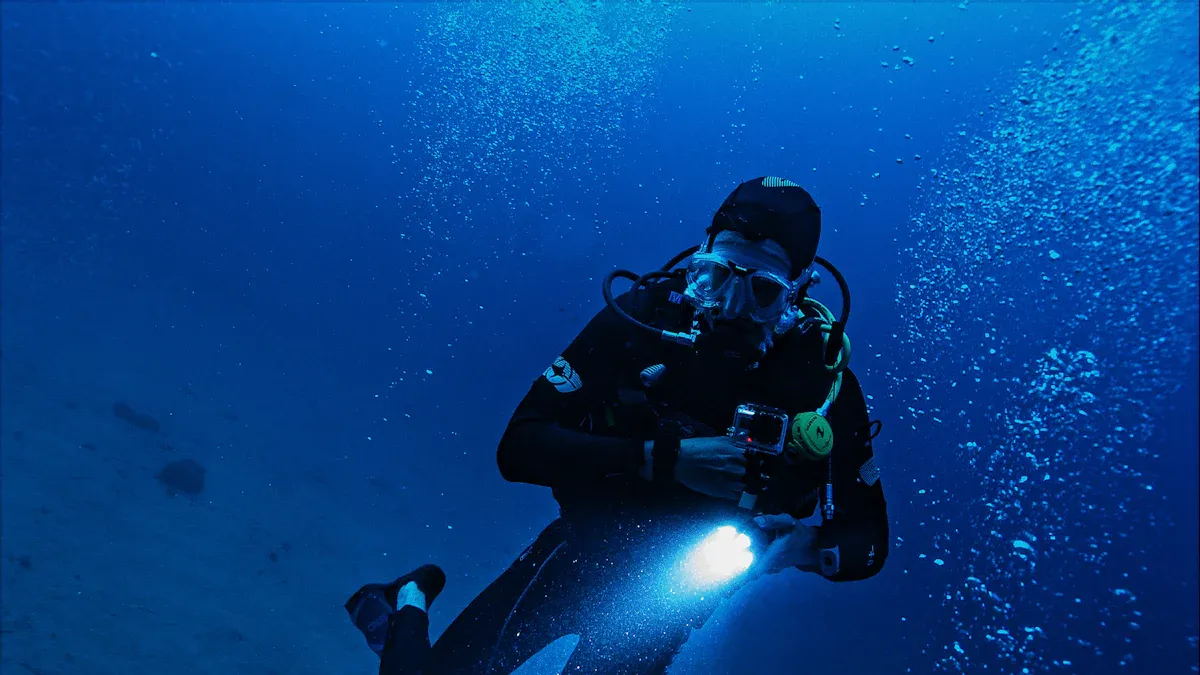
When you select a dive light, the beam color directly shapes your visibility underwater. Different light colors behave uniquely in water, so your dive experience changes with depth and clarity. You improve diver safety when you match your light to your diving environment. Always prioritize visibility and choose a dive light, like a helius flashlight, that fits your dive.
Key Takeaways
Choose a dive light with a blue beam for the best visibility in deep or salty water. Blue light travels farther and enhances your underwater experience.
For underwater photography, use red beams to avoid startling marine life. This helps you capture natural behaviors and improve your images.
Always match your dive light's beam color to your diving environment. A wide flood beam works well in clear water, while a narrow spot beam is best for murky conditions.
Light and Color Underwater
Absorption and Scattering
When you enter the water for a dive, you notice that your surroundings look different than on land. Water absorbs and scatters light in ways that change what you see. The absorption coefficient rises at shorter wavelengths, such as X-rays, because of effects like Compton scattering and the photoelectric effect. In the visible spectrum, water absorbs less light at blue wavelengths, so you experience the greatest visibility with blue light. Salt in seawater increases absorption, especially at longer wavelengths, which means that visibility drops faster in salty environments. Theoretical models show that absorption is inversely proportional to wavelength, so blue light travels farther than other colors. You rely on your dive light to cut through these effects and improve visibility during your diving adventure.
Tip: Choose a dive light with a beam designed for your environment. Blue beams often provide the best visibility in deep or salty water.
Why Colors Fade with Depth
As you descend during a dive, you see colors fade one by one. Water filters out colors in a specific order, which affects how your gear and marine life appear. The table below shows the approximate depth ranges for each color's loss:
Color | Depth Range (approx.) |
|---|---|
Red | 0 - 50 feet |
Orange | 0 - 50 feet |
Yellow | 0 - 50 feet |
Green | 0 - 50 feet |
Blue | Best penetration |
You notice that red, orange, yellow, and green disappear quickly, while blue remains visible at greater depths. This change impacts your ability to identify objects and enjoy the full spectrum of underwater scenery. Your dive light restores some of these colors, but you must select the right beam for optimal visibility. When you plan your next diving trip, remember how water changes the way you see and choose your gear accordingly.
Common Dive Light Colors
White and Blue Beams
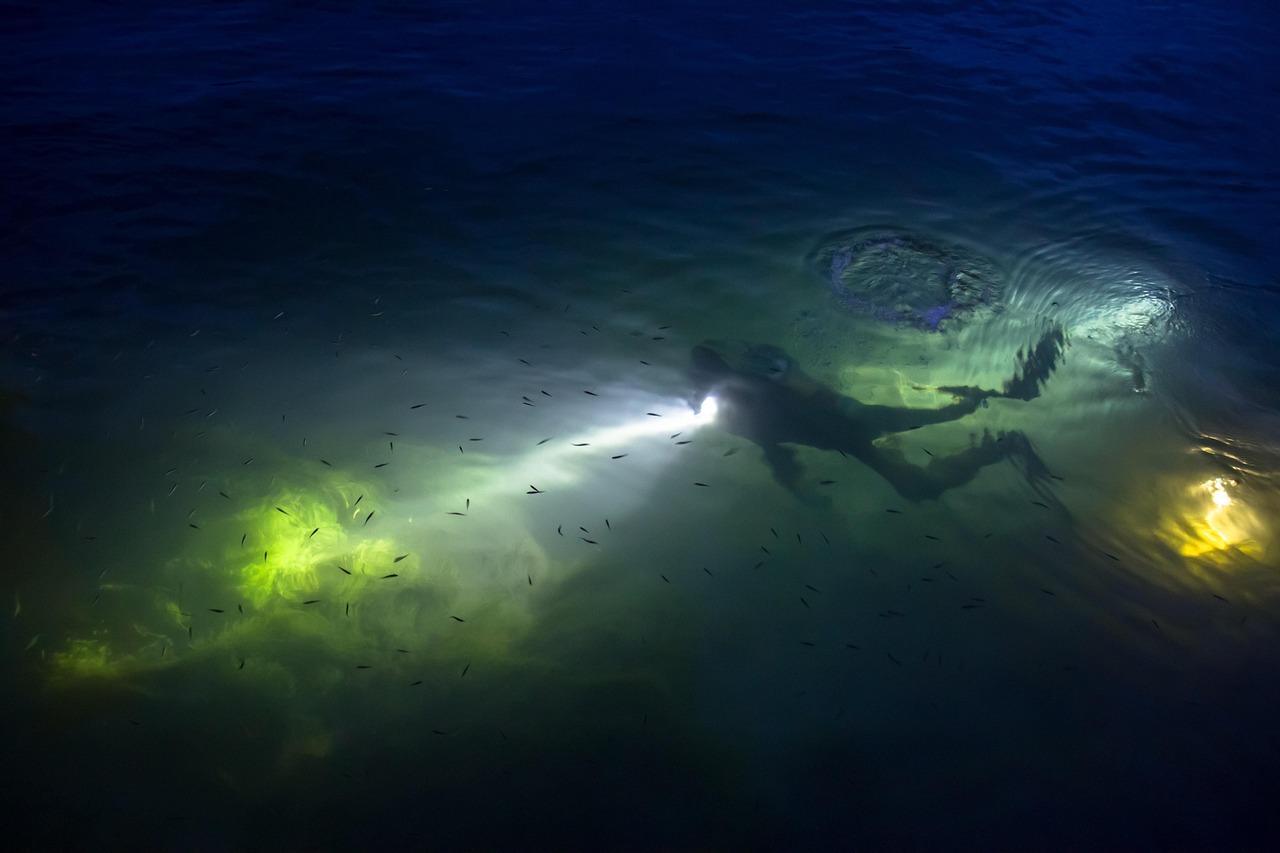
You will find that most divers choose white or blue beams for their dive light. White beams offer a balanced spectrum, making them ideal for general diving and restoring natural color underwater. Blue beams penetrate water efficiently, providing excellent visibility at depth. Many diving flashlight models use LED technology to deliver high lumens, which helps you see clearly during night or cave dives. You can rely on these beams for navigation, communication, and emergency signaling.
Red and Green Beams
Red and green beams serve specialized purposes in diving. Red beams allow you to illuminate marine life without startling it, which is perfect for underwater photography. You can capture natural behaviors and enhance contrast in macro shots. However, red light loses effectiveness with distance, so you must use it carefully. Green beams offer good visibility and contrast, making them useful for navigation and signaling. When you select a diving flashlight, consider these colors for specific tasks.
Red beams: Best for photography and observing marine life.
Green beams: Useful for signaling and navigation.
Fluorescent and Specialty Colors
Fluorescent beams provide a unique advantage for your dive. These beams convert blue light into longer wavelengths, such as green, yellow, orange, or red. This process makes objects stand out against the blue background, increasing brightness and contrast. You will notice improved visibility, especially in deep or monochromatic environments. Specialty colors in a diving flashlight can help you spot details that standard beams might miss.
Diving Flashlight Options
You can choose from several types of diving flashlight, each with different beam angles and performance:
Feature | Flood Light | Spot Light |
|---|---|---|
Beam Angle | 90°–120° | 6°–20° |
Light Type | Soft, even illumination | Focused, intense center beam |
Best For | Photography, videography, close-up work | Signaling, exploration, search dives |
Light Effect | Natural-looking wide coverage | Strong penetration through murky water |
Drawback | Less effective in low-visibility conditions | Too harsh for wide-area lighting |
You should select a dive light and diving flashlight based on your needs, whether you want high lumens for exploration or a specific color for photography. LED models offer powerful beams and long battery life, making them a popular choice for both recreational and technical diving.
Beam Color Performance
Visibility at Different Depths
You experience dramatic changes in visibility as you descend during a dive. The effectiveness of your diving flashlight depends on both beam color and water depth. Controlled diving experiments show that you should adjust your light and filter choices based on how deep you plan to go. The following table summarizes recommended filter and video light use at different depths:
Depth Range (Feet) | Recommended Filter | Use of Video Lights |
|---|---|---|
Above 10 | None | No |
10–25 | Shallow Filter | Low power if dark |
25–50 | Dive Filter | For small/medium subjects |
50–90 | Dive Filter | For close subjects |
You notice that above 10 feet, natural light provides enough illumination for most dives. As you reach deeper levels, you need a diving flashlight with higher lumens and the right filter to maintain visibility. Dive filters help restore lost colors and improve object clarity. When you use a helius flashlight, you benefit from advanced beam color options that adapt to changing depths, ensuring consistent performance throughout your dive.
Color Rendering and Object Clarity
Your ability to distinguish colors and details underwater depends on the beam color and the quality of your dive light. White beams from a diving flashlight offer balanced color rendering, making marine life and objects appear more natural. Blue beams penetrate water efficiently, but they can wash out subtle colors. Fluorescent beams enhance contrast by converting blue light into longer wavelengths, which makes objects stand out against the background.
You should select a dive light with high lumens and LED technology for optimal performance. LED lights deliver consistent brightness and color accuracy, which helps you identify objects and navigate safely. The helius flashlight uses advanced LED modules to provide superior color rendering and object clarity, even in murky conditions. You gain confidence in your dive when your flashlight reveals the true colors of your surroundings.
Note: For underwater photography, you achieve the best results by combining a blue filter for your flash and a yellow filter for your camera lens. This setup enhances fluorescence and reveals hidden details.
Pros and Cons by Color
You must weigh the advantages and disadvantages of each beam color before choosing your diving flashlight. User experiences and laboratory tests highlight the following points:
Blue light reveals fluorescence underwater, but it can overwhelm the visibility of the fluorescence itself.
Yellow visors filter out excess blue light, making fluorescence easier to see.
Camera filters, such as blue for the flash and yellow for the lens, are essential for capturing vibrant fluorescence.
White beams provide balanced illumination and restore natural colors, but they may not penetrate as deeply as blue beams.
Fluorescent beams increase contrast and brightness, especially in deep water, but they require specialized filters for best results.
You should match your dive light color to your specific needs. For general diving, white or blue beams offer reliable performance. For photography or scientific dives, fluorescent and specialty colors provide unique advantages.
Helius Flashlight Comparison
You want a diving flashlight that delivers consistent performance and adapts to different environments. The helius flashlight stands out among leading dive lights for its versatility and reliability. The table below compares two popular helius flashlight models:
Feature | Helius Professional Diving Flashlight | Helius High-Powered Underwater Torch |
|---|---|---|
Waterproof Design | Yes | Yes |
Enhanced Visibility in Murky Waters | Yes | Yes |
Ergonomic Grip | Yes | Yes |
Limited Utility Outside Diving | Yes | Yes |
You benefit from waterproof construction and ergonomic design, which make the helius flashlight easy to handle during long dives. Both models deliver high lumens and advanced LED performance, ensuring you maintain visibility in challenging conditions. You notice improved color rendering and object clarity, especially when diving in low-visibility environments. The helius flashlight provides reliable illumination for recreational, technical, and scientific diving.
Tip: Choose a helius flashlight with adjustable beam color and lumens to maximize performance for every dive.
Buying Considerations for Dive Lights
Water Clarity and Dive Environment
When you select a dive light, you must consider the clarity of the water and the environment where you plan to dive. Water absorbs and scatters light, which changes how you see colors and objects. In clear water, a wide flood beam gives you broad visibility and helps you explore large areas. In murky or low-visibility water, a tight, focused beam allows you to spot objects and look into crevices without backlighting the particles in the water. You restore the natural colors of marine life with the right light, making your underwater experience more vibrant.
A tight beam works well for spotting and searching in crevices.
A wide flood beam is best for general visibility in open water.
A bright, narrow spot beam is essential for diving in limited visibility or murky conditions.
The table below shows how different beam colors perform in various water types:
Light Color | Best Use Case | Key Advantage | Limitation |
|---|---|---|---|
Green | Freshwater, fish aggregation | Balanced attraction | — |
Blue | Clear water, long-range visibility | Penetrates far | Less effective in turbid water |
Cyan | Long sessions, soft visual effect | Comfortable for eyes | Less effective in turbid water |
Red | Close-range visibility, photography | Does not disturb marine life | Limited penetration |
White | General lighting, broad illumination | High visibility | Less selective for fish attraction |
Tip: Always match your dive light beam color and angle to the water conditions for the best results.
Purpose: Recreation, Photography, Night Dive
You need to choose a dive light that fits your diving purpose. For recreational diving, a white light is the most common choice. It mimics daylight and gives you a broad spectrum of illumination, which helps you see natural colors and navigate safely. If you enjoy underwater photography, yellow or red beams can reduce backscatter and avoid disturbing marine life. These colors enhance contrast and help you capture clear images.
The table below summarizes the best beam types for different diving activities:
Purpose | Recommended Beam Type | Beam Angle |
|---|---|---|
Recreational Diving | Flood Light | 90°–100° |
Night Diving | Spot Light | 8°–12° |
Underwater Photography | Dual Flood Lights | 120° each |
Flood lights provide even illumination for photography and videography. Spot lights are better for night dives and technical dives, where you need to see farther. Combining both types can improve your safety and orientation during a dive.
When you want to know how to choose a dive light for photography, consider the impact of beam color on your images. Red beams help you approach marine creatures without startling them. Blue or UV beams reveal underwater fluorescence, which adds a unique effect to your photos.
Beam Color | Impact on Underwater Photography |
|---|---|
Red | Allows you to get close to marine life; helps with focus and stealth |
Blue/UV | Reveals fluorescence; creates dramatic visual effects |
Note: For night dives, a diving flashlight with a wide beam gives you better area coverage and helps you explore safely.
Personal Preference
Your personal preference plays a big role in how to choose a dive light. You should think about the type of diving you do most often, the size of the dive light, and the features that matter to you. If you dive in murky waters, pick a powerful flashlight with a narrow beam. For night dives, a wider beam gives you better area illumination. Technical divers often prefer a bright, narrow beam with a canister for longer battery life. Underwater photographers need a wide beam to avoid hotspots and get even lighting.
LED lights are popular for their energy efficiency, durability, and high power output. When you select a diving flashlight, look for waterproof construction and advanced dive light features like adjustable beam angle, color temperature control, and high lumens output. Rechargeable dive lights offer cost savings and are better for the environment. You can also choose between rechargeable battery options, traditional batteries, or lithium batteries, depending on your needs and how often you dive.
Rechargeable batteries: Cost-effective and eco-friendly for frequent divers.
Traditional batteries: Easy to find and budget-friendly, but shorter lifespan.
Lithium batteries: High performance, but harder to find in remote areas.
Remember: The right dive light size and features make your dives safer and more enjoyable.
Recommendations for Choosing Beam Color
Best for General Diving
You want a dive light that performs well in most conditions. White beams work best for general diving because they restore natural colors and offer broad illumination. You see marine life and underwater features clearly with a white light. Blue beams also provide strong visibility at depth, especially in clear water. You should select a flashlight with adjustable brightness and a waterproof rating for reliability. Many divers prefer a flood beam for recreational dives since it covers a wide area and helps you navigate safely. You can use the table below to compare options:
Beam Color | Visibility | Best Use Case |
|---|---|---|
White | High | General diving |
Blue | Deep | Clear water, depth |
Tip: Choose a dive light with a waterproof design and high lumens for the best results in open water.
Specialized Needs
You may need a specific beam color for unique diving activities. Red beams help you approach marine life without startling it, which is ideal for underwater photography. Green beams offer good contrast for navigation and signaling. Fluorescent beams reveal hidden details and enhance contrast in deep water. You should select a flashlight with a narrow spot beam for night dives or murky conditions. Technical divers often choose a dive light with a focused beam and waterproof construction for safety. You can match your light to your dive environment and purpose for optimal performance.
Red: Best for photography and observing marine life.
Green: Useful for signaling and navigation.
Fluorescent: Enhances visibility in deep or monochromatic environments.
Note: Always test your dive light before each dive to ensure the waterproof seal works and the beam color suits your needs.
You improve visibility and safety when you choose the right beam color for each dive. Consider your diving environment and personal needs before every dive. Use this knowledge to select gear that supports your goals. Enjoy every dive with greater visibility and confidence in your diving adventures.
FAQ
What beam color should you choose for your first dive?
You should start with a white beam. It helps you see clearly and restores natural colors during your first dive.
Does beam color affect night diving safety?
Yes. The right beam color improves your visibility and helps you spot hazards during a night dive. You stay safer when you select the correct light.
Can you use the same dive light for every diving environment?
You can use one dive light, but you may not get the best results. Different environments need different beam colors for the most effective dive.
See Also
Advantages of Buying Wholesale Flashlights for Diving Needs
Comprehensive Overview of Wholesale Flashlights: Brightness and Quality
Exploring LED Headlamp Suppliers: An In-Depth Resource