Top Features to Look for When Selecting a Professional Diving Flashlight for Retail

If you want a great scuba diving experience, choosing the right diving flashlight matters. Underwater, you face challenges like disorientation and panic from poor visibility. You need high-quality gear to stay safe. Take a look at the table below to see how features like brightness and beam angle affect safety and performance.
Feature | Impact on Diver Safety and Performance |
|---|---|
Brightness (lumens) | Higher lumen output enhances visibility, crucial for navigating in low-light conditions and identifying hazards. |
Beam Angle | A wider beam angle provides better overall visibility, essential for exploring large areas and conducting search operations. |
Color Temperature | Cool white lights improve visibility in murky conditions, while warm white lights enhance natural color perception underwater. |
Common underwater challenges include:
Disorientation due to poor visibility
Panic that can arise from feeling lost
The necessity for specialized equipment and techniques to navigate safely
Retailers like you help divers find products that boost confidence and comfort underwater.
Key Takeaways
Choose a diving flashlight with high brightness (lumens) for better visibility underwater. This helps you navigate and identify hazards safely.
Look for a flashlight with a suitable beam angle. A wider beam is great for open areas, while a narrow beam works better in murky water.
Ensure the flashlight is waterproof with a proper depth rating. This guarantees it will function well even in deep dives.
Essential Features of a Diving Flashlight
When you shop for a diving flashlight, you want to make sure it has the right features for underwater use. These features help you stay safe, see clearly, and enjoy your scuba diving experience. Let’s break down what matters most and how each feature affects your dive.
Waterproof and Depth Rating
Waterproofing is the first thing you should check. If your dive light isn’t built for underwater use, it won’t last long. You need a flashlight with a strong watertight o-ring seal to keep water out. The depth rating tells you how deep you can go without risking damage. Here’s a quick look at industry standards:
Rating | Definition | Ideal Use |
|---|---|---|
IPX7 | Can be submerged in water up to 1 meter for 30 minutes. | Great for wet environments and accidental dips. |
IPX8 | Designed for continuous immersion beyond 1 meter. | Perfect for deep-sea diving and tough conditions. |
If you plan to dive deep, always check the depth rating. A reliable dive light keeps working even when you’re far below the surface.
LED Light Source
LEDs have changed the game for diving flashlights. You get more brightness, better energy efficiency, and longer life. Take a look at how LEDs stack up against traditional bulbs:
Advantage | Description |
|---|---|
Energy Efficiency | LEDs use less power, so your batteries last longer. |
Durability | Solid-state design means LEDs handle bumps and water pressure better than glass bulbs. |
Brightness | LEDs offer a wide range of lumens, so you can pick the right light for your needs. |
Versatility | You can choose different colors to see better and avoid disturbing marine life. |
Advanced Features | Many LED dive lights come with strobe, SOS, and dimming modes for emergencies. |
Did you know? LED lights can last over 50,000 hours underwater. They resist saltwater corrosion and UV rays, so you don’t have to worry about replacing them often. You get a low-maintenance, reliable option for every dive.
Brightness and Beam Angle
Brightness is measured in lumens. The higher the lumens, the more you can see. But it’s not just about how bright your dive light is. The beam angle matters too.
A wide beam angle gives you more overall illumination and helps you see your surroundings in clear water.
A narrow beam is better in murky water. It lets you focus on specific tasks, like finding lost gear or checking tight spaces.
The right combination of lumens and beam angle depends on where you dive. In clear water, a wide beam with high lumens works best. In unclear water, a narrow beam with strong lumens helps you see what matters.
Battery Life and Type
You don’t want your dive light to die in the middle of a dive. Battery life depends on the type of batteries and how bright you set your light. Here’s what you can expect from popular models:
Model | High Setting (hours) | Low Setting (hours) |
|---|---|---|
5 | 50 | |
Halcyon Flare EXP Corded Dive Light (2.6 AmpH) | 2.5 | 5 |
Halcyon Flare EXP Corded Dive Light (5.2 AmpH) | 5 | 10 |
The type of batteries you use makes a big difference. Check out how lithium-ion and alkaline batteries compare:
Feature | Lithium-Ion | Alkaline |
|---|---|---|
Internal Resistance | Lower | Higher |
Run Time | Longer | Shorter |
Performance Under Load | Better for high current | Poorer for high current |
Energy Loss | Less energy wasted | More energy wasted |
Rechargeable lithium-ion batteries give you longer power and steady brightness.
Alkaline batteries lose energy faster and may dim during your dive.
Lithium-ion batteries work better for high-power dive lights and are more reliable underwater.
Build Quality and Durability
You want a dive light that can handle rough conditions. Build quality matters. Most durable diving flashlights use aircraft-grade aluminum or aerospace 6061 aluminum. These materials resist corrosion and damage from bumps or drops.
Product | Material Used |
|---|---|
ThorFire S1 Diving Light | Aircraft-grade Aluminum |
BLUDIVE BD10 Max | Aerospace 6061 Aluminum |
Professional divers trust dive lights with strong build quality. Many users report using their lights for dozens of dives, some over 100 feet deep, with no leaks or flooding. One diver said their flashlight worked perfectly after 40+ dives in 18 months. Another reviewer praised the heavy, solid feel and said their light lasted over two years.
Intuitive Controls
When you’re underwater, you need controls that are easy to use. Look for a dependable switch that works with gloves and doesn’t jam. Simple controls help you adjust brightness or switch modes quickly. You don’t want to fumble with complicated buttons when you need light fast.
Grip and Comfort
A good dive light feels comfortable in your hand. You want a grip that won’t slip, even when wet. Some flashlights have textured handles or wrist straps for extra security. Comfort matters, especially on long dives. If your light is easy to hold, you’ll focus more on your adventure and less on your gear.
Tip: Try holding different dive lights before you buy. See which one feels best in your hand and check if the grip stays firm when wet.
Choosing the right diving flashlight means looking at all these features. You get better safety, stronger performance, and a more enjoyable scuba diving experience. When you know what to look for, you help your customers find the best dive light for their needs.
Advanced Dive Light Features
When you look for a dive light, you want special features that make your underwater experience better. These advanced options give you more control and flexibility, so you can match your gear to your diving style.
Adjustable Brightness Modes
You can switch between multiple power modes to save battery or boost visibility. Many dive lights, like the APLOS AP15, let you adjust brightness for different activities. You might use a lower setting for exploring shallow reefs or a higher one for night dives. The Sola Dive 1200 offers flood and spot beams, so you can adapt to any underwater scene.
Tip: Multiple power modes help you get the right amount of light without wasting energy.
Rechargeable Battery Options
Rechargeable batteries make your dive light more reliable and cost-effective. You can charge them before each trip and avoid buying new batteries all the time. Most rechargeable models last longer and keep a steady brightness. You get peace of mind knowing your light will not fade halfway through your dive.
Rechargeable batteries work well for both recreational and technical divers.
You can find rechargeable options with USB charging, making them easy to use anywhere.
Indicator Lights
Indicator lights add safety and convenience. They let you know when your battery is low or when you need to switch modes. During night or deep dives, you can use your dive light to signal distress or attract help. LED dive lights improve visibility and help you avoid hazards. Many divers say they feel safer and enjoy their dives more with these features.
Mounting Compatibility
Mounting options let you attach your dive light to different gear. You can use rigid aluminum mounts for durability or quick release systems for easy changes. Adjustable fits and secure locks keep your light in place. Some models work with Ikelite housings, so you can use your light for diving, focusing, or video. Technical divers love compact lights with easy mounting for close-up work or focus assist.
How to Choose the Right Dive Light
Matching Features to Customer Needs
When you help customers pick a diving flashlight, you want to match the features to their needs. Start by asking about their dive type. Are they into recreational or technical scuba diving? Next, look at the beam angle. Wide beams work well for exploring open areas, while narrow beams help in murky water. Check the brightness and burn time. Make sure the light lasts longer than their dive.
Identify the purpose and dive type.
Choose the right beam angle for visibility.
Assess brightness and burn time for safety.
Here’s a quick guide for different experience levels:
Experience Level | Preferred Features |
|---|---|
Recreational Divers | Brightness (700-1000 lumens), beam angle, battery life |
Experienced Divers | Higher lumens, extra modes for versatility |
Beginners | Simple, easy-to-use options |
Comparing Models and Brands
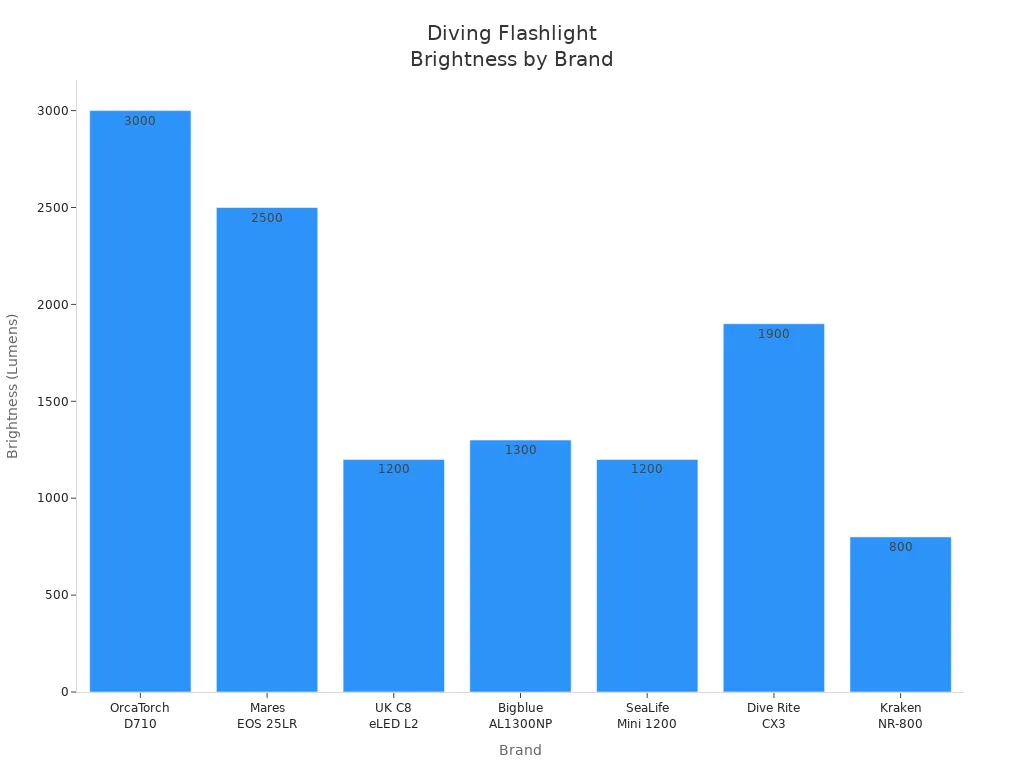
You’ll find many brands with different strengths. Compare brightness, beam type, battery, runtime, and durability. Some models offer high lumens and spot beams, while others focus on longer runtime. Take a look at this chart to see how top brands stack up:
Brand | Brightness (Lumens) | Beam Type | Battery Type | Runtime (High) | Durability Rating |
|---|---|---|---|---|---|
OrcaTorch D710 | 3000 | 6° Spot | Rechargeable Li-ion | 1h 40min | High |
Mares EOS 25LR | 2500 | 15° Beam | Proprietary Li-ion | 75min | High |
UK C8 eLED L2 | 1200 | Dual Beam | Rechargeable NiMH | 3h | High |
Bigblue AL1300NP | 1300 | 10° Beam | Rechargeable Li-ion | 2h | Medium |
SeaLife Mini 1200 | 1200 | 8° Spot | Rechargeable Li-ion | 2h | Medium |
Dive Rite CX3 | 1900 | 8° Beam | Rechargeable Li-ion | 2-5h | High |
Kraken NR-800 | 800 | N/A | Rechargeable Li-ion | 2h | Low |
Genwiss | 2000 (claimed) | N/A | Rechargeable/AA | 1-2h | Low |
Evaluating Warranty and Support
Warranty and support matter when you want peace of mind. Some brands offer free replacements for defects, while others give longer repair periods. Here are some examples:
LetonPower: 30-day free replacement, 24-month free repair, limited lifetime warranty.
Speras: 30-day free replacement, 5-year warranty, some models with lifetime limited warranty.
Archon: 1-year warranty, not transferable, void if tampered.
Sursnong: 30-day free replacement, 12-month free repair, limited lifetime warranty for parts.
Tip: Always check the warranty details before you buy. Good support means less stress if something goes wrong.
Price vs. Value
You want to balance price with features and durability. Prices range from $5 to over $4,800. Higher prices usually mean better waterproof ratings and more lumens. Premium brands offer advanced features for specialized uses. IP68-rated lights cost more than IPX8, but they last longer. When you compare options, look at distribution channels, brand reputation, and after-sales support. These factors help you decide which diving flashlight gives the best value.
If you wonder how to choose a dive light, focus on what matters most for your customers. Match the features to their needs, compare brands, check warranties, and weigh price against value. You’ll help them find the perfect dive light for every adventure.
When you focus on key features like durability, brightness, and battery life, you help divers stay safe and enjoy every dive. Check out how suppliers with higher reorder rates show stronger customer loyalty:
Supplier Name | Reorder Rate |
|---|---|
Ningbo Brightenlux Outdoor Products Co., Ltd. | 27% |
Shenzhen Xtar Electronics Co., Ltd. | 25% |
Use this checklist to guide your retail choices and boost customer satisfaction every time.
FAQ
How do you know if a diving flashlight is waterproof?
Check the IPX rating on the packaging. IPX8 means you can use it for deep dives.
Tip: Always test the seal before your first dive.
What brightness level should you choose for night diving?
Pick a flashlight with at least 1000 lumens for clear visibility at night.
Higher lumens help you spot hazards and navigate easily.
Can you use regular batteries in a diving flashlight?
Most professional models use rechargeable lithium-ion batteries.
Note: Regular alkaline batteries may not last long or perform well underwater.
See Also
Selecting Quality Flashlights for Bulk Wholesale Buying
Guidelines for Picking Premium Flashlights for Wholesale
Advantages of Buying Wholesale Flashlights for Diving Use