How to Choose the Right Diving Flashlight for Different Depth Levels

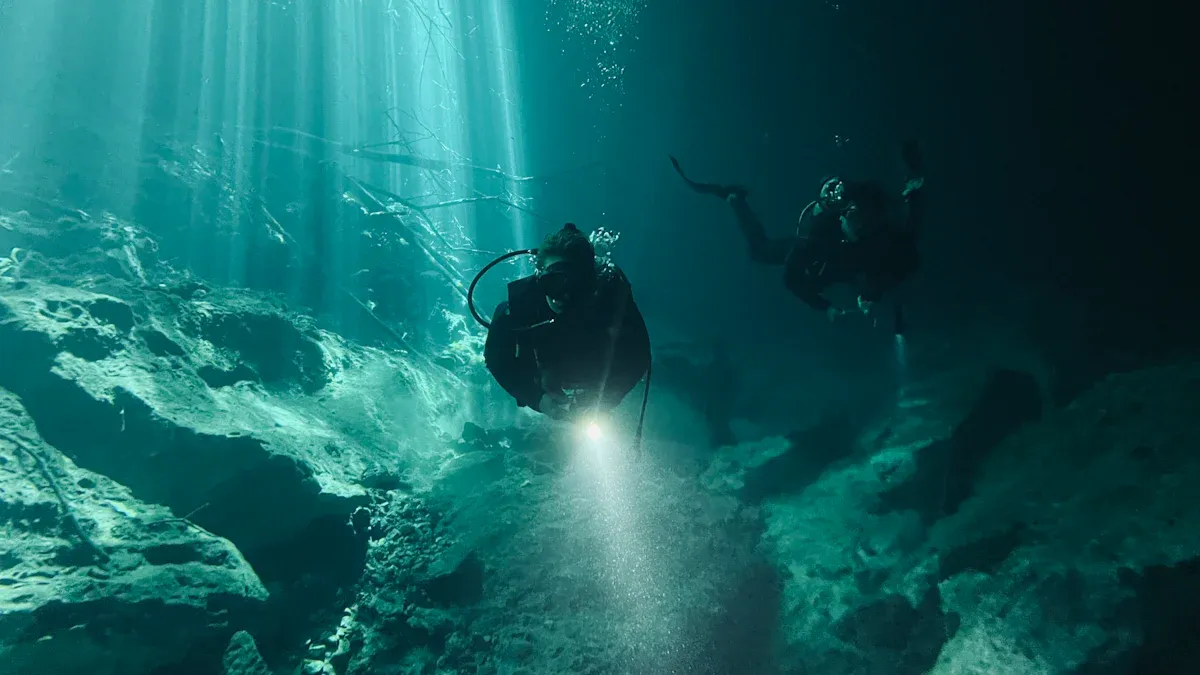
You must match brightness, waterproof rating, battery life, and beam type to your dive depth and environment when selecting a diving flashlight. Deeper dives demand stronger lights. Consider beam angle and construction for different underwater conditions. Always assess your dive conditions and prioritize safety before making a choice.
Key Takeaways
Choose a dive light with the right brightness for your depth. Shallow dives need 700-1000 lumens, while deeper dives require 2000-5000 lumens for safety and visibility.
Select a flashlight with a suitable beam type. Use flood beams for wide coverage and spot beams for focused illumination in tight spaces.
Always check the waterproof rating of your dive light. An IPX8 rating is ideal for most diving activities, ensuring safety at greater depths.
Choosing Dive Lights by Depth
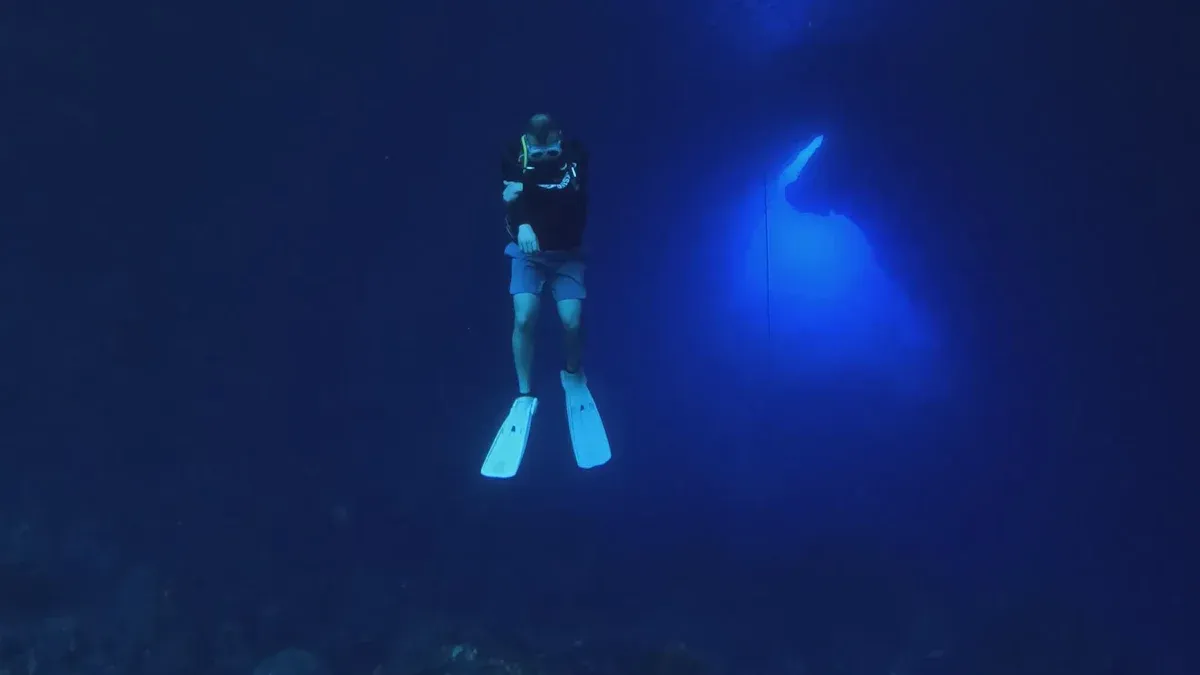
Shallow Dives: Entry-Level Dive Light Features
When you explore shallow waters, you need dive lights that offer reliability without excessive power. Entry-level models typically provide between 700 and 1000 lumens, which is sufficient for daytime or clear water conditions. These lights balance affordability and performance, making them popular among recreational divers. Many users appreciate their durability, noting that these lights withstand long sessions and resist water intrusion at depths up to 120 feet.
Tip: Choose a dive light with a dual battery system for flexibility during extended shallow dives.
A wider beam angle works well in open water, giving you expansive visibility for search operations or group dives. Most entry-level dive lights last 2-5 hours on high mode, and up to 12 hours on low settings. This burn time ensures you complete your dive without worrying about losing illumination.
Mid-Depth: Balancing Lumens and Battery
As you descend to mid-depth environments, you encounter reduced natural light and increased particulate matter. You should select dive lights with 1500–3000 lumens for optimal visibility. These models offer a balance between brightness and battery efficiency, making them suitable for night dives or exploring wrecks.
Setting | Battery Life |
|---|---|
High | 1.5 - 2 hours |
Low | Up to 12 hours |
A narrow beam helps you navigate unfamiliar areas, providing long-distance illumination. In poor visibility, a wider beam illuminates a larger area but may cause back-scatter. You must consider the burn time, as most mid-range dive lights last 2-5 hours on high mode. Lower settings extend battery life, allowing you to adapt to changing conditions.
Note: Wreck diving requires lights that can highlight sharp edges and unstable structures, improving safety as you scan your surroundings.
Deep and Technical: High-Powered Diving Flashlight
Technical and deep dives demand advanced dive lights with robust construction and high output. You should look for models delivering 2000–5000 lumens or more, especially for cave or night diving. Enthusiast-level divers may require up to 10,000 lumens for specialized tasks like underwater photography or research.
Rugged designs ensure durability in challenging environments. High battery capacity supports extended burn time, which is critical when navigating absolute darkness. Long-throw models with narrow beams excel in cave diving, providing focused illumination for following guidelines and marking your path.
Rugged construction for durability
High battery capacity for extended burn time
Long-throw, narrow beam for cave diving
Multi-spectrum options for photography
Portability and simplicity for ease of use
Emergency-ready features
Safety Alert: Always test your dive lights before each technical dive. Reliable lighting is crucial for emergency readiness and safe navigation.
You must match your dive light features to your environment. Cave diving requires powerful, reliable lights with extended burn time. Wreck diving highlights the need for lights that illuminate sharp edges and unstable structures. Open water dives benefit from wider beams for expansive visibility.
Dive Light Technology and Beam Types
Spot vs. Flood Beams for Dive Lights
You need to understand the difference between spot and flood beams to select the right dive light for your activity. Spot beams create a focused, intense center beam with a narrow beam angle, usually between 6° and 20°. Flood beams offer soft, even illumination with a wide beam angle, ranging from 90° to 120°. The table below highlights the main differences:
Feature | Flood Light | Spot Light |
|---|---|---|
Beam Angle | 90°–120° | 6°–20° |
Light Type | Soft, even illumination | Focused, intense center beam |
Best For | Photography, videography, close-up work | Signaling, exploration, search dives |
Light Effect | Natural-looking wide coverage | Strong penetration through murky water |
Drawback | Less effective in low-visibility conditions | Too harsh for wide-area lighting |
For underwater photography or videography, flood lights help you avoid harsh shadows and cover wide scenes.
For wreck or cave diving, spot lights let you see details in confined spaces.
On night dives, you benefit from using both types for safety and orientation.
LED vs. Traditional Dive Light Bulbs
You gain many advantages by choosing led bulbs over traditional bulbs. The table below compares their performance:
Advantage | LED Bulbs | Traditional Bulbs |
|---|---|---|
Brightness | 5 to 5,000+ lumens | About 900 lumens (60-watt bulb) |
Lifespan | 10,000+ hours | Much shorter lifespan |
Energy Efficiency | Highly energy-efficient | Less efficient |
Durability | Extremely durable | Less durable |
Burn Time | Hours or days | Shorter burn times |
Light Quality | Brighter, whiter light | Warmer, less intense light |
LED lights provide longer battery life and reliable performance.
You experience consistent illumination for all diving conditions.
LED bulbs resist shock and impact, making them ideal for underwater use.
You reduce the need for frequent replacements due to their long lifespan.
LED technology supports longer dive times and enhances safety.
You help protect marine environments because LEDs emit less heat.
Color Temperature and Underwater Visibility
Color temperature plays a key role in how you see underwater. Water absorbs different wavelengths, so scenes often look bluish at depth. Cooler color temperatures (5,000K to 6,500K) improve your ability to spot marine life and features. These cooler lights also avoid attracting nocturnal creatures during night dives. Warmer color temperatures (2,700K to 3,000K) create a more natural look but may not enhance visibility as well. You should choose your dive light’s color temperature based on your environment and safety needs.
Battery, Waterproofing, and Maintenance
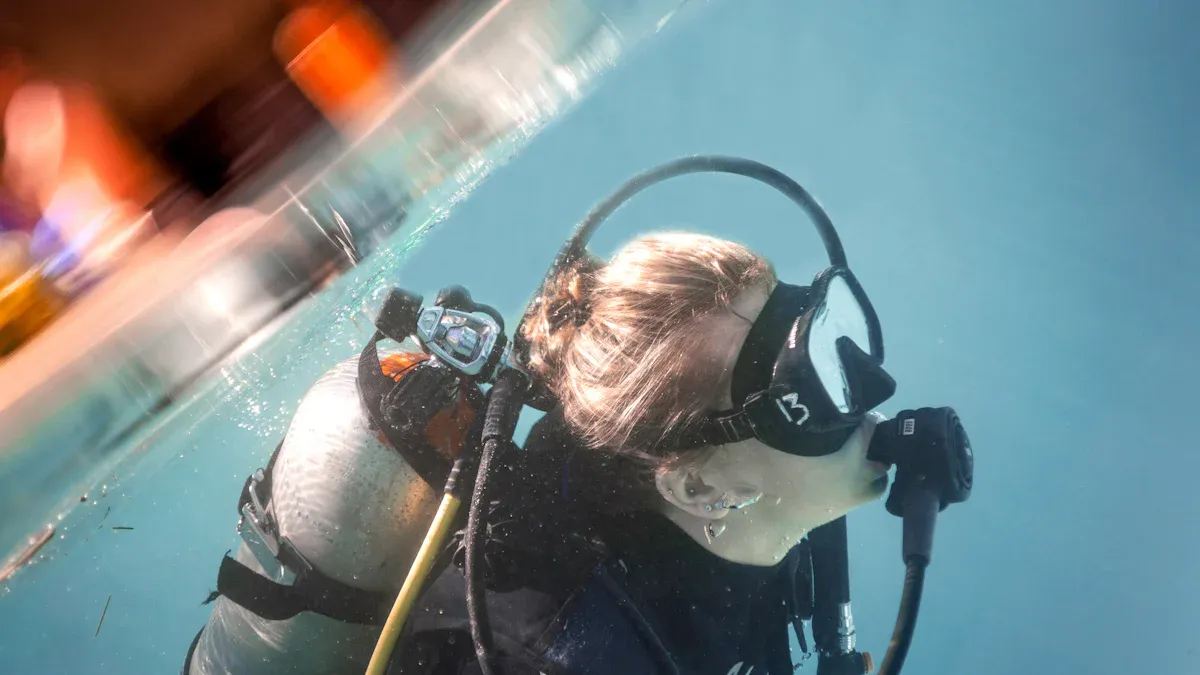
Battery Life for Dive Lights
You need to consider battery life when choosing a dive flashlight. Reliable battery performance ensures you complete your dive safely. Rechargeable flashlights have become popular because they offer longer battery life and reduce waste. The table below compares rechargeable and disposable battery models:
Feature | Rechargeable Flashlights | Battery-Powered Models |
|---|---|---|
Initial Cost | Higher | Lower |
Long-term Cost | Lower | Higher |
Environmental Impact | Better (less waste) | Worse (more waste) |
Rechargeable batteries help protect the environment by reducing waste. You also save money over time. Always check your battery status before each dive and carry a backup if possible.
Tip: Adjust your flashlight’s brightness mode based on water clarity to extend battery life during longer dives.
Waterproof Ratings for Diving Flashlight
You must select a dive flashlight with the right waterproof rating for your planned depth. The ANSI/NEMA FL 1 Standard helps you compare models. The table below explains common waterproof ratings:
Waterproof Rating | Description |
|---|---|
IPX4 | Splash resistant, suitable for rain. |
IPX7 | Submersible up to 1 meter for 30 minutes, ideal for accidental drops. |
IPX8 | Submersible beyond 1 meter for specified depth and time, suitable for diving. |
For most diving activities, choose a flashlight rated IPX8. Manufacturers often specify the maximum depth, so always check this detail. Saltwater is more corrosive than freshwater. Rinse your flashlight with fresh water after every saltwater dive to prevent long-term damage.
IP ratings are tested in freshwater.
Saltwater can damage devices even with high IP ratings.
Select higher IP ratings for saltwater use.
Durability and Care Tips
Proper care extends the lifespan of your dive flashlight. Follow these steps to keep your equipment reliable:
Rinse with fresh water after each dive to remove salt and debris.
Lubricate the O-ring regularly with silicone grease and replace it if worn.
Check battery status and charge fully before diving.
Store your flashlight in a protective case to prevent physical damage.
Safety Alert: Always inspect the O-ring and test your flashlight’s waterproofness in shallow water before deep dives.
Routine maintenance and careful handling help you avoid common causes of failure. You protect your investment and ensure your flashlight performs when you need it most.
When choosing the right dive light, you must focus on these essentials:
Brightness and high lumens for visibility
Proper beam angle for your environment
Reliable battery life
Waterproof rating for your dive depth
Mistake | How to Avoid |
|---|---|
Ignoring battery life | Test primary dive lights regularly |
Overlooking reliability | Choose reputable brands |
Always bring secondary dive lights and photo/video lights for safety. Select a bright dive light that matches your needs. Prioritize safety by testing your gear before each dive.
FAQ
How do you choose the best dive light for night dives?
You select a dive light with high lumens, a narrow beam, and reliable battery life. This ensures you see clearly and stay safe during night dives.
Can you use any dive light for underwater photography?
You need a dive light with a flood beam and adjustable brightness for underwater photography. This helps you capture vibrant colors and avoid harsh shadows.
What maintenance steps keep your dive light working longer?
You rinse your dive light after each dive, check the O-ring, and charge the battery fully. Regular care prevents leaks and extends the life of your dive light.
See Also
Selecting Ideal Flashlights for Bulk Buying Opportunities
Guidelines for Picking Premium Flashlights in Bulk
Five Essential Tips for Selecting Flashlights and Headlamps