Best Wholesale Flashlight Sources for Your Need

Choosing a wholesale flashlight source is less about finding the largest catalog and more about matching a supply model to how you actually sell. A hardware chain that turns stock every three weeks needs a different partner from a private-label brand placing one customized run per year, and neither of them is served well by the supplier who simply ranks first.
This guide covers what to check before you commit, then compares seven supply channels for wholesale flashlights, covering most of the realistic options: factory-direct manufacturers, B2B marketplaces, brand distribution arms, professional catalog distributors, and wholesale marketplaces for independent retail.
One thing we found while checking their public pages: only the factory-direct source publishes all three numbers that matter, which are minimum order, lead time, and logo capability. That single gap explains why supplier research so often takes weeks instead of days.
What to Look for in a Wholesale Flashlight Supplier
Product range
A source worth keeping will cover more than one application. Flashlight demand is seasonal and event-driven, so a partner who can supply across categories lets you fill a container without mixing vendors.
The categories that matter most when buying wholesale flashlights: outdoor flashlights, rechargeable flashlights, tactical flashlights, headlamps, work lights, and searchlights with emergency lighting. If your buyers are industrial or utility accounts, add explosion-proof and intrinsically safe models to the list before you shortlist anyone.
Range also has a commercial meaning. A supplier with twenty models can usually offer tiered pricing within a family, which gives you a good-better-best shelf without opening a second account.
Product quality and testing
Ask for numbers, not adjectives. Four measurements decide whether a light survives a return cycle.
Brightness and beam distance. Both should be stated against ANSI/NEMA FL 1, the standard that defines how lumen output, beam distance, runtime, and impact resistance are measured. A datasheet quoting "5000 lumens" with no reference standard is a marketing number.
Runtime and battery performance. Runtime must be quoted at a stated output level, because a light rated for six hours at 100 lumens may hold peak output for eight minutes. Ask for the runtime curve, not the headline.
Waterproof and impact resistance. IPX8 and IP68 are different claims. IPX8 covers water immersion only, IP68 covers dust and water. Impact ratings should state the drop height and surface.
Material quality. Anodized aluminum bodies resist corrosion and handle heat better than ABS. ABS is lighter and cheaper, which suits promotional and entry-price programs. Neither is wrong, but the spec should match the price band.
Quality control. Ask what happens between production and packing. A documented process usually includes incoming component inspection, in-line assembly checks, a burn-in or aging test, and a final random sample before cartoning.
Certifications and compliance
Certification needs depend on the destination market, not on the supplier's preference.
CE for the European Union, covering the applicable directives
RoHS for restricted substances, required alongside CE in the EU
FCC for the United States on products with electronic components
UL or ETL where a retail channel or authority requires a recognized safety mark
Battery and shipping documents: UN38.3 test summary, MSDS, and IEC 62133 for lithium cells
The practical test is not whether a supplier says it is certified, but whether it can send the certificate for the exact model you are buying, with your brand name or the OEM's name on it. Certificates are issued per product and per factory, and a certificate for a similar model is not coverage.
OEM, ODM, and private-label services
The distinction matters commercially. OEM means the product exists and you apply your brand. ODM means the supplier has a developed design you can adapt, often with cosmetic changes. Full custom development is a third track with its own timeline and tooling cost.
What to confirm before you rely on any of them:
Logo customization: method (laser engraving, pad printing, laser marking), placement, and the minimum quantity at which it becomes free
Color and material options: whether body color is a stock option or a production change
Packaging design: whether custom boxes, inserts, and manuals are handled in house or sourced
Product modifications: which changes are allowed without new tooling
New product development: who owns the tooling and the design files
MOQ, samples, pricing, and lead times
This is where most comparisons fall apart, because the numbers are rarely published and rarely comparable when they are.
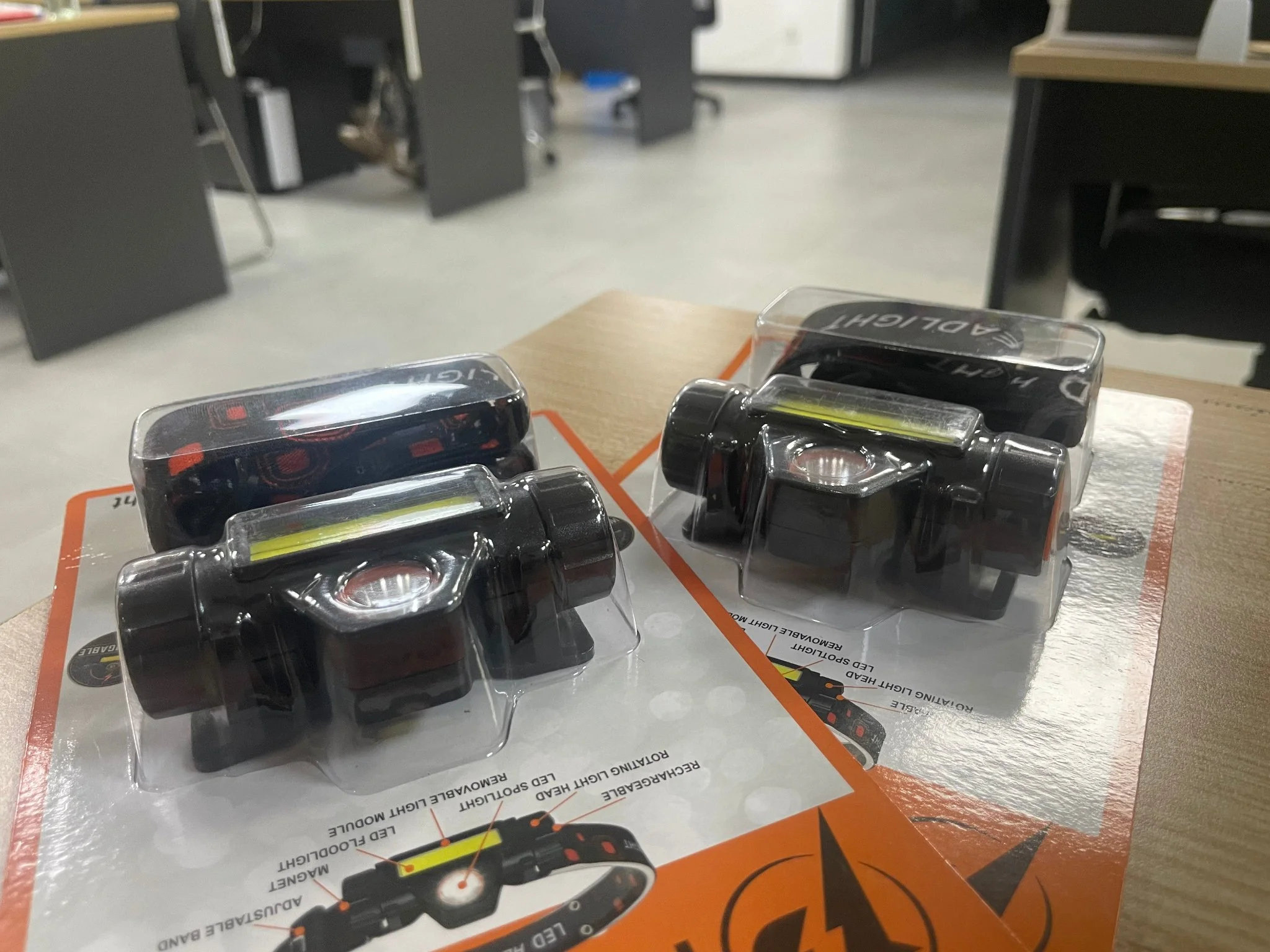
Samples. Confirm whether the sample is a stock unit or a pre-production unit, whether it is free, and who pays freight. A free stock sample tells you about build quality. It does not tell you about your customized version.
MOQ. Ask separately for stock items, logo-customized items, and full custom items. These three numbers can differ by a factor of ten.
Bulk pricing. Get the tier table, not a single quote. You need to know where the price breaks sit before you decide your order size.
Production schedule. Split the number into material lead time, production time, and inspection time. A single "30 days" answer hides which part is compressible.
Shipping and trade terms. Confirm FOB port, or whether EXW or DDP applies. Two quotes at the same unit price are not the same landed cost.
Best Wholesale Flashlight Sources
Terms below were read from each supplier's public pages in November 2026. Where a figure is not published, we say so rather than estimate it. Each entry covers what the channel stocks, who it suits, and how it handles wholesale flashlights orders.
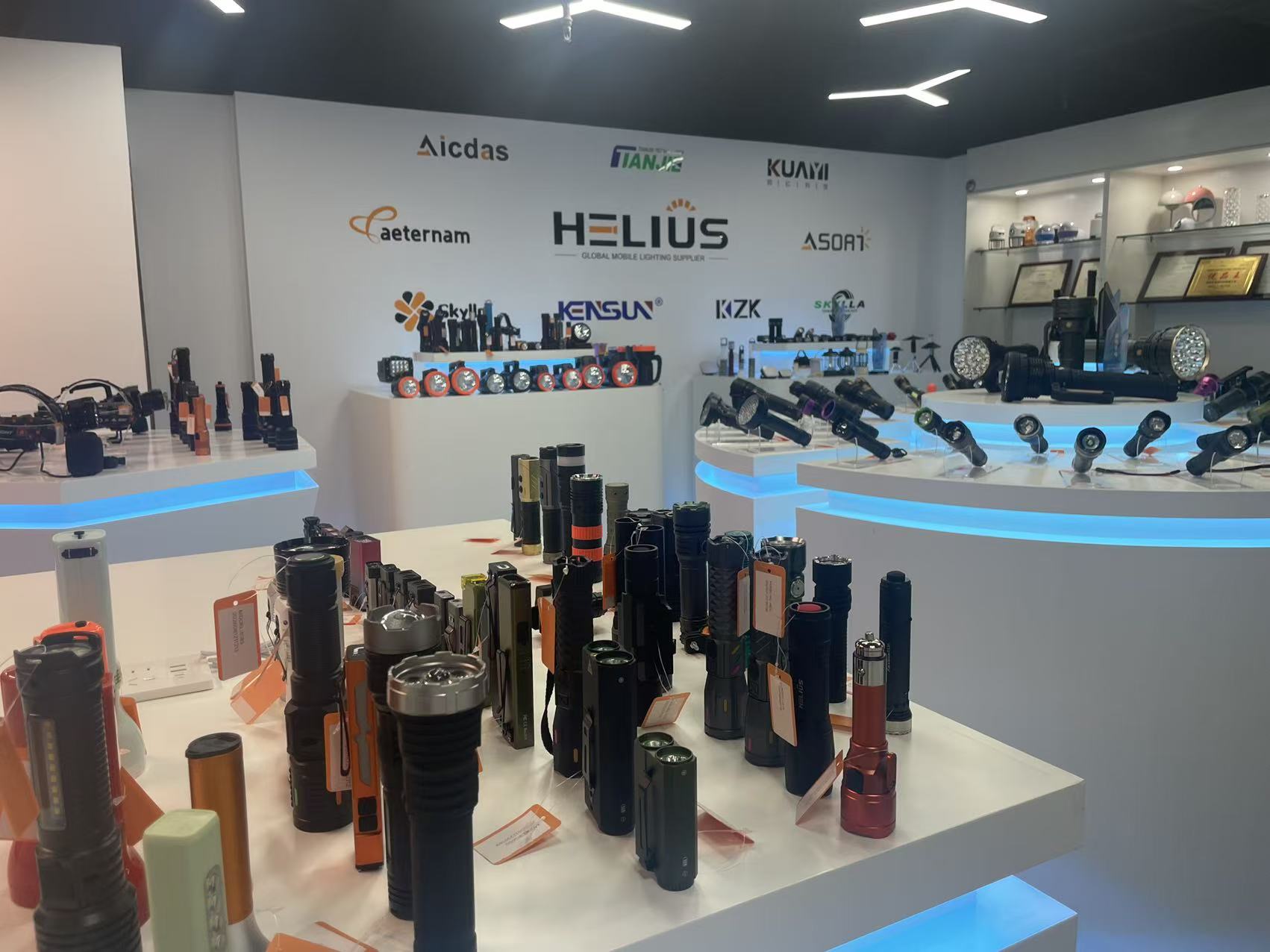
1. HELIUS (Shenzhen Tuliang Technology)
Factory-direct manufacturer of rechargeable LED lighting, supplying distributors, retailers, outdoor brands, industrial buyers, and promotional programs.
Product categories: high-power, zoomable, tactical, diving, UV, and explosion-proof flashlights, plus headlamps, work lights, camping lights, and bike lights. Both aluminum alloy and ABS constructions.
OEM/ODM: logo customization, custom colors, and custom packaging. Mold resources available for new development.
MOQ and samples: 500 pcs for OEM/ODM programs. Logo customization from 100 to 1,000 pcs depending on model and method. Samples in 3 days, first production batch of 1,000 units in 15 days.
Best for: private-label and mid-volume OEM buyers who need customization without a full container commitment.
Website: heliuslights.com
2. Global Sources
B2B marketplace listing verified manufacturers, mostly China-based, with supplier background checks on the platform side.
Product categories: full range, since each listing is an independent supplier rather than a catalog.
MOQ and pricing: set per listing. A representative LED flashlight listing shows US$0.25 to 0.35 per piece at 500 pieces MOQ, and the category spans MOQ from 1 piece to 3,000 pieces.
OEM/ODM: available from suppliers tagged for OEM service; capability varies by listing.
Best for: buyers in the research phase who want to benchmark price bands and MOQ ranges before committing to a direct supplier.
Website: globalsources.com
3. Made-in-China.com
B2B marketplace with a strong factory-verification layer and audited supplier badges. Useful when you need to check that a manufacturer actually operates the plant it claims.
Product categories: full range across independent suppliers.
MOQ and pricing: displayed per listing and genuinely variable. Three sampled flashlight listings show the spread: US8.30at45to499pcs,US8.30at45to499pcs,US7.80 at 500 to 4,999 pcs, US6.80at5,000pcsandaboveforonemodel;US6.80at5,000pcsandaboveforonemodel;US15.58 to 22.89 from 10 pcs for a tactical model; and US$0.70 at 1,000 pcs for a COB keychain light.
OEM/ODM: free logo customization is offered on many listings; confirm the method before assuming it.
Best for: price benchmarking and factory due diligence, especially the tiered pricing pattern you can use as a negotiating reference.
Website: made-in-china.com
4. Fenix Lighting
The principal US distributor for the Fenix brand. Relevant if you want an established consumer brand rather than a private-label program.
Product categories: Fenix branded handheld lights, headlamps, bike lights, and tactical models.
MOQ and samples: no MOQ is published. The site routes orders of five or more products to a commercial quote form, which is a quote gate rather than a production minimum. Retailer access runs through a separate application.
OEM/ODM: not applicable. Brand-owned products only, with custom engraving available through their custom shop, shipped in as little as two business days.
Best for: retailers who want branded stock with consumer recognition and no development work.
Website: fenixlighting.com
5. BrightGuy
Online distributor focused on professional and industrial flashlights, carrying multiple brands in one account.
Product categories: duty, industrial, and outdoor lights from established brands.
MOQ and pricing: no wholesale program or MOQ is published. Industrial, government, military, and institutional buyers can request a quote through their institutional form.
OEM/ODM: not offered.
Best for: agencies and institutional buyers who need mixed-brand orders and a single invoice.
Website: brightguy.com
6. Faire
Wholesale marketplace built for independent retailers, with net terms and a low entry barrier.
Product categories: broad general merchandise, with flashlights as one category among many.
MOQ and pricing: Faire does not use unit MOQ. Their retailer terms state that brands may set a minimum dollar amount a retailer must spend, and that this amount is set by each brand and varies between brands. Prices are hidden until you register as a retailer.
Terms: 60-day payment terms are available, and if an order takes longer than two weeks to ship, the invoice due date and return window are extended by two weeks.
Best for: independent shops testing a small flashlight assortment without importing.
Website: faire.com
7. Forestry Suppliers
Specialist catalog distributor serving forestry, natural resources, and field professionals in the US and Canada.
Product categories: field equipment, including right-angle and intrinsically safe lighting for professional use.
MOQ and pricing: no minimum, single units available. Quantity breaks are set per item rather than as a site-wide policy, so the discount depends on the specific SKU.
OEM/ODM: not offered.
Best for: specialist retailers benchmarking professional-grade pricing, and buyers who need one or two units rather than a pallet.
Website: forestry-suppliers.com
Why Choose Helius as a Wholesale Flashlight Supplier
The seven sources above solve different problems. Helius is built for one specific problem: you need your own product, at a volume below a full container, with a timeline you can plan around.
Range that covers one shelf or one catalog. Outdoor, tactical, industrial, diving, and emergency lighting in one place, so a distributor can build a category page without three supplier accounts.
OEM, ODM, and private label in one track. Logo, color, and packaging changes are handled as production options rather than exceptions, which is what keeps a mid-volume program viable.
Material options matched to price band. Aluminum alloy for professional and tactical lines, ABS for promotional and entry-price programs.
Mold resources. When a stock model does not fit, development is possible in house rather than through a third party.
Export experience. Shipments to Europe, North America, and Southeast Asia, with logistics coverage to more than 150 countries.
Documentation on request. Test reports and declarations are issued per model, which is the only form that survives a customs check or a retail compliance review.
The honest limit: if you need fifty units next week, a domestic distributor will beat us every time. Factory-direct economics start to work at the 500-piece level and improve from there.
Best Wholesale Flashlight Types for Different Businesses
Outdoor retailers. Rechargeable handhelds and headlamps move together. Stock the same battery platform across both so accessories sell through.
Hardware stores. Work lights and mid-price rechargeable flashlights, with a clear good-better-best ladder. Hardware buyers compare on brightness per dollar.
Tactical equipment suppliers. Tail switches, momentary-on, and impact ratings matter more than lumen counts. Buyers in this segment read the spec sheet closely and return products that underperform it.
E-commerce sellers. Compact, lightweight models with strong photography and a battery that ships without special handling. Packaging quality affects review scores more than most sellers expect.
Emergency-supply companies. Lights that run on standard cells and store for years without charging. Rechargeable models fail this use case because a stored battery loses capacity.
Promotional-product businesses. Low unit cost, fast logo turnaround, and packaging that survives bulk handling. ABS bodies and pad printing fit here better than aluminum and engraving.
How to Compare Wholesale Flashlight Prices
Two quotes at the same unit price are rarely the same cost. These nine variables explain most of the difference between two wholesale flashlights quotes.
Variable | What to compare |
|---|---|
Product specifications | Lumen output, beam distance, and runtime at a stated output level |
Battery type and capacity | Built-in lithium versus replaceable cells, and the mAh figure |
Materials and construction | Aluminum alloy versus ABS, wall thickness, anodizing type |
Waterproof rating | IPX8 versus IP68, and whether the claim is tested or declared |
Charging method | USB-C, magnetic, dock, or proprietary |
Packaging and accessories | Retail box, cable, holster, manual, and language versions |
Order quantity | Where the price breaks sit, not just the price at your current volume |
Customization costs | Tooling, setup, or per-unit charges for logo and packaging |
Shipping terms | FOB port, or EXW or DDP, and who carries duty and insurance |
The quickest way to normalize a comparison is to fix the specification first and then collect quotes against it. Comparing a 1,000-lumen ABS light against a 3,000-lumen aluminum one tells you nothing except that one is cheaper.
Wholesale Flashlight Buying Checklist
Define the target market. Destination country, sales channel, and price band, because these three decide certification and packaging.
Confirm product specifications. Written down, at a stated measurement standard.
Request samples. Ask whether the sample is stock or matches your customized build.
Verify certifications. For the exact model, with a named certificate holder.
Test performance. Measure runtime and output at your own ambient temperature, not just on the datasheet.
Confirm branding and packaging. Artwork approval step, and who pays for plates or tooling.
Review MOQ and payment terms. Separate numbers for stock, logo, and custom.
Confirm delivery schedule. Material, production, and inspection time as three separate figures.
Check warranty and after-sales. What is covered, for how long, and who pays return freight.
Frequently Asked Questions
What is the typical MOQ for wholesale flashlights? It depends on the change you are asking for. Stock items ship from tens of pieces, logo customization commonly starts between 100 and 1,000 pieces, and OEM programs typically begin at 500 pieces.
Can I order samples before bulk purchasing? Almost always, and the sample policy tells you how the supplier works. Paid samples shipped in days indicate a stocked operation; free samples with a long wait usually mean the unit is being built for you.
Are rechargeable flashlights suitable for wholesale? Yes, and they now outsell disposable-battery models in most consumer segments. The exception is emergency storage, where a light that sits unused for years still favors standard replaceable cells.
What certifications are required? CE and RoHS for the European Union, FCC for the United States on electronic products, and UN38.3 plus MSDS for any lithium battery shipment. UL or ETL is added when a retail channel or authority requires a recognized safety mark.
Can manufacturers customize logos and packaging? Most can, but the method and the minimum differ. Laser engraving is durable and permanent, pad printing suits low-cost promotional work, and packaging is usually a separate cost with its own minimum.
How long does production usually take? Plan for three stages: material lead time of one to two weeks, production of two to four weeks depending on complexity, and inspection plus packing of two to four days. Factory-direct orders also carry transit time, which is where most schedules slip.
What is the difference between OEM and ODM? OEM means you brand an existing product. ODM means you adapt a design the supplier already developed, which is faster and cheaper than starting from a drawing but gives you less differentiation.
Conclusion
Sourcing wholesale flashlights is a matching exercise, not a search for the biggest catalog. The right source is the one whose constraints match your business. Check the product range against what you actually sell, confirm specifications against a measurement standard, verify that certifications cover your exact model and market, and get the MOQ, lead time, and customization minimum as three separate numbers before you commit.
Quality, compliance, customization, and delivery are the four things that decide whether a supply relationship lasts beyond the first order. Price decides only the first one.
If you are planning a private-label or OEM program, we can send our current catalog and a quotation against your target specification. You will get the MOQ tiers, the customization minimums, and a production schedule with the three stages separated, so you can compare it against whatever quotes you already have.
See Also
Discovering the Top Wholesale Deals for LED Headlamps and Flashlights
Selecting the Optimal Flashlights for Wholesale Buying
Advice for Finding Dependable Wholesale Flashlights
Finding the Ideal Wholesale Flashlight Supplier for Your Outdoor Store
Key Strategies for Sourcing Wholesale Flashlights for Your Company