Wholesale Pricing: What Affects Your Cost Per Unit?


You face several factors that affect your cost per unit in wholesale pricing. These include production costs, overhead expenses, desired profit margin, market demand, competitor pricing, and volume discounts.
Production costs: raw materials, labor, and direct manufacturing
Overhead expenses: rent, utilities, and salaries
Desired profit margin: often between 20-40%
Market demand and competitor pricing
Volume discounts for large orders
Accurate calculation of both fixed and variable costs helps you set profitable prices for wholesale flashlights. For example, when a supplier reduced transportation expenses by optimizing routes, they improved their profit margins.
Key Takeaways
Understand all cost components, including production, overhead, and shipping, to set accurate wholesale prices.
Regularly review your overhead expenses to identify potential savings that can improve your profit margins.
Monitor market trends and competitor pricing to ensure your wholesale prices remain competitive and attractive to buyers.
Implement volume discounts to encourage larger orders, boost sales, and foster customer loyalty.
Use a reliable formula for calculating cost per unit, including all expenses, to maintain profitability and support business growth.
Cost Per Unit Factors

Understanding the factors that shape your cost per unit is essential for setting a competitive wholesale price. You must analyze each component to ensure your wholesale pricing supports a healthy profit margin and keeps your business sustainable. Let’s break down the main factors that influence your costs.
Production and Material Costs
Production and material costs form the foundation of your wholesale pricing. You need to account for every expense that goes into manufacturing your product. These costs can vary widely depending on your industry, the complexity of your product, and the source of your materials. Here is a breakdown of the main components:
Component | Description |
|---|---|
Direct Materials | Raw materials that go directly into making the product (e.g., wood, screws, paint for furniture). |
Direct Labor | Wages and related expenses for workers directly involved in manufacturing. |
Manufacturing Overhead | Indirect costs necessary for production, such as utilities and factory rent. |
You must monitor trends in raw material prices because they can change quickly. Several factors drive these fluctuations:
Commodity prices, such as plastic resin and crude oil, often shift due to market demand.
Geopolitical events can disrupt supply chains and increase costs.
Currency exchange rates affect the price of imported materials.
Price volatility signals rapid changes in supply and demand, which can impact your wholesale pricing strategy.
If you source materials domestically, you may face higher costs due to increased wages and facility expenses. These factors directly influence your wholesale price and profit margin.
Overhead and Administrative Expenses
Overhead and administrative expenses are critical factors in your cost per unit calculation. These costs include rent, utilities, insurance, and salaries for staff not directly involved in production. You must also consider administrative expenses such as accounting, legal fees, and office supplies. These costs remain constant regardless of your production volume, so they play a significant role in determining your wholesale pricing.
You should allocate overhead costs across all units produced to get an accurate picture of your true cost per unit. This approach helps you set a wholesale price that covers all expenses and maintains your desired profit margin.
Tip: Regularly review your overhead expenses. Small changes, like renegotiating your lease or switching utility providers, can lower your costs and improve your profit margin.
Shipping, Marketing, and Other Costs
Shipping, marketing, and other costs are often overlooked but can significantly affect your wholesale pricing. You must include transportation and logistics expenses, especially if you ship large volumes or work with international suppliers. Insurance protects your goods during transit and adds to your overall cost per unit.
Packaging also plays a role. Stock packaging is usually less expensive than custom options, but you may need to invest in unique packaging to stand out in the market. Marketing costs, such as advertising and promotional materials, help you reach new customers and grow your wholesale business.
Consider these additional factors:
Strong relationships with suppliers can lead to discounts, reducing your costs.
Sustainability efforts, like eco-friendly packaging, may increase costs but can attract more customers.
Market dynamics, including supply chain changes and demand fluctuations, require you to adjust your wholesale pricing regularly.
You must factor in every expense to set a wholesale price that supports your profit margin and keeps your business competitive.
Wholesale Pricing and Market Influences
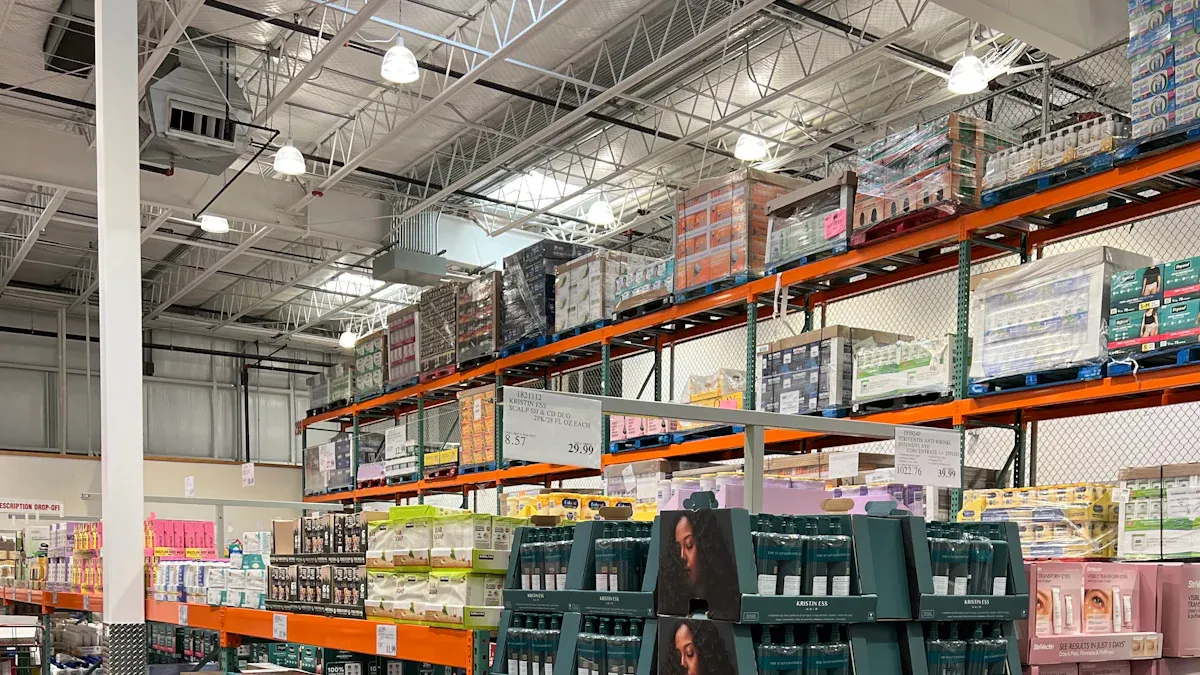
Wholesale pricing depends on more than just your internal costs. You must watch market conditions, competition, and customer demand. These factors shape your pricing decisions and affect your profit margin. Understanding these influences helps you set a wholesale price that keeps your business competitive and profitable.
Competition and Industry Standards
You operate in a market where competitors set benchmarks for wholesale pricing. Aligning your wholesale price with industry standards ensures you attract price-sensitive buyers and stay relevant. Different pricing strategies help you respond to market conditions:
Pricing Strategy | Description |
|---|---|
Price Matching | Align prices with competitors to meet industry standards and customer expectations. |
Penetration Pricing | Set initial prices lower than competitors to gain market share. |
Premium Pricing | Charge higher prices for unique value or superior quality. |
Loss Leader Strategy | Offer some products at lower prices to boost sales of higher-margin items. |
You gain a competitive edge by matching market trends, but you may face margin uncertainty if competitors lower their prices. Market-based pricing keeps your business relevant, but it can make you dependent on unpredictable market conditions.
Volume Discounts and Order Size
Volume discounts play a key role in wholesale pricing. You can offer price breaks for bulk purchases, which lowers the cost per unit and encourages larger orders. Common discount structures include:
Tiered discounts that increase as order size grows.
Cumulative volume pricing that rewards repeat buyers.
Bulk pricing that reduces rates for large quantities.
These strategies help you move more inventory and improve cash flow. Selling more units at a lower profit margin per item can still increase your overall profit margin. Regular analysis of sales data lets you optimize your discount offerings and manage inventory more efficiently.
Customer Demand and Seasonality
Customer demand changes with the seasons and affects your wholesale pricing. Ignoring seasonality can lead to mismatches between supply and demand, raising your costs and lowering your profit margin. By tracking demand patterns, you can adjust your wholesale price and inventory levels. This approach can reduce costs by nearly 5% and help you avoid out-of-stock situations. Understanding how market conditions shift throughout the year allows you to keep your pricing competitive and your profit margin healthy.
Pricing Strategy for Wholesale Flashlights
Choosing the right pricing strategy for wholesale flashlights helps you maximize your wholesale profit margin and stay competitive. You must analyze your costs, market trends, and customer expectations before selecting a wholesale pricing strategy. Wholesale pricing strategies vary, but three main pricing methods stand out for wholesale flashlights.
Cost-Based Pricing
Cost-based pricing starts with calculating all costs involved in producing and selling wholesale flashlights. You add your desired profit margin to the total cost to set your wholesale price. This wholesale pricing method gives you a clear structure and ensures you cover every expense. You must include direct costs like materials and labor, plus indirect costs such as shipping and overhead. Accurate pricing depends on a complete list of costs. Request detailed breakdowns from suppliers to avoid hidden fees. Cost-based pricing works well when you have stable costs and want predictable profit margins.
Tip: Bulk buying lowers per-unit costs and increases your negotiation power with suppliers. You can stabilize your wholesale price and improve budget control.
Value-Based Pricing
Value-based pricing focuses on the perceived value of wholesale flashlights to your customers. You set your wholesale price based on features like durability, energy efficiency, and long-term savings. Customers may pay more for flashlights that last longer or save money on batteries. You must understand what your buyers value most. This pricing strategy helps you capture higher profit margins if your product stands out. Building strong supplier relationships ensures reliable service and fair pricing, which supports your value-based pricing approach.
Market-Based Pricing
Market-based pricing uses competitor prices and industry standards to guide your wholesale pricing. You research what other wholesalers charge for similar flashlights. You then set your wholesale price to match or beat those rates. This pricing strategy keeps you competitive and attracts price-sensitive buyers. You must monitor market trends and adjust your wholesale pricing formula as needed. Logistics and inventory management play a role in keeping costs low and avoiding delays. Successful pricing strategies often combine market insights with accurate pricing and cost control.
You must choose a pricing strategy that fits your product, market, and business goals. Wholesale pricing strategies work best when you balance costs, customer value, and market conditions. Wholesale flashlights offer many opportunities for profit if you use the right pricing methods and maintain a strong wholesale profit margin.
How to Set Wholesale Prices
Setting wholesale prices requires a clear understanding of your costs and profit goals. You must analyze every expense, from production to customer acquisition costs, to ensure your pricing supports your business growth. Follow these steps to calculate wholesale prices that keep you competitive and profitable.
Cost Per Unit Calculation Formula
You need a reliable formula to calculate wholesale prices. Start by determining your total production costs, including direct materials, labor, and overhead. Add administrative expenses and customer acquisition costs. Divide the sum by the number of units produced to find your average cost of goods manufactured. This method, known as absorption pricing, gives you a precise cost per unit.
Tip: Always include customer acquisition costs in your calculations. These expenses, such as marketing campaigns and sales commissions, impact your total cost and profit margin.
The formula looks like this:
Cost Per Unit = Variable Product Cost + ((Overhead Expenses + Administrative Costs + Customer Acquisition Costs) / Number of Units)
Once you know your cost per unit, you can calculate wholesale prices by adding your desired profit margin. Many wholesalers use industry benchmarks to set profit margins. For example, furniture wholesalers often target gross margins between 30-50%, while electronics wholesalers aim for 3-7%.
Sector | Gross Margin (%) | Net Profit Margin (%) |
|---|---|---|
FMCG Wholesalers | 3-10 | 2-7 |
Apparel Distributors | 15-30 | 2-7 |
Electronics Wholesalers | 3-7 | 2-7 |
Automotive Parts | 5-15 | 2-7 |
Furniture Wholesalers | 30-50 | 2-7 |
Jewelry Distributors | 30-60 | 2-7 |
Average (All Sectors) | 20-30 | 2-7 |
Industry Benchmark | 22.2 | N/A |
Doubling Cost for Profit Margin
Many businesses use a simple method to calculate wholesale prices: doubling the cost per unit. This approach aims for a 50% profit margin. You multiply your total cost by two to set wholesale prices quickly. This method works well in industries where price competition is less intense.
Advantages | Disadvantages |
|---|---|
Simple calculation and implementation | May price products out of competitive range |
Ensures adequate margin coverage | Ignores market demand and value perception |
Industry standard in many sectors | One-size-fits-all approach misses optimization opportunities |
You should consider market demand and customer acquisition costs before relying solely on this method. Doubling cost may not suit every product or market. You risk losing sales if your price exceeds what buyers expect.
Note: Always compare your calculated wholesale prices with competitor rates. Adjust your profit margin if you notice shifts in market demand or customer preferences.
Practical Example Calculation
Let’s walk through a practical example using wholesale flashlights. Suppose you want to calculate wholesale prices for a batch of 1,000 units. Here’s how you break down your total costs:
Direct Material Cost: $2,000
Direct Labor Cost: $1,500
Overhead Expenses: $1,000
Administrative Costs: $500
Customer Acquisition Costs: $500
Your total production costs equal $2,000 (materials) + $1,500 (labor) = $3,500. Add overhead, administrative, and customer acquisition costs for a total of $5,500.
Calculate your average cost of goods manufactured:
Average Cost Per Unit = $5,500 / 1,000 units = $5.50 per unit
If you want a 40% profit margin, use the formula:
Wholesale Price = Average Cost Per Unit / (1 - Desired Profit Margin)
Wholesale Price = $5.50 / (1 - 0.40) = $5.50 / 0.60 = $9.17 per unit
If you use the doubling method for a 50% margin:
Wholesale Price = $5.50 x 2 = $11.00 per unit
You must review your wholesale pricing regularly. Factor in changes in customer acquisition costs, market demand, and competitor pricing. Demand-based pricing helps you clear out old inventory, while bundling slow-moving items at a lower price moves stock efficiently.
Callout: Always include every cost—especially customer acquisition costs—when you calculate wholesale prices. This practice ensures you set wholesale prices that protect your profit margin and keep your business sustainable.
Common Mistakes to Avoid
Missing Hidden Costs
You often overlook hidden costs when setting wholesale prices. These costs can erode your profit margins and misrepresent your financial health. You must identify every expense associated with your product, including those that do not appear obvious at first glance. Many businesses lose up to 30% of profits to hidden costs such as discounts and promotions. If you skip cost calculations or ignore overhead expenses, you risk setting prices that barely cover raw materials. Underpricing your products can limit profit potential and harm your brand perception.
Hidden Cost | Description |
|---|---|
Underpricing Your Products | Undervaluing products can deplete profit margins and damage brand image. |
Skipping Cost Calculations | Guessing prices without factoring in exact costs can lead to unprofitable pricing. |
Ignoring Overhead Expenses | Overhead costs like rent and marketing can accumulate, leading to insufficient pricing. |
Tip: Always factor in materials, labor, shipping, and overhead when you set wholesale prices. Neglecting these calculations can turn profitable months into losses.
Ignoring Market Trends
You must monitor market trends to avoid selling outdated products at uncompetitive prices. If you ignore shifts in customer demand or competitor pricing, you risk losing customers to competitors who offer modern alternatives. You need to analyze the market and competitor pricing regularly. Conduct thorough research to understand competitor pricing strategies and product offerings. Implement tiered pricing and seasonal promotions to stay ahead of competitors. Set minimum order quantities to streamline operations and encourage bulk buying. Monitor sales and adjust pricing based on market trends to maintain competitive pricing.
Note: Use dynamic pricing tools to respond quickly to changes in competitor pricing and market conditions.
Overlooking Volume Discounts
Volume discounts play a crucial role in wholesale pricing. If you overlook these, you miss opportunities to incentivize bulk purchasing and foster customer loyalty. Clear communication of discount policies builds trust between you and your clients. Volume discounts strengthen customer retention strategies and encourage repeat business. You should implement tiered pricing structures and communicate them clearly to your customers. This approach helps you compete with other wholesalers and maintain strong relationships.
Callout: Volume discounts not only attract bulk buyers but also help you stand out in a crowded market with competitive pricing.
You must review your cost factors and pricing strategy regularly to maintain profitability. Use proven methods to set wholesale prices that reflect true costs and market conditions.
Update pricing often to match changes in costs and competitor actions.
Analyze market trends and consumer behavior to optimize inventory turnover.
Embrace digital innovation and dynamic pricing to stay competitive.
Studies show that price transparency and strategic discounts can lower costs and boost sales performance. Adapting quickly helps you protect your margins and strengthen your market position.
FAQ
What is the most important factor in wholesale pricing?
You must focus on accurate cost calculation. This includes production, overhead, and shipping. Precise numbers help you set competitive prices and protect your profit margin.
How often should you review your wholesale prices?
You should review your prices quarterly. Market trends, material costs, and competitor actions change often. Regular updates keep your business profitable and competitive.
Why do volume discounts matter in wholesale?
Volume discounts encourage larger orders. You increase sales and build customer loyalty. Bulk pricing also helps you move inventory faster and improve cash flow.
How can you avoid missing hidden costs?
Tip: Create a checklist for all expenses. Include materials, labor, shipping, and overhead. Review your list before setting prices to ensure you cover every cost.
See Also
Discovering Savings With B2B Wholesale Buying Strategies
Advantages of Bulk Buying: Wholesale Flashlight Insights
Expert Tips for Securing Wholesale Prices on Flashlights
Boosting Retail Profits Through Wholesale Merchandise Strategies