Flashlights for Automotive Workshops: Precision Lighting for Professionals

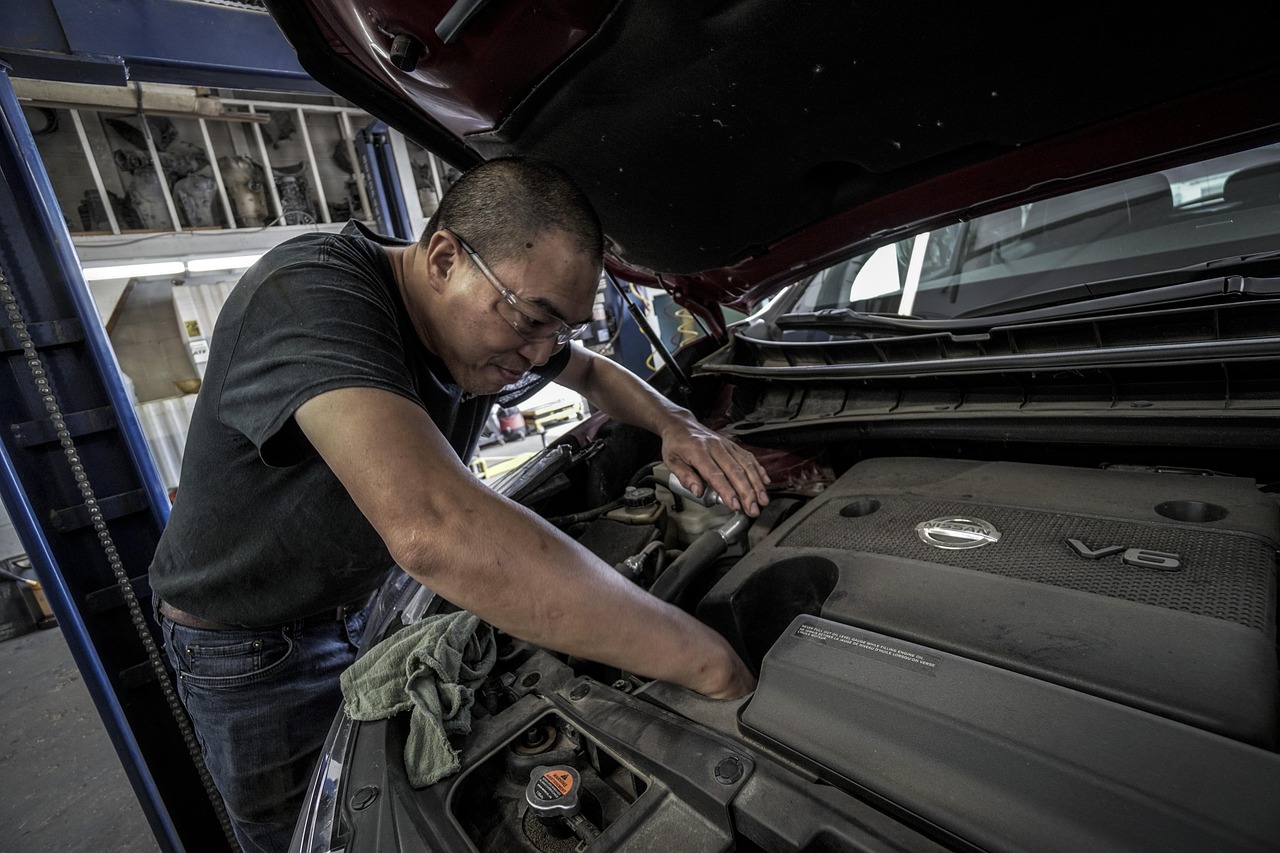
You know it can be hard to work in a car workshop. Shadows can hide important things. Good lighting helps a lot. If you use a bright led flashlight or a strong automotive workshop lamp, you find problems quickly and stay safe. Many people who work with cars use led lights in their garage. You can choose a led headlamp or a wholesale flashlight. Picking the right one gives you great workshop lighting every time.
Key Takeaways
Good lighting is very important in car workshops. It helps workers see small things better. This keeps everyone safe and helps fix cars right.
Pick the best light for each job. Handheld flashlights, headlamps, and LED work lights all help in different ways. They make work faster and easier.
Find strong lights with high IP ratings. These lights can handle water, dust, and bumps. They work well in busy workshops.
Think about using rechargeable lights. They are easy to use and save money. They also make less trash and let you work longer without stopping.
Take care of your lights to make them last. Clean the contacts and put them away the right way. Check for damage so your lights stay working well.
Precision Lighting Needs
Safety and Accuracy
You know how tricky it can get when you work in a car workshop. Shadows hide small parts, and poor lighting makes it easy to miss a loose wire or a leaking hose. Good lighting keeps you safe and helps you spot problems before they turn into bigger issues. When you use the right flashlight, you see every detail, even in tight engine spaces. Mechanics need to trust their eyes, so clear and steady light is a must.
Here are some common lighting challenges you might face in an automotive setting:
You need reliable lights to keep everyone safe and to understand the car’s status.
Sometimes, electromagnetic interference can mess with your LED lights, so you have to check them often.
High temperatures in the workshop can shorten the life of your LEDs, so you need to watch for overheating.
Some lights need to fit into small spaces, especially when you work with instrument panels.
Complex LED systems need careful testing to make sure they work right.
If the color of your light changes, it can make it hard to see what you’re fixing.
When you solve these problems, you make your repair work safer and more accurate. Mechanics who use the right lighting tools avoid mistakes and keep their hands safe from sharp edges.
Productivity Boost
Bright, focused lighting does more than keep you safe. It helps you work faster and smarter. When you see clearly, you don’t waste time searching for tools or double-checking your work. Mechanics who use high-quality lights finish jobs quicker and with fewer errors.
Here’s a quick look at how lighting affects your productivity:
Aspect of Lighting | Impact on Productivity |
|---|---|
Proper Lighting | Reduces eye strain and improves visibility |
Inappropriate Environment | Causes fatigue and reduces concentration |
High-Quality Lighting | Enhances comfort and job satisfaction |
When you have the right lighting in your workshop, you feel less tired and more focused. Mechanics who use good lights make fewer mistakes and enjoy their work more. If you want your repair jobs to go smoothly, don’t overlook the power of a great flashlight.
Key Qualities
Brightness and Beam
When you work on cars, you need the right amount of light for each job. Some tasks are simple, while others need you to see every tiny detail. Check out this table to see how much light you might need:
Task Difficulty Level | Recommended Lux Level |
|---|---|
Simple | 200-300 lux |
Moderately difficult | 500-750 lux |
Difficult | 1,000-1,500 lux |
Very difficult | 2,000-3,000 lux |
Extracting | 5,000-7,500 lux |
General paint facilities | 200-500 lux |
Automobile paint inspection | 3,000-10,000 lux at 3.3 feet |
You also want to think about the beam pattern. A wide beam helps you see more of the area, while a focused beam lets you spot small parts in tight spaces. Some led lights have adjustable beams, so you can switch between wide and narrow as needed.
Tip: Look for lights that meet DOT or ECE standards. These patterns help you see better without causing glare.
Durability
Workshops can be tough on your tools. You drop things, bump into stuff, and sometimes work in hot or wet places. Durable lights last longer and save you money. Here’s a quick look at what makes a light tough:
Material Type | Benefits |
|---|---|
Aluminum | Resists impacts |
High-grade plastics | Handles rough use and stress |
IP65 rating or higher | Blocks dust and water jets |
High IK ratings | Takes shocks and vibrations |
Heat-resistant materials | Works well in high temperatures |
A strong led work light can handle drops and keep shining, even in harsh conditions.
Battery and Power
You don’t want your light to die in the middle of a job. Most led work lights use batteries like NiMH, Li-ion, or Alkaline. Li-ion batteries last longer and give you more power, which is great for long repair sessions.
Battery Type | Capacity (mAh) | Rechargeable |
|---|---|---|
NiMH | 500 - 10000 | Yes |
Li-ion | 500 - 20000 | Yes |
Alkaline | 1500 - 3000 | No |
A good led light can last up to 50,000 hours, so you spend less time changing bulbs and more time fixing cars.
Portability
You move around a lot in a workshop. You need lights that are easy to carry and fit into small spaces. Lightweight and compact designs make your job easier. Some lights have magnetic bases, so you can stick them to metal parts and work hands-free. Portability means you always have the right light, right where you need it.
Types of Work Lights for Car Mechanics
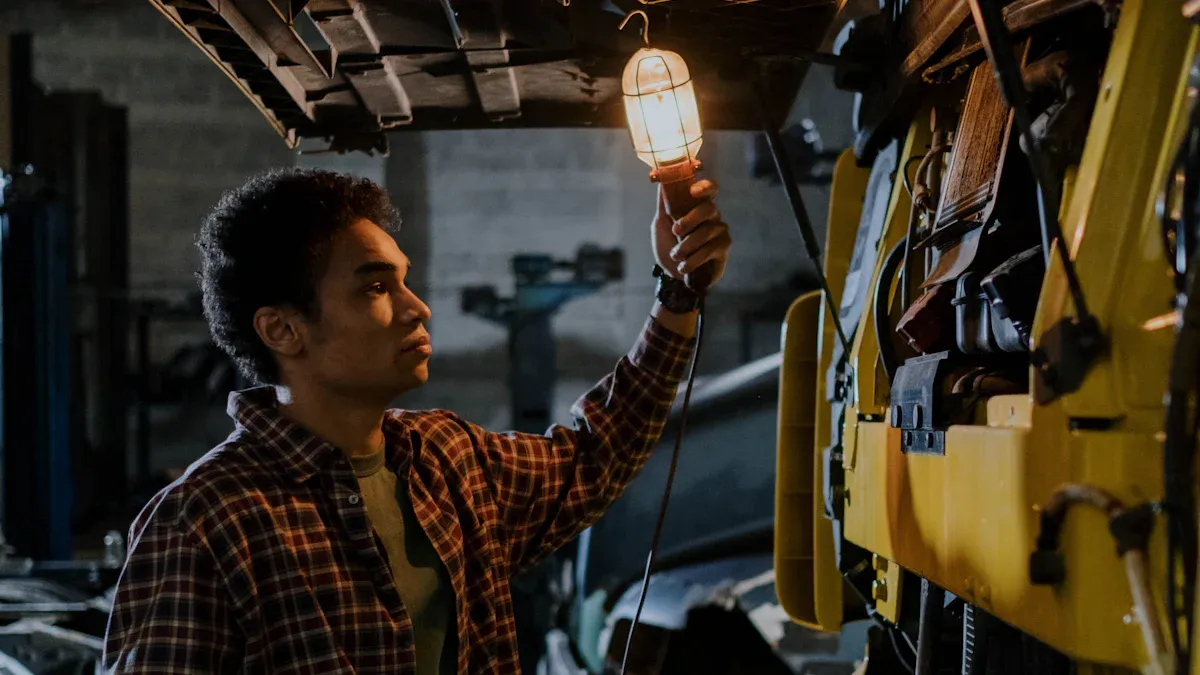
Choosing the right work lights for car mechanics can make your job easier and safer. You have many options, and each one fits a different task in the workshop. Let’s look at the main types and see how they help you get the job done.
Handheld LED Flashlight
You probably reach for a handheld led flashlight more than any other tool. This light fits right in your hand and goes wherever you go. You can use it to check under the hood, look inside wheel wells, or spot leaks in dark corners. Models like the Feynlab Detailing Flashlight give you a bright, focused beam that shows every detail.
Here’s a quick look at the pros and cons:
Advantages | Disadvantages |
|---|---|
Enhanced visibility | Need for battery replacements |
Safety | Non-rechargeable models can be inconvenient |
Versatility | |
Longevity | |
Energy-efficient LED tech |
You get great visibility and safety with a led flashlight. You can use it for many jobs, and it lasts a long time. Some models need new batteries, but many now come with rechargeable options. If you want a tool that works for almost any repair, a led flashlight is a must-have.
Tip: Keep a backup led flashlight in your toolbox. You never know when you’ll need extra light during a late-night repair.
Headlamps
Sometimes you need both hands free. That’s when a headlamp becomes your best friend. You strap it on your head, and it shines light wherever you look. This is perfect for working deep inside an engine or under a dashboard. The Streamlight 61501 Flipmate is a popular choice for mechanics who want reliable, hands-free lighting.
Headlamps give you hands-free illumination, so you can focus on your work.
You get targeted lighting right where you need it, which helps with detailed tasks in tight spots.
With both hands free, you work faster and safer.
Many headlamps let you adjust the beam or switch between different lighting modes. You can pick a wide beam for general work or a narrow one for close-up jobs. The comfortable design means you can wear it for hours without feeling sore.
Note: Headlamps are great for confined spaces. You won’t have to juggle a led flashlight and a wrench at the same time.
LED Work Lights
When you need to light up a bigger area, led work lights do the trick. These powerful work lamps sit on the floor, hang from a hook, or stick to metal with a magnetic base. You can use them to light up the whole engine bay or under the car. They last a long time and use less power than old halogen lights.
Feature | LED Work Lights | Halogen Lights |
|---|---|---|
Energy Efficiency | Higher efficiency, less power consumption | Lower efficiency, more power consumption |
Lifespan | Longer lifespan, durable | Shorter lifespan, fragile components |
Heat Emission | Minimal heat emission | High heat emission |
Environmental Impact | No hazardous materials, lower emissions | Contains hazardous materials |
Safety | Safer due to low heat | Higher risk of burns and fire hazards |
User Experience | Adjustable brightness, comfortable light | Can cause glare and discomfort |
You save money with led work lights because they use less energy and last longer. You also stay safer because they don’t get hot. Many models let you adjust the brightness, so you always have the right amount of light. If you want to upgrade your lighting, led work lights are a smart choice for any automotive workshop.
Callout: LED work lights cost more at first, but you save money over time. You won’t need to replace them as often as halogen lights.
Lanterns
Lanterns give you soft, even light in all directions. You can set one on a bench or hang it from the hood. This makes them great for lighting up the whole work area when you need to see everything at once. Lanterns are not as bright as a led flashlight or led work lights, but they help you avoid shadows.
You might use a lantern when you clean up, organize tools, or work on big projects. Some lanterns run on batteries, while others plug in for longer jobs. They are easy to move and set up anywhere in the shop.
Tip: Use a lantern when you need to light up a large space without harsh shadows. It’s perfect for group projects or when you need to see the whole car.
Comparing Work Lights for Car Mechanics
You have many choices for work lights for car mechanics. Each type has its own strengths. Here’s a quick table to help you decide:
Type of Work Light | Features |
|---|---|
LED Work Lights | Energy efficient, durable, robust design, long light duration, flexible mounting options |
Handheld LED Flashlight | Bright, focused light, portable, versatile, fits in tight spaces |
Headlamps | Hands-free, targeted lighting, adjustable modes, comfortable for long use |
Lanterns | 360-degree light, easy to set up, good for large areas |
You want to pick the right light for each job. Use a led flashlight for close-up work. Grab a headlamp when you need both hands. Set up led work lights or lanterns for bigger tasks. With the right lighting, you work faster, safer, and with fewer mistakes.
Remember: Good lighting is not just about seeing better. It helps you stay safe, avoid accidents, and finish your repair jobs with confidence.
Essential Features
LED Technology
You want your automotive workshop lamp to shine bright and last long. That’s where led technology comes in. Led lights use less power, so you can work longer without stopping to recharge. They also give you strong, clear lighting that helps you spot every detail. You can even adjust the color temperature for better visibility. Take a look at how led lights stand out:
Feature | Description |
|---|---|
Energy Efficiency | Led lights use less power, saving battery life. |
Lumens-per-Watt Ratio | More light for less energy. |
Longevity | Some led lights run over 100 hours on one charge. |
Tip: Led lights give you the brightness you need for any job in your workshop.
Rechargeable Options
You don’t want your light to die in the middle of a repair. Rechargeable options make your life easier. Most led work lights charge in just a few hours. Some even have fast-charging, so you get back to work quickly. High-quality rechargeable lights last for years, especially if you pick a trusted brand. You spend less time swapping batteries and more time fixing cars.
Most models charge in a few hours.
Some offer fast-charging for quick power-ups.
Longer battery life means fewer interruptions.
Adjustable Beams
Every job is different. Sometimes you need a wide light to see the whole engine. Other times, you want a narrow beam for a small spot. Adjustable beams let you switch between modes. Some lights even rotate, so you can point the light exactly where you need it. You can turn your light into an underhood lamp, an emergency light, or even wear it as a sash. This flexibility helps you handle any task.
Magnetic Bases
You need both hands when you work. Magnetic bases let you stick your light to any metal surface. This gives you hands-free convenience and keeps your light steady. You can move the light to any angle, making it easy to see hard-to-reach spots. Magnetic bases help you work faster and safer.
Attach your light to metal for hands-free use.
The light stays put, even if you bump it.
Adjust the angle for perfect lighting on your project.
Water and Impact Resistance
Workshops can get messy. You need lights that can handle water, dust, and bumps. Look for water and dustproof ratings like IP65 or higher. These lights keep out dust and can handle water jets. Some even have IP67, which means they survive being dropped in water. Impact resistance is also important. Ratings like IK08 or IK09 show your light can take a hit and keep working. Water and dustproof features make your light last longer, even in tough conditions.
Note: Water and dustproof lights are a must for any busy workshop. They keep shining, no matter what.
Top LED Work Lights
Best for Engine Work
You want the best light when you check under the hood. Good lighting helps you spot leaks, loose wires, and other problems fast. Many mechanics trust these two models for engine inspections:
Festool STL 450-SET Inspection Light: This light gives you 1,500 lumens. You can move it around with a boom arm or set it up on a tripod. You can even take it off the stand for hands-free use. It weighs just 4.5 pounds. You plug it in, so you never run out of power during long jobs. It costs more, but you get top quality for your workshop.
Braun 2,000 Lumen Foldable Underhood Light: This model shines with 2,000 lumens. You can fold it, hang it with hooks, and adjust it in any direction. It stretches up to 75 inches, so it fits across most engine bays. Mechanics like it because it is affordable and easy to use.
Tip: Choose a light that covers the whole engine area. You will see every detail and finish your work faster.
Best for Under-Car Tasks
Working under a car can be tough. You need a led light that fits in tight spots and stays bright. Here are some top picks for under-car jobs:
Model | Lumens | Color Temp | Battery Life | IP Rating | Special Features |
|---|---|---|---|---|---|
Maxxeon WorkStar 5000 | 1000 | 5000K | 4-20 hrs | IP65 | Rotating head, magnetic base |
Milwaukee M18 PAL | 1500 | 4000K/6000K | Up to 20 hrs | IP54 | Pivoting head, USB charging |
COAST HX5R | 400 | 6000K | 3-30 hrs | IP54 | Rechargeable, focusable beam |
Astro Pneumatic 65SL | 650 | 5000K | 2-20 hrs | IP65 | Slim design, magnetic base |
SCANGRIP MAG PRO | 600 | 6500K | 2-20 hrs | IP54 | 2-in-1 lamp, strong magnets |
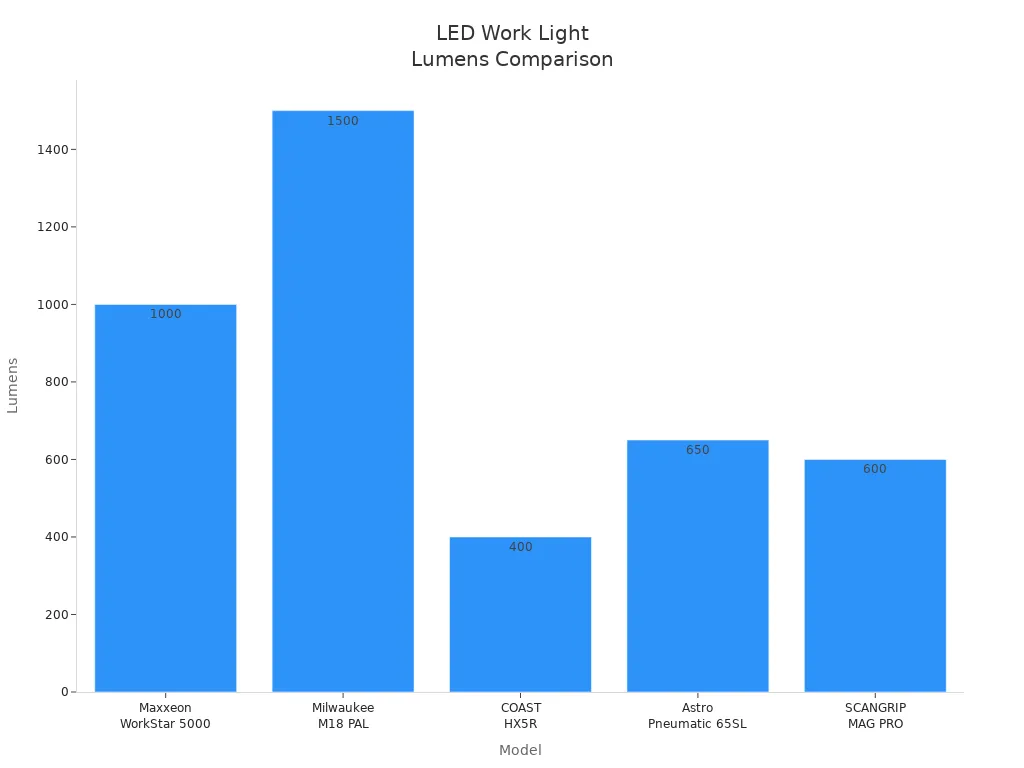
You get different features with each model. Some have magnetic bases, so you can stick them to metal parts. Others have slim designs to fit in small spaces. Mechanics like these lights because they last long and handle dust and water.
Best for Detailing
Detailing needs special lighting. You want to see every swirl and scratch on the paint. The best led lights for detailing meet these important criteria:
Criteria | Description |
|---|---|
Color Temperature | Around 5000K helps you see true colors and spot defects. |
Brightness | You can adjust the light for different paint colors. |
Durability | High IP ratings and strong materials keep your light working in tough spots. |
Build Quality | Good build means your light lasts longer and stays reliable. |
You should pick a light that lets you change the brightness. This helps you see both light and dark paint. A strong, well-built light will last through many detailing jobs. Mechanics who care about perfect results always use the right led lighting for this work.
Wholesale Flashlight Options
When you run a busy workshop, you need more than just one good light. You want every mechanic to have the right tool. That’s where a wholesale flashlight order makes sense. You get plenty of lights for everyone, and you save money at the same time.
Bulk Buying Tips
Buying flashlights in bulk can help your shop in many ways. Here’s why you might want to go for a wholesale flashlight order:
You get big cost savings. Suppliers give you volume discounts, so each flashlight costs less.
You always have enough flashlights on hand. No one has to wait or share when a job needs extra light.
You avoid running out. Stockouts slow down your work, but a wholesale flashlight order keeps your team ready.
You can mix and match models. Some jobs need a headlamp, while others need a handheld light.
Tip: Before you buy, check if the supplier offers a warranty or after-sales support. This helps if you ever need a replacement.
Choosing for Teams
Picking the right wholesale flashlight for your team takes a little planning. You want every mechanic to have a light that fits their job. Here’s a simple way to choose:
Check the power source. Decide if you want rechargeable flashlights or ones with regular batteries.
Look at brightness. Make sure the flashlight is bright enough for both quick checks and tough repairs.
Think about portability. The flashlight should fit in a pocket or clip onto a belt for easy carrying.
Factor | Why It Matters |
|---|---|
Power Source | Rechargeable saves money over time |
Brightness | Helps spot small details and problems |
Portability | Makes it easy to move around the shop |
When you order a wholesale flashlight for your team, you make sure everyone works faster and safer. You also keep your shop running smoothly, even during busy times.
Usage Tips
Safe Operation
You want to stay safe every time you use work lights in your shop. Good lighting helps you avoid mistakes and keeps you and your team out of danger. Here are some tips to help you use your lights safely:
Place your work lights where they shine directly on your task. This helps you see better and lowers the chance of missing something important.
Pick the right type of light for each job. Floodlights work well for big areas, while spotlights help you focus on small parts.
Use a led light with a strong, concentrated beam. This makes it easier to spot details, especially in dark corners.
Make sure your lights meet safety rules. Following OSHA guidelines keeps your workspace safe and helps you avoid accidents.
Check your lights often. Regular inspections help you catch problems before they cause trouble.
Use warning lights or flashing beacons if you work in busy areas. These lights help others see you and prevent accidents.
Tip: Mechanics who use proper lighting tools finish their repair jobs faster and with fewer errors.
Maintenance
Taking care of your lights means they last longer and work better. You don’t want your flashlight to fail in the middle of a job. Here’s a simple table to help you remember the best maintenance steps:
Maintenance Practice | Description |
|---|---|
Use the Correct Charger | Always use the charger from the manufacturer to avoid damage. |
Follow the Right Charging Cycle | Charge before the battery is empty and avoid full discharges. |
Store in a Cool, Dry Place | Keep your lights away from heat and moisture. |
Clean the Contacts Regularly | Wipe the terminals with rubbing alcohol once a month. |
Avoid Prolonged Inactivity | Partially charge and use your flashlight every few months. |
You help your team by keeping all lights in top shape. Mechanics who follow a good maintenance routine save money and avoid delays. When you take care of your gear, you always have the right light ready for any repair.
You want the best tools for your automotive jobs. Good lighting helps mechanics see every detail and stay safe. When you pick strong lights for your workshop, you work faster and make fewer mistakes. Mechanics should think about both their own needs and what the whole team uses. Try out new lights and upgrade your setup when you can.
FAQ
What type of flashlight works best for tight spaces?
You want a slim, handheld LED flashlight or a headlamp. These lights fit into small spots and help you see hidden parts. Many mechanics keep both in their toolbox for quick checks.
How do I know if a work light is durable enough?
Check for an IP65 or higher rating. Look for strong materials like aluminum or high-grade plastic. A durable light can handle drops, dust, and water in your automotive workshop.
Can I use rechargeable lights for all my jobs?
Yes, you can. Rechargeable lights save money and reduce waste. Most models last through long shifts. Just remember to charge them after each use so you never run out of power.
Why do mechanics prefer LED over halogen lights?
LED lights use less energy and stay cool. They last longer and give you bright, clear light. You also get more options for beam patterns and brightness settings.
How do I keep my work lights in good shape?
Wipe your lights clean after each job. Store them in a dry place. Charge rechargeable models before they run out. Check for damage often so your lights always work when you need them.
See Also
Finding Affordable, High-Quality Flashlights for Your Import Needs
Selecting Top Flashlights for Your Wholesale Buying Needs
Boost Your Brand with Customized Wholesale Flashlight Products
Comparing Quality and Prices of Wholesale Flashlights and Headlamps
A Complete Guide to Selecting Your Ideal Flashlight Supplier