Lithium Battery Shipping Regulations 2026: What Importers Must Know

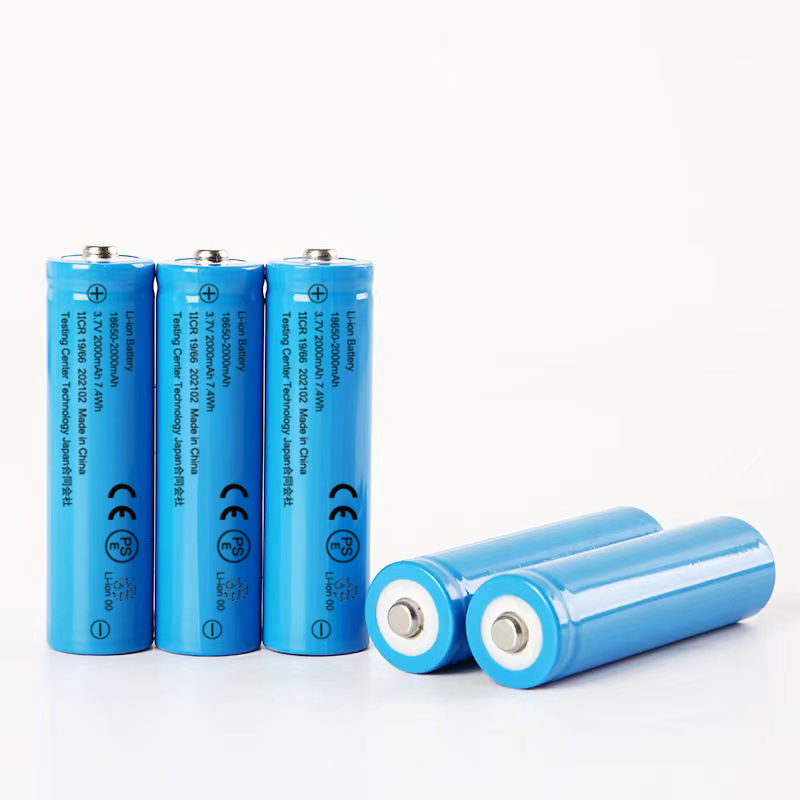
You face new lithium battery shipping rules in 2026. Authorities now limit batteries to a 30% charge for transit. As an importer, you must follow strict documentation and packaging steps from this lithium battery guide. Stay alert to global and U.S. updates to avoid costly shipment delays.
Key Takeaways
Starting January 1, 2026, lithium batteries must be shipped at or below a 30% charge to reduce fire risks. Always check and document the charge level before shipping.
Proper documentation is crucial. Include the UN38.3 Test Report, Material Safety Data Sheet (MSDS), and Safe Transport Certificate to avoid shipment delays.
Misclassifying lithium batteries can lead to costly fines and shipment rejections. Ensure accurate classification and follow packaging standards to protect your business.
2026 Lithium Battery Regulation Updates

Key Changes for Importers
You must understand the new lithium battery shipping regulations for 2026 to avoid compliance issues and shipment delays. The authorities now classify lithium batteries as Class 9 Dangerous Goods. This change requires you to use special labeling and follow strict packaging standards. You need to prepare mandatory documents, including the UN38.3 Test Report, Material Safety Data Sheet (MSDS), and Certificate for Safe Transport of Goods. The International Maritime Dangerous Goods (IMDG) Amendment 42-24 introduces new requirements for battery-powered vehicles and stricter transport rules starting January 1, 2026.
Key Change | Description |
|---|---|
Classification | Lithium batteries are now classified as Class 9 Dangerous Goods, requiring special labeling. |
Documentation | Mandatory documents include UN38.3 Test Report, MSDS, and Certificate for Safe Transport of Goods. |
IMDG Requirements | Starting Jan. 1, 2026, new IMDG Amendment 42-24 requires reclassification of certain battery-powered vehicles and compliance with stricter transport regulations. |
You face several challenges when adapting to these regulations. Frequent changes in packaging standards can confuse your staff. Inadequate employee training may lead to mishandling of dangerous goods. Misclassifying lithium-ion batteries can cause shipment delays and financial loss.
Neglecting regulations can lead to fines.
Poor packaging may result in damage and financial loss.
Insufficient documentation can delay shipments or lead to confiscation.
Regulatory authorities such as PHMSA in the United States enforce these rules. Inspections focus on lithium-ion and sodium-ion batteries, undeclared hazardous materials, and repeat violators. You must comply with UN Model Regulations and IATA Dangerous Goods Regulations. Enforcement policies act as de facto regulation, so you must follow existing standards.
Enforcement Mechanism | Description |
|---|---|
Regulatory Authorities | PHMSA in the United States applies inspection and enforcement policies. |
Compliance Standards | Emphasis on UN Model Regulations and IATA Dangerous Goods Regulations. |
Inspection Focus | Concentration on lithium-ion and sodium-ion batteries, undeclared hazardous materials, and repeat violators. |
Legal Implications | Enforcement policy acts as de facto regulation, requiring compliance with existing standards. |
30% Charge Restriction and Its Impact
The 2026 regulations introduce a strict 30% charge restriction for lithium-ion batteries during transit. You must ensure that batteries do not exceed this charge level before shipping. This requirement aims to reduce the risk of overheating, fire, and other hazards during transport. You need to verify the charge level and document it as part of your compliance process.
Tip: Always check the charge level of lithium-ion batteries before shipment. Use certified equipment to measure and record the charge percentage.
This restriction affects international trade. Export costs for Chinese manufacturers will rise due to reduced VAT rebates. Manufacturers will rush to export before rebates end, causing short-term supply constraints. Over time, these regulations will push manufacturers to build local production facilities in Europe and Southeast Asia. The global battery supply chain will shift from a China-centric model to a more regional structure.
You must adapt your shipping procedures to meet these regulatory requirements. Failure to comply with class 9 regulations can result in fines, shipment delays, or confiscation. You need to train your staff to handle lithium battery shipping according to the latest standards. Proper classification, packaging, and documentation help you avoid compliance issues and protect your business.
Lithium Battery Classification & Compliance
Types of Lithium-Ion Batteries
You must classify lithium-ion batteries correctly before shipping. Each type falls under a specific UN number, which determines how you pack and transport them. The table below shows the main categories you need to know for 2026 shipping regulations:
UN Number | Description | Example Product | Shipping Difficulty |
|---|---|---|---|
UN 3480 | Lithium Ion Batteries (Loose / Standalone) | Power Banks, 18650 Cells, Spare Battery Packs | High (Strict SOC limits & airline bans) |
UN 3481 | Packed WITH Equipment | Searchlight + Extra Spare Battery in same box | Medium |
UN 3481 | Contained IN Equipment | Rechargeable Fans, Camping Lights (Built-in) | Low (Most DP Light products fall here) |
You must identify whether your shipment contains loose lithium-ion batteries, batteries packed with equipment, or batteries contained in equipment. This step helps you avoid confusion and ensures you follow the right shipping rules.
Why Proper Classification Matters
Proper classification protects your business from costly mistakes. You must comply with the 30% state of charge rule for certain lithium battery shipments starting January 1, 2026. The table below highlights key compliance requirements:
Requirement | Description |
|---|---|
30% State of Charge (SoC) | Mandatory for certain lithium-ion battery classifications starting January 1, 2026. |
Misclassification Consequence | Can lead to cargo rejection and financial losses. |
Classification Test | Determines if the battery is packed with or contained in equipment, affecting SoC requirements. |
An electronics trader lost $45,000 on an e-bike shipment because the batteries shipped at 80% SoC instead of the required 30%.
You risk cargo rejection and financial loss if you misclassify lithium-ion batteries.
Always check the classification test to confirm the correct category.
Note: Accurate classification of lithium battery shipments helps you avoid penalties and keeps your supply chain running smoothly.
Required Documents to Ship Batteries
Shipping lithium batteries in 2026 requires you to prepare several key documents. Customs officials will check these documents closely. Missing or incorrect paperwork can cause delays or even shipment rejection. You must follow general lithium battery requirements and keep your battery guidance document up to date.
UN38.3 Test Report
You must include a un38.3 test report for every shipment. This report proves your batteries meet safety standards. Customs will expect the following details in your un38.3 test report:
Type of cell or battery (lithium-ion or lithium metal)
Mass and watt-hour rating or lithium content
Physical description and model numbers
List of tests conducted and results
Reference to assembled battery testing, if needed
Reference to the correct edition of the test manual
Signature, name, and title of the person responsible
The un38.3 summary must match the battery model you ship. Inconsistent information can lead to customs delays.
Material Safety Data Sheet (MSDS)
You must provide an MSDS for all compliant lithium battery shipments. Customs will check that your MSDS includes:
Requirement | Description |
|---|---|
State of Charge | Batteries must ship at 30% SoC or less. |
Documentation | All shipments need proper documentation, labeling, and handling. |
IMDG Reference | Section 14 must reference IMDG Code Amendment 42-24. |
Safe Transport Certificate & Other Documents
Customs require a Safe Transport Certificate. You must also include production and packaging dates, and the temperature of materials at packaging. All documents must be consistent. Discrepancies can cause customs to reject your shipment. Always follow general lithium battery requirements and keep your battery guidance document ready for inspection.
Tip: Use rigid, sealed packaging and label each package with the correct UN number, shipping name, and Class 9 hazard label. Customs will check these details.
Shipping Lithium-Ion Batteries: Methods & Rules
Air, Sea, and Road Transport
You must follow strict shipping regulations when shipping lithium-ion batteries by air, sea, or road. Each method has unique requirements. Air transport demands the highest safety standards. You need to keep the state of charge at or below 30% for standalone batteries. Damaged or recalled batteries are not allowed on planes. Ocean shipping offers more flexibility, but you still must use proper packaging and hazard labels. Road transport follows regional rules, often mirroring air and sea standards.
Requirement | Air (IATA/ICAO) | Ocean (IMDG) |
|---|---|---|
State of charge (SOC) | ≤ 30% SOC for standalone lithium-ion batteries | No SOC requirement |
Damaged or recalled batteries | Prohibited | Case-by-case basis |
Packaging | Inner + outer packaging, UN-certified | Inner + outer required, less restrictive |
Labels | Class 9 hazard label + lithium battery label | Class 9 hazard label required |
Documentation | Shipper’s Declaration for Dangerous Goods (DGD) | DGD required; other documents vary |
Tip: Always check the carrier’s guidelines before you ship batteries. This helps you avoid compliance issues and delays.
IMDG, DOT, and TDG Compliance
You must comply with international and national regulations for the transportation of lithium batteries. The IMDG Code governs ocean shipments. DOT rules apply in the United States. TDG covers Canada. Each set of regulations requires you to declare dangerous goods, use certified packaging, and label batteries correctly. You must train your staff to handle dangerous goods and keep records for every shipment.
Battery Type and Watt-Hour Rating
Battery transport requirements depend on battery type and watt-hour rating. You must classify batteries as dangerous goods if the watt-hour rating exceeds 100 Wh. Smaller batteries require proper packing and labels but do not need a dangerous goods declaration.
Watt-hour Rating | Classification | Requirements |
|---|---|---|
≤ 100 Wh | Not Dangerous Goods | Proper packing, labels, Section II/Excepted guidelines |
> 100 Wh | Dangerous Goods | DG declaration, special labels, certified packing, trained handling |
You must check the state of charge limit for each battery type. UN 3480 and UN 3481 require a 30% charge limit. UN 3556 batteries in vehicles need expanded packaging and documentation.
Note: Accurate classification and compliance with shipping lithium batteries rules protect your business from fines and shipment delays.
How to Safely Pack and Ship Batteries
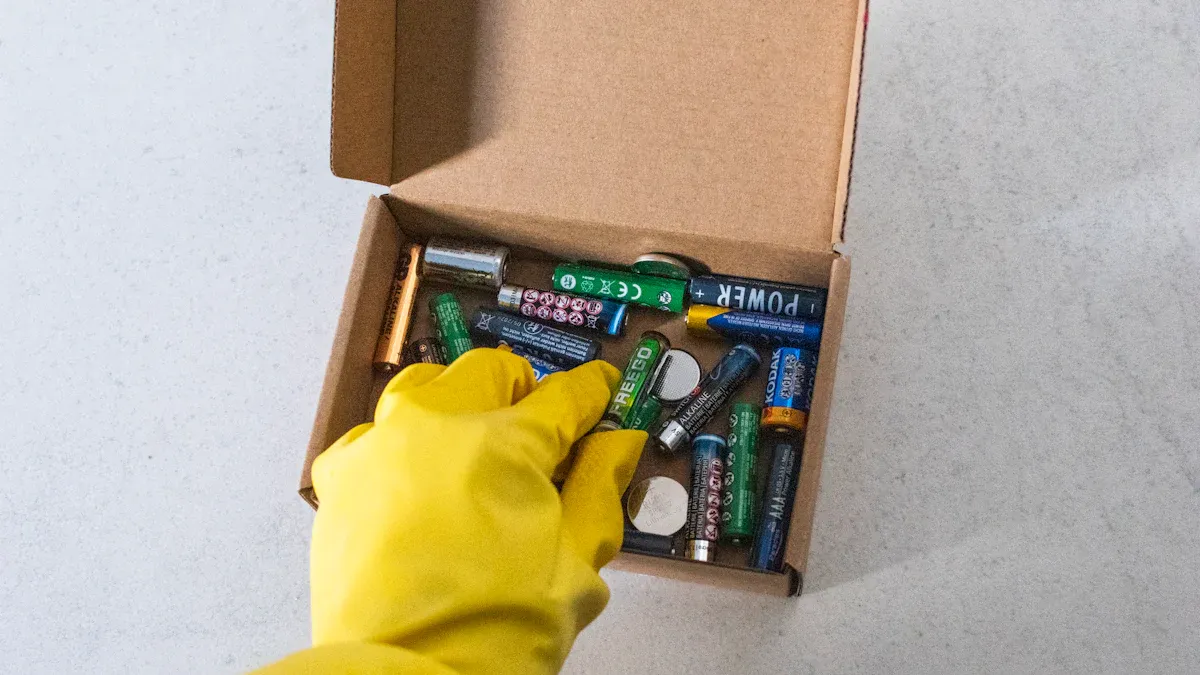
Packaging Standards for Lithium Batteries
You must follow strict packaging requirements to safely pack and ship batteries. Use rigid, sealed containers that prevent leaks and damage. Flimsy materials are not acceptable. Wrap each battery individually or cover terminals with non-conductive tape to prevent short circuits. Small button cell batteries need sturdy cardboard boxes for extra protection. Devices powered by lithium-ion batteries must be secured so they cannot turn on during transit. Always use packaging that meets UN Manual of Tests and Criteria standards. If you ship batteries with equipment, limit the number to what is necessary for operation plus two spare sets.
Labeling and Marking Requirements
Proper labeling is essential when you safely pack and ship batteries. Attach the UN number, shipping name, and Class 9 hazard label to every package. If you ship more than four cells or two batteries, add a lithium battery handling mark. For ground shipments, use a lithium battery mark that signals careful handling. Labels must be visible on the outside and meet size requirements—handling marks should be at least 100mm x 100mm with a red border. Class 9 labels must be diamond-shaped and 100mm on each side. Damaged or recalled batteries are not allowed unless you have approval.
Documentation Best Practices
You must prepare accurate documents to avoid shipment delays. Use inner packaging, such as fiberboard boxes, to prevent short circuits. Place inner packaging in strong outer containers for impact protection. Securely seal packages to contain possible spills. Display the Lithium Battery Mark and UN label on every package. For palletized cargo, attach an Overpack Label and an extra UN label to the outer wrapping. Include a Dangerous Goods Declaration, emergency response information, MSDS, transport document, pilot notification, packaging certifications, battery test summary, and exemption approvals. Avoid common mistakes like incorrect UN numbers, improper packaging, missing emergency contact info, labeling errors, and misclassification.
Mistake Type | Description |
|---|---|
Incorrect UN numbers | Using wrong UN numbers can lead to regulatory issues and shipment delays. |
Improper packaging | Failing to use approved containers or sufficient cushioning can result in damage and fire risks. |
Missing emergency contact info | Lack of emergency contact information can hinder response in case of incidents during transport. |
Labeling errors | Incorrect or missing labels prevent proper identification of hazards by transport workers. |
Misclassification of batteries | Misclassifying lithium batteries can lead to wrong packaging and regulatory violations. |
Tip: Double-check all packaging, labeling, and documents before shipping. This step helps you avoid penalties and keeps your supply chain moving.
Special Cases: Damaged or Used Lithium-Ion Batteries
Handling Damaged or End-of-Life Batteries
You must handle damaged or end-of-life batteries with extra care under the 2026 shipping regulations. These batteries pose higher risks of fire, leaks, or chemical exposure. The table below outlines the main requirements for shipping both intact end-of-life and damaged, defective, or recalled (DDR) batteries:
Requirement | Intact End-of-Life Batteries | Damaged, Defective, or Recalled (DDR) Batteries |
|---|---|---|
Packaging | Strong, rigid outer packaging with inner protection against short circuits. | UN-rated, specialized packaging that may require thermal barriers, absorbent material, or fire-suppressant features. |
State of Charge (SoC) | Often required to be at 30% SoC or lower, especially for air transport. | Must be discharged to the lowest possible level. |
Labeling | Class 9 Hazard Label and Lithium Battery Mark. | Class 9 Hazard Label, Lithium Battery Mark, and an explicit 'Damaged/Defective Lithium-Ion Batteries' mark. |
Documentation | Standard dangerous goods declaration. | Dangerous goods declaration with specific notation indicating the batteries are DDR. |
You must always discharge DDR batteries as much as possible and use packaging that prevents thermal events. Proper labeling and documentation help you avoid regulatory issues and keep your shipments safe.
Staff Training and Safety
You need to invest in lithium battery training for all employees who handle used or damaged batteries. This training covers the hazards of fire, explosion, and chemical exposure. Employees learn to classify batteries, select the right packaging, and apply correct labels. Training also teaches accurate completion of shipping papers and prepares staff for emergency response.
Understanding hazards and regulations
Classification and packaging techniques
Labeling and marking procedures
Documentation accuracy
Emergency response steps
You should implement guidance from safety manuals, review Safety Data Sheets, and develop standard operating procedures. Lithium battery training ensures your team can safely manage batteries and respond to incidents. Always inspect batteries before shipping and dispose of damaged units according to regulations.
Resources and Next Steps for Importers
Where to Find Official Guidance
You need reliable guidance to ship batteries safely and legally in 2026. Start with official sources that outline requirements for lithium battery shipments. These resources help you understand the rules for labeling, classification, and packaging. You can use the following table to identify the main categories and their descriptions:
Classification | Description |
|---|---|
UN 3480 | Lithium-ion batteries shipped on their own |
UN 3481 | Batteries packed with equipment |
UN 3556 | Lithium-ion battery-powered vehicles |
Special Provision 188 | Simplifies rules for smaller batteries |
Fully Regulated | Applies to batteries over 100 Wh |
You must follow proper labels, including the UN number and hazard label. For standalone batteries, shipping limits depend on watt-hours. Damaged or recalled batteries are not allowed in the mail. Guidance from the International Air Transport Association (IATA), International Maritime Dangerous Goods (IMDG) Code, and the U.S. Department of Transportation (DOT) provides up-to-date rules. You should also review the 30% Rule for charge limits and the 1000-Point Rule for small shipments. Specialized containers are required for damaged or defective batteries.
Tip: Always check the latest guidance from regulatory agencies before you ship batteries. This step helps you avoid mistakes and stay compliant.
Consulting Experts for Compliance
You can benefit from consulting compliance experts when you face complex lithium battery shipping scenarios. Experts help you interpret guidance and apply it to your unique situation. They offer tailored advice for your products, packaging, and routes. A dedicated consultation prevents costly mistakes and shipment delays. You gain peace of mind knowing your shipments meet all requirements.
Experts help you navigate changing regulations.
You receive guidance for special cases, such as new battery types or international routes.
Professional support reduces your risk of fines and rejected shipments.
You should build a relationship with a trusted compliance advisor. This partnership ensures you always have access to the latest guidance and best practices.
You must prioritize compliance with lithium battery shipping regulations in 2026. Review the table below for essential actions:
Compliance Action | Description |
|---|---|
Robust documentation capabilities | Maintain detailed records for all batteries shipped. |
Comprehensive supply chain mapping | Ensure transparency for lithium-ion batteries. |
Enroll in ongoing training programs.
Audit internal procedures regularly.
Consult regulatory resources for updated regulations.
FAQ
What is the 30% state of charge (SoC) rule for lithium batteries?
You must ship lithium-ion batteries at or below 30% SoC. This rule reduces fire risks during transport and applies to most air shipments.
Which documents do you need for lithium battery shipments in 2026?
UN38.3 Test Report
Material Safety Data Sheet (MSDS)
Safe Transport Certificate
How do you avoid shipment delays or penalties?
You should double-check packaging, labeling, and documents. Train your staff on current regulations. Use certified packaging and always verify the battery classification.
See Also
Discovering Trustworthy Wholesale Sources for Flashlight Chargers
Your 2024 Handbook for the Flashlight Industry in America
A Complete Guide to Wholesale LED Headlamp Suppliers