IPX8, Lumens, Beam Angles: What Diving Stores Should Know Before Sourcing Flashlights

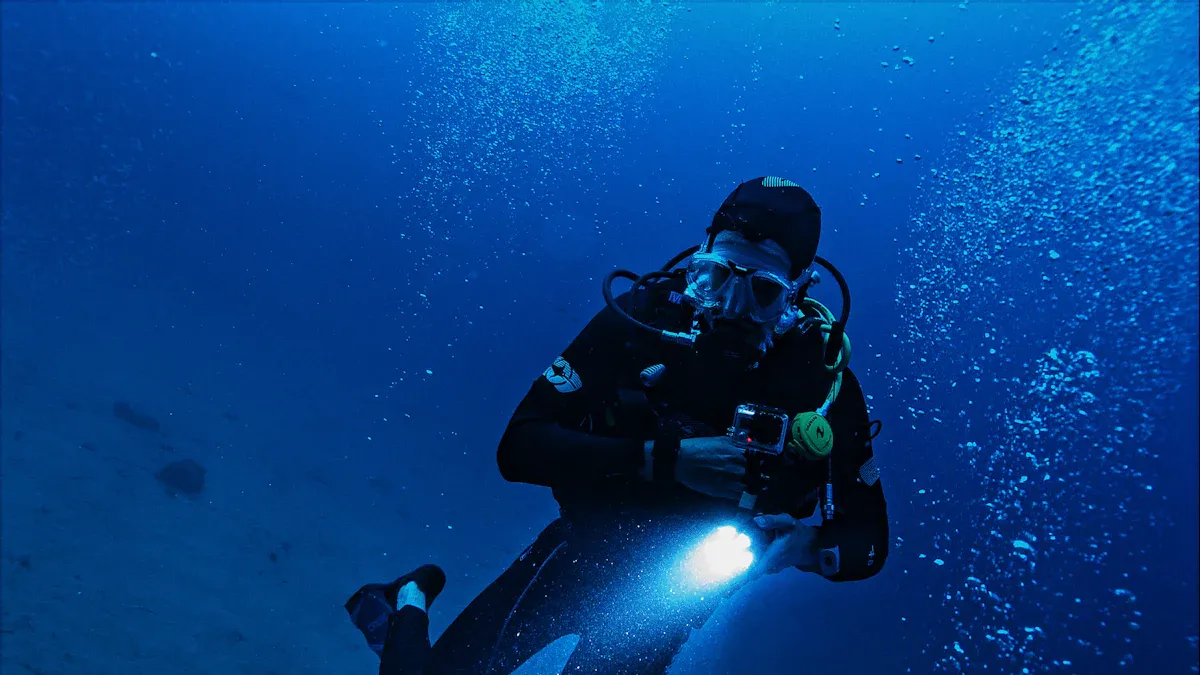
You need to prioritize safety, reliability, and performance when choosing flashlights for your customers. Focus on the IPX8 waterproof rating, proper lumen output, and the right beam angles. Your choices directly impact diver satisfaction and safety. For diving flashlight wholesale sourcing, understanding these specs helps you avoid costly mistakes.
Key Takeaways
Prioritize the IPX8 waterproof rating for diving flashlights. This ensures safety during deep-water activities and protects against water damage.
Match lumen output to diving conditions. Higher lumens improve visibility in dark or murky waters, enhancing diver safety and experience.
Choose flashlights with adjustable beam angles. This feature provides versatility for different diving scenarios, from navigation to underwater photography.
Key Specs for Diving Flashlights
Why Specs Matter
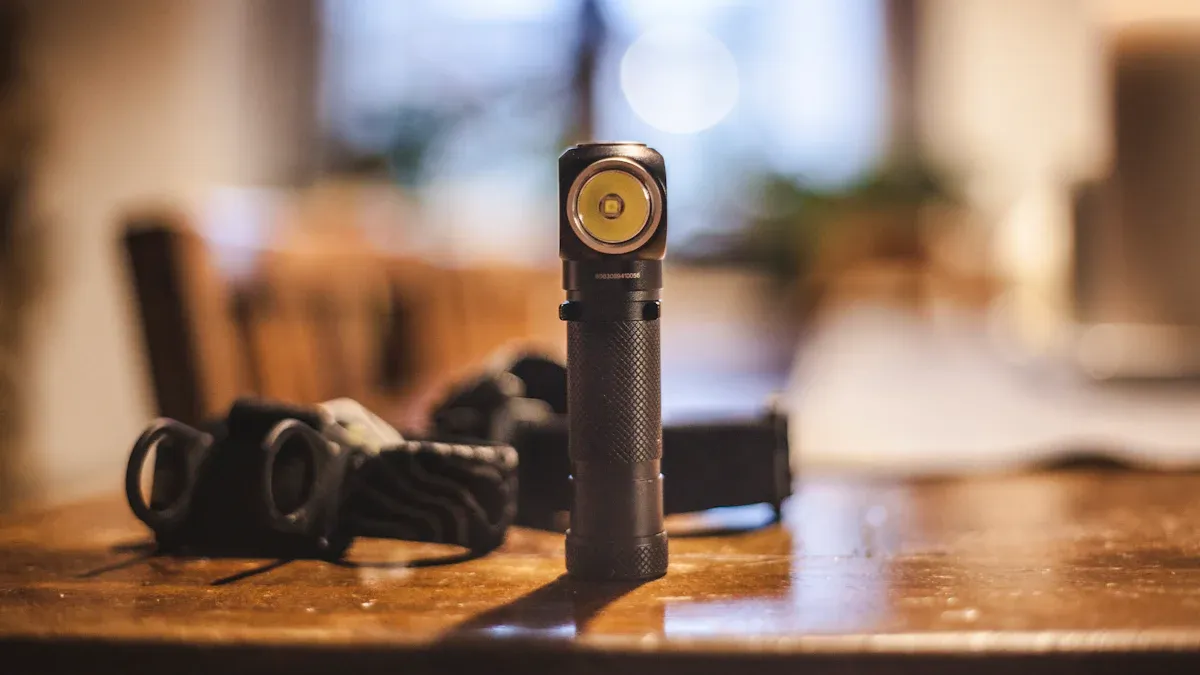
You must understand the technical specifications of diving flashlights before making any sourcing decisions. These specs determine how well a flashlight performs underwater and how safe it keeps your customers. Professional divers often request specific features that enhance their experience and safety. The following table highlights the most commonly requested specifications:
Specification | Description |
|---|---|
Types of Lights | Handheld and canister lights suit different diving needs. |
Burn Time | Longer burn times support technical and cave diving. |
Intensity | Higher lumens improve visibility in low-light conditions. |
Coverage | Lux rating shows how well the light illuminates an area. |
Beam Angle | Tight beams help with underwater communication in dark environments. |
Mounting Options | Goodman handles, hand straps, and helmet mounts affect usability. |
You should pay close attention to lumens, beam distance, durability, and runtime. These features directly impact diver safety and performance. The table below outlines how each spec contributes to a successful dive:
Feature | Description |
|---|---|
Lumens | 200+ lumens provide enhanced visibility underwater. |
Beam Distance | 80m beam distance ensures effective illumination. |
Durability | Heavy-duty, water-resistant designs withstand harsh conditions. |
Runtime | 3+ hours of runtime support extended dives. |
Additional | Adjustable beams and safety lights add versatility and utility. |
Tip: Always match flashlight specs to the type of diving your customers do. Night, cave, and wreck diving require higher intensity and longer runtime. General recreational diving may need lighter, more compact models.
Impact on Store Reputation
Your reputation depends on the quality and reliability of the products you offer. When you source flashlights with proven specs, you build trust with your customers. Divers expect consistent performance and safety from their gear. If you provide flashlights that fail underwater or lack essential features, you risk damaging your store’s credibility.
Many dive stores struggle to stand out because of inconsistent product quality and a lack of innovation. This leads to commoditization, where customers see little difference between brands. You can avoid this by focusing on quality assurance and offering flashlights with verified specs. Consider these points:
Stores that offer reliable, high-spec flashlights earn repeat business and positive reviews.
Differentiation becomes easier when you stock products with unique features, such as adjustable beams or extended runtime.
Consistent quality helps you avoid price wars and positions your store as a trusted source for diving gear.
Note: Product specs are not just technical details. They are your store’s promise of safety and performance. Make specs a central part of your sourcing strategy to strengthen your reputation and customer loyalty.
IPX8 Waterproof Rating Explained
What IPX8 Means (200m/20 ATM)
You need to understand the IPX8 rating before sourcing diving flashlights. Manufacturers design flashlights with this rating to withstand continuous immersion in water deeper than 1 meter for long periods. The exact depth and duration depend on the manufacturer, but many IPX8-rated flashlights can handle depths up to 200 meters (20 ATM). This level of waterproofing makes these flashlights suitable for demanding underwater activities.
You can recommend IPX8-rated flashlights for scuba diving.
These lights work well for underwater search and rescue.
Deep-water expeditions require this level of protection.
Tip: Always check the manufacturer’s specifications for maximum depth and duration. Not all IPX8 flashlights are equal.
Verifying IPX8 Claims
You must verify that a flashlight truly meets the IPX8 standard. Reliable suppliers use strict testing methods to confirm waterproof performance. The most common tests include:
Testing Method | Description |
|---|---|
Air Pressure Test | The sample goes into a test tank. Pressure is applied. Leaks show as bubbles. |
Negative Pressure Test | The sample is submerged. A vacuum is created. Escaping air bubbles reveal leaks. |
Ask your supplier for test reports or certifications. This step protects your store’s reputation and ensures customer safety.
Comparing Waterproof Ratings
You should compare IPX8 with other waterproof standards. IPX8 means the flashlight can be submerged beyond 1 meter for 30 minutes to several hours, depending on the product. IP68 also allows submersion beyond 1 meter and adds dust resistance. Lower ratings, like IPX7, only protect against temporary immersion. For diving, always choose IPX8 or higher to guarantee performance and safety.
Lumens and Brightness
Lumens for Diving
You must understand how lumen output affects underwater visibility. Lumens measure the total amount of light a flashlight emits. Higher lumens help you see farther and clearer, especially in dark or murky conditions. Professional divers often choose flashlights with intense illumination for deep or cave dives. Recreational divers prefer balanced output for general use. The table below shows recommended lumen ranges for different diving needs:
Lumen Range | Description |
|---|---|
Low Lumens (Up to 500) | Suitable for close-up tasks and as backup lights, ideal for illuminating small crevices. |
Medium Lumens (500-1000) | Balanced output for general-purpose diving, suitable for both daytime and nighttime dives. |
High Lumens (1000 and Above) | Intense illumination for deep, night, and cave dives, ideal for professional divers and photographers. |
Tip: Match the lumen output to the dive environment. Clear water needs less light, while murky or deep water requires higher lumens.
Balancing Brightness and Battery
You need to balance brightness with battery life. High lumen settings drain batteries faster, which can limit dive time. Lower settings extend battery life but may reduce visibility. The table below compares burn times for different power settings:
Power Setting | Burn Time (2.6 AmpH Battery) | Burn Time (5.2 AmpH Battery) |
|---|---|---|
High | ~2.5 hours | ~5 hours |
Low | ~5 hours | ~10 hours |
Some models, such as the Bigblue Dive Lights CB11000P, offer up to 11,000 lumens with 1.5 hours on high and 15 hours on low. The Light Cannon eLED L1 provides 2,100 lumens for 2 hours on high and 5.5 hours on low. You should consider these options for customers who need flexibility.
Best Lumen Range
You must select the optimal lumen range based on the type of diving. Recreational diving works best with 700–1,000 lumens. Cave and technical diving require more than 2,000 lumens. Night diving benefits from higher lumen output for maximum visibility. Use the following list to guide your sourcing:
Recreational Diving: 700–1,000 lumens
Cave/Technical Diving: 2,000+ lumens
Night Diving: High lumens recommended
Note: Always ask your customers about their typical dive conditions. This helps you recommend flashlights with the right brightness and battery life.
Beam Angles for Diving
Wide vs. Narrow Beams
You need to understand how beam angle affects underwater visibility. Wide and narrow beams each serve different purposes. The table below highlights the main advantages and disadvantages:
Beam Angle Type | Advantages | Disadvantages |
|---|---|---|
7 to 12 degrees | Greater distance and focused lighting; reduces reflection in silted water | Limited area coverage |
90 - 140 degrees | Illuminates large areas; ideal for photography and videography | Shorter distance; less effective in murky water |
A narrow beam helps you see farther and cut through particles. A wide beam covers more area, which is useful for group dives or capturing photos.
Choosing for Dive Conditions
You must match the beam angle to the dive environment. Consider these scenarios:
In open sea night navigation, a narrow beam (10°–20°) gives you long-range vision to spot obstacles.
When entering or leaving a port, a wide beam (40°–60°) lets you monitor your surroundings and see more at once.
Choosing the wrong beam angle can compromise safety. An overly wide beam may create a false sense of brightness, hiding obstacles in shallow water.
An overly narrow beam can leave blind spots, making it harder to spot hazards at your sides or below.
The table below shows recommended beam angles for different dive types:
Diving Type | Recommended Beam Angle | Notes |
|---|---|---|
Night Diving | 90 degrees | Focused beam for macro subjects |
Cave Diving | 90 degrees | Focused beam for macro subjects |
Underwater Photography | 120 degrees | Floodlight for wide-angle scenes |
Adjustable Beam Options
You can offer more versatility by stocking flashlights with adjustable beams. These models let divers switch between narrow and wide angles as needed. For example:
Product Name | Lumens | Beam Angle | Description |
|---|---|---|---|
1800-Lumen Adjustable Beam | 1800 | 7–37° | Bright and versatile for many underwater tasks |
Adjustable Beam 1300 Lumen Dive Light | 1300 | 7–37° | Engineered for diverse lighting needs |
XTAR D40 ZOOM 1600 lumens | 1600 | 4–77° | Seamless transition between focused and broad lighting |
Tip: Adjustable beam flashlights help you meet the needs of both recreational and professional divers with a single product.
Matching Specs to Dive Types
Night Diving
You must select flashlights with specific features for night diving. The following table highlights the most important specifications:
Specification | Importance |
|---|---|
Brightness | A lumen output of 500+ ensures effective illumination. |
Beam Type | A mix of wide and narrow beams provides versatility. |
Burn Time | Exceeding planned dive duration guarantees reliability. |
Backup Light | A reliable backup prevents safety risks if the primary light fails. |
Comfortable Grip | Ergonomic design supports ease of use during extended dives. |
Low Visibility Performance | Essential for navigating and observing in dark conditions. |
Tip: Always carry a backup light during night dives. This practice increases safety and builds trust with your customers.
Cave and Wreck Diving
You need flashlights that deliver concentrated beams for cave diving. This feature helps you navigate through dark passages and tight spaces. Wreck diving requires strong illumination to reveal intricate details of submerged structures. You can help divers appreciate historical artifacts and avoid hazards. In both cases, a durable flashlight with a focused beam improves safety and enhances the diving experience.
Murky Water
You should recommend powerful flashlights for murky water conditions. High lumen output penetrates reduced visibility and allows divers to spot marine life and obstacles. A narrow beam cuts through suspended particles, making navigation safer. You increase customer satisfaction by offering models designed for challenging environments.
Photography
Underwater photography demands specialized flashlight features. The table below outlines essential requirements:
Feature | Description |
|---|---|
Brightness | High lumens illuminate dark underwater scenes. |
Beam Control | Adjustable beams suit different photography needs. |
Color Tuning | Multi-spectrum lighting enhances color fidelity in photos. |
Rugged Design | Durable construction withstands harsh underwater conditions. |
Note: You improve photo quality and customer satisfaction by stocking flashlights with adjustable beams and color tuning options.
Sourcing and Wholesale Tips
Evaluating Diving Flashlight Wholesale Options
When you source diving flashlight wholesale, you must assess suppliers with a clear set of criteria. Reliable suppliers help you avoid costly mistakes and ensure your customers receive high-quality products. Use the following checklist to guide your evaluation:
Product Quality: Choose suppliers who offer flashlights that meet strict safety and performance standards. Durable and reliable products lead to satisfied customers and fewer returns.
Product Variety: Look for suppliers with a diverse range of flashlights. You need options for tactical, emergency, and everyday diving scenarios.
Pricing and Discounts: Compare wholesale pricing across multiple suppliers. Many offer volume discounts, which can improve your profit margins when you place larger orders.
Customization: Some suppliers allow you to customize branding, packaging, or design. Customization helps you create a unique product line and stand out in the market.
Shipping and Delivery: Reliable shipping is essential for bulk orders. Confirm that your supplier can deliver on time and uses secure packaging to prevent damage during transit.
Tip: Always request sample units before committing to a large diving flashlight wholesale order. Testing samples helps you verify quality and performance.
Supplier Quality Checks
You must perform thorough quality checks before finalizing any diving flashlight wholesale purchase. Quality assurance protects your reputation and ensures your customers receive safe, reliable gear. Use certifications and hands-on inspections to confirm product standards.
Certification | Purpose |
|---|---|
ANSI/NEMA FL1 | Assesses flashlight brightness and longevity. |
IEC 60529 (IP Code) | Evaluates protection against dust and water. |
CE Marking | Confirms compliance with EU safety regulations. |
UL Listing | Indicates safety testing by Underwriters Laboratories. |
You should look for flashlights that have passed ANSI/PLATO FL1 tests for durability. An IPX8 rating is crucial for diving, but you must verify that the supplier provides authentic test reports. Inspect each flashlight upon arrival. Check lens clarity, test all output modes above water, and examine O-rings for nicks or misalignment. Apply silicone lubricant before first use to maintain waterproof integrity.
Purchase only from authorized dealers or manufacturers to avoid counterfeit products.
Confirm voltage compatibility for chargers, especially when importing internationally.
Review customs regulations for lithium batteries to prevent shipping delays.
Note: Flashlights designed with impact-resistant materials and waterproof casings offer greater reliability. Explosion-proof technology and certifications such as UL 913, ATEX, and ANSI FL1 ensure safety in hazardous conditions.
Bulk Order Considerations
When you place a diving flashlight wholesale order, you must anticipate common issues that can affect product reliability and customer satisfaction. Water leakage remains a significant concern for diving flashlights. Poor material quality or design flaws, such as improper sealing, can lead to failures during dives. Flashlights with a single battery may not provide enough runtime for extended use.
To minimize risks, follow these steps:
Request sample units and test them in real-world conditions before placing a bulk order.
Inspect every flashlight upon arrival, focusing on waterproof seals and battery reliability.
Communicate your specifications clearly to the supplier, including required certifications and performance standards.
Match the specs of your wholesale order to your customers’ needs. Night divers require higher lumens and longer runtime, while recreational divers may prefer lighter models with adjustable beams.
Tip: Problems with specific brands, such as flooding due to design issues, have been reported. Always research supplier reputation and customer feedback before finalizing your diving flashlight wholesale order.
You must align your bulk purchasing strategy with the demands of your market. By sourcing flashlights that meet verified safety standards and match your customers’ diving environments, you build trust and encourage repeat business. Reliable diving flashlight wholesale sourcing sets your store apart and protects your reputation.
Other Buying Factors
Battery Life
You need to prioritize battery life when sourcing diving flashlights. Long battery life supports extended dives and reduces the risk of light failure underwater. Rechargeable Li-ion batteries offer the best performance and simplify logistics for your customers. Consistent lumen output throughout the battery cycle ensures reliable visibility. You should also look for models with effective thermal management. This feature prevents overheating and extends battery lifespan. Always check if the flashlight provides clear battery status indicators. These help divers plan their dives and avoid unexpected power loss.
Tip: Offer spare batteries or charging systems compatible with your main flashlight models. This adds value and convenience for your customers.
Durability
You must choose flashlights built to withstand harsh underwater conditions. Aircraft-grade aluminum housings provide excellent pressure resistance and durability. IPX8 or IP68 certification ensures the flashlight can handle deep immersion and keeps out dust. Switch reliability is essential, especially for divers who wear gloves. You should also consider models with CE marking or EN15112 certification. These certifications indicate compliance with strict safety standards.
Look for impact-resistant materials.
Check for robust O-rings and seals.
Test switches for smooth operation.
Note: Durable flashlights reduce maintenance costs and build trust with your customers.
Usability with Gear
You need to ensure that flashlights integrate seamlessly with standard diving gear. Key usability features include:
Mounting options for BCDs, cameras, or sidemount rigs
Reliable switches that work with gloves
Adjustable beam angles for different dive scenarios
Charging systems compatible with common equipment
Supplier responsiveness and access to spare parts also matter. Fast warranty claim processing minimizes downtime for your customers. By focusing on usability, you help divers enjoy safer and more efficient underwater experiences.
Match flashlight specs to your customers’ dive needs.
Verify IPX8 ratings and supplier quality.
Prioritize durability, battery life, and usability.
Use this guide as your sourcing checklist. Proper selection boosts safety, customer satisfaction, and your store’s reputation.
FAQ
What does IPX8 mean for diving flashlights?
IPX8 means your flashlight can handle continuous immersion deeper than 1 meter. You get reliable waterproof protection for scuba, cave, and wreck diving.
How many lumens do you need for night diving?
Dive Type | Recommended Lumens |
|---|---|
Night Diving | 700–2,000+ |
You should choose higher lumens for better visibility in dark water.
How do you verify supplier quality for wholesale orders?
Request product certifications.
Test sample units before bulk purchase.
Inspect waterproof seals and battery reliability.
You protect your store’s reputation by following these steps.
See Also
Understanding Lumens and Brightness When Selecting Flashlights
Comprehensive Wholesale Flashlight Guide: Brightness, Durability, and More
Benefits of XHP360 LED Flashlights for Bulk Buyers