Importing from China in 2025: Navigating Profitability Challenges

Is importing from China in 2025 still a good idea? Many businesses wonder this as trade rules keep changing. The tariffs from Trump's time, still in place, changed global trade.
US imports from China fell by 10% because of trade rules that doubled, making China sell more to other countries.
These rules caused big money losses:
Tariffs made $27 billion in export losses from 2018 to 2019.
Some industries gained $2.8 billion in production, but others lost $3.4 billion because of higher costs for materials.
These problems need smart plans to stay profitable in tricky trade times.
Key Takeaways
Keep up with tariff updates. In 2025, Chinese goods have a 28% tariff, raising costs for businesses and buyers.
Look for other sourcing choices. India and Mexico have good prices and faster shipping, making them good options besides China.
Make your supply chain better. Use smart inventory planning and technology to save money and improve service.
Build strong supplier connections. Talking well with suppliers can get you better deals and help during hard times.
Adjust fast to market changes. Watch world events and new trends to stay ahead and find new chances.
Tariff Policies and Their Impact on Importing from China
Current Tariff Rates and Changes in 2025
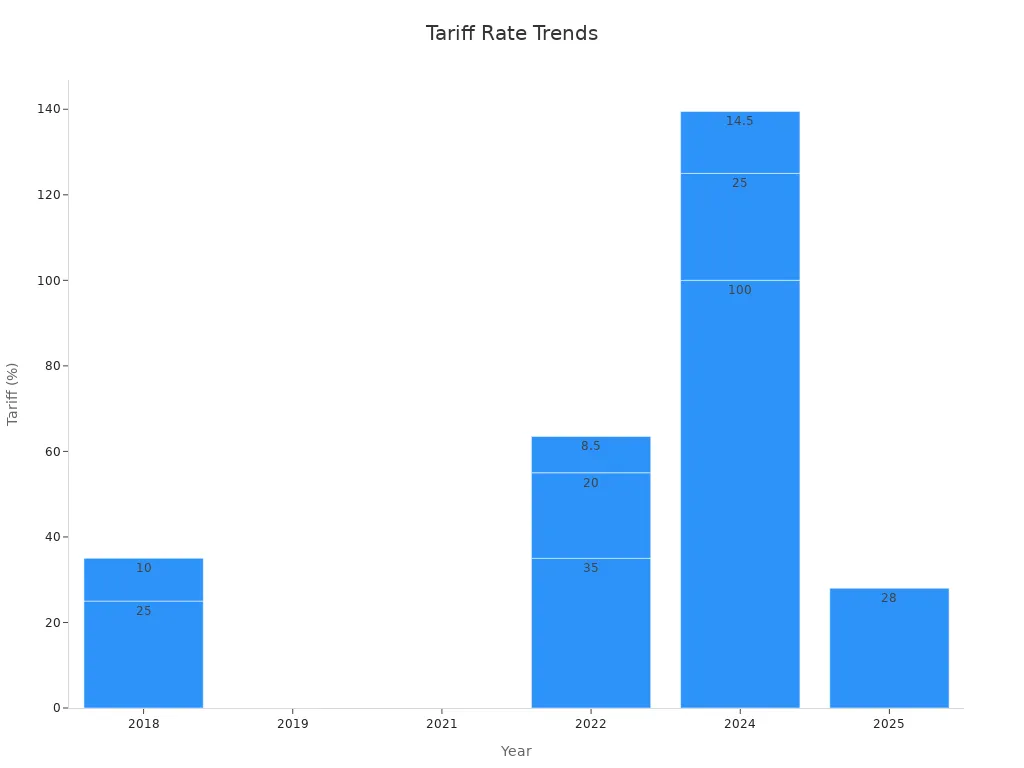
Tariffs have greatly affected imports from China. In 2025, the average tariff hit 28%, the highest in over 100 years. These tariffs continue the trade war started during Trump's presidency. Some tariffs, like 25% on steel and aluminum, stayed the same. Others, like the 100% tariff on electric cars added in 2024, made things harder for businesses.
The table below shows important tariff changes:
Year | Administration | Tariff Type | Rate (%) | Notes |
|---|---|---|---|---|
2018 | Trump | Steel | 25 | First time these tariffs were added. |
2018 | Trump | Aluminum | 10 | First time these tariffs were added. |
2024 | Biden | Electric Vehicles | 100 | A new tariff was introduced. |
2024 | Biden | Steel & Aluminum | 25 | Continued from earlier policies. |
2025 | Current | Average Tariff Rate | 28 | Highest rate in over 100 years. |
These tariffs raise costs for businesses and shoppers. If you import goods, stay updated on these changes. Adjust your plans to handle these challenges.
Sector-Specific Tariffs and Their Implications
Some tariffs target specific industries, making importing even harder. Sectors like cars, farming, and tech face unique problems. For example, carmakers pay a 25% tariff on imported vehicles, which raises costs. Farmers face China's retaliatory tariffs, cutting soybean exports by 47%. Tech companies deal with over $1 billion in extra costs and 27% longer supply chain delays.
Industry | Tariff Impact | Key Issues |
|---|---|---|
Manufacturing | $2,000 - $12,000 per vehicle | High costs from global supply chains |
Automotive | 25% on imported vehicles | Domestic assembly offers some relief |
Agriculture | 125% retaliatory tariffs from China | Soybean exports may drop by 47% |
Technology | Over $1 billion in additional costs | Supply chain delays up by 27% |
These tariffs force businesses to change how they work. If you're in one of these industries, look for new suppliers or renegotiate deals to lower costs.
Dropshipping Challenges Under High Tariffs
Dropshipping faces tough times with high tariffs. Higher tariffs mean suppliers charge more, raising product costs. This forces dropshippers to increase prices, making products less competitive. Stricter customs checks also slow deliveries, upsetting customers and hurting your business.
Here are the main problems dropshipping businesses face in 2025:
Higher product costs due to increased tariffs.
Smaller profits as you try to keep prices low.
Harder to profit from low-margin items like clothes or gadgets.
Slower shipping because of stricter customs rules.
Higher shipping fees as carriers adjust to new rules.
If you use dropshipping, you need to adapt fast. Try selling different products, improving your supply chain, or switching to a new business model to stay competitive.
Alternative Sourcing Strategies for Importers
Benefits of Sourcing from Other Asian Countries
Looking at other Asian countries can save money and spread risks. India is a great choice with many benefits.
India is second-best in flexibility, just behind China in 2024.
U.S. imports from India include many types of clothing.
About 60% of these clothes use cotton, much of it organic.
Over 45% of India's clothing is for luxury and premium brands.
More than 90% of India's textile materials come from within the country.
By choosing India or other Asian nations, you get variety and strong production. This helps you compete while depending less on China.
Nearshoring Opportunities in Mexico and Latin America
Nearshoring, or sourcing closer to home, is a smart option. Mexico is now a top U.S. trade partner. Trade between them has doubled in 15 years. This is due to shared manufacturing and global changes.
Mexico offers quicker deliveries and cheaper shipping than Asia. Being close to the U.S. also lowers risks from long-distance shipping. Latin America, like Colombia and Brazil, offers similar benefits.
If you want to save time and money, nearshoring in Mexico or Latin America can help your business grow.
Domestic Manufacturing as a Viable Option
Making products in the U.S. has some perks but isn’t for everyone. It cuts shipping costs and avoids tariffs, but there are issues.
Some businesses can’t find U.S. factories that work fast.
The U.S. doesn’t have enough skilled engineers for big projects.
Big brands like Apple and Nike still make goods overseas to save money.
For small businesses, U.S. manufacturing works for special or small orders. But for large-scale production, overseas options might still be cheaper.
Strategies to Handle Profitability Problems
Improving Supply Chains to Cut Costs
Fixing your supply chain can save money and work better. Many companies have done this and seen great results. For instance, Briggs & Stratton, a global company, saved over 15% on supply chain costs. They also improved service by 14% and cut warehouse costs by 6%. These changes show how smart planning can boost profits.
To improve your supply chain, focus on these areas:
Keep the right amount of stock to avoid waste.
Plan shipping better to save time and money.
Organize your network to make things run smoothly.
You can also try advanced ideas to stay ahead:
Let suppliers manage inventory to avoid running out.
Use smart tech like IoT for real-time updates.
Communicate well across teams to prevent delays.
Use AI tools to predict future needs.
Order the right amounts to save money.
Seeing the whole supply chain and planning for demand are key. These steps help you avoid delays, prepare for problems, and react quickly to changes.
Using Technology to Work Smarter
Technology is important for making supply chains better. Tools like AI and forecasting help businesses handle imports from China. Over half of companies now use AI to stop supply chain problems before they happen. This shows how tech helps businesses stay competitive.
Here’s how tech can help your business:
Technology | How It Helps |
|---|---|
Predictive Analytics | Helps plan better and manage stock. |
Machine Learning | Finds patterns and improves predictions. |
Demand Forecasting | Keeps stock levels right and lowers costs. |
Regression Analysis | Shows sales trends and outside factors. |
Using these tools can cut shipping delays and save money. For example, AI can look at past data to guess when demand will rise. This helps you avoid having too much or too little stock. It saves money and keeps customers happy.
Getting Better Deals with Suppliers
Talking well with suppliers helps you save money. Good relationships can get you lower prices, better payment plans, and good-quality products. One company saved money by using research during talks. Another big retailer used data to cut costs.
To get better deals, try these tips:
Study the market to know fair prices.
Build trust by focusing on long-term deals.
Use data to show where costs can drop.
Buy in bulk to get discounts.
Strong supplier ties also help during tough times. Reliable suppliers can adjust when problems happen, keeping your business steady. By using these ideas, you can handle tariffs and trade issues while protecting your profits.
Future Trends in U.S.-China Trade Relations
Predictions for Tariff Adjustments and Trade Policies
Tariffs on Chinese goods may stay at 30% through 2025. This high rate limits Chinese exports to the U.S., making importing harder. Experts disagree on future changes. Some think tariffs will drop below 30% soon, while others predict increases.
Three possible outcomes could affect trade policies:
Scenario Description | Implications |
|---|---|
Return to Trump 1.0 Policies: 25% Blanket Tariff | Trade stabilizes but tensions and deficits remain. |
Effective Embargo-Level Tariffs (145%–245%) | Companies may need to stop trading or change operations. |
Reduction to Presidential Campaign-Promised 60% Tariffs | Trade improves but costs and sales stay lower. |
Keep an eye on these changes. Adjust your pricing and sourcing plans to handle tariff shifts.
Geopolitical Factors Influencing Trade Dynamics
Geopolitical issues are changing U.S.-China trade. Tariff changes make trade deals uncertain and hurt dropshipping businesses. The move to bilateral trade systems replaces global agreements, reshaping trade rules.
Important factors include:
The U.S. aims to fix unfair trade practices.
Tariffs dropped from 145% to 30% on Chinese goods and from 125% to 10% on U.S. goods.
The U.S. depends less on China, lowering trade volumes.
These shifts show why finding new suppliers and markets is smart. Reducing reliance on China can protect your business.
Emerging Opportunities in the Chinese Market
Despite trade problems, China offers new chances for businesses. Tech like AI and IoT helps industries work faster and smarter. Eco-friendly products and recyclable materials are becoming popular.
Evidence Description | Key Points |
|---|---|
Technological advancements | AI and IoT improve efficiency and tracking. |
Demand for sustainable solutions | Green products are in high demand. |
Growth in industrial applications | Expanding uses drive market growth. |
Focus on these trends to enter growing markets. Offering eco-friendly and tech-driven solutions can help you succeed despite trade challenges.
Understanding tariffs, sourcing, and trade trends is key to profits. High tariffs, industry-specific issues, and supply chain problems are tough. But you can stay ahead by improving supply chains, using tech, and making better supplier deals.
Look at other places like India or Mexico for supplies. These areas are cheaper and deliver faster than China. Small businesses might also benefit from making products in the U.S.
Small companies in places like Indonesia succeed by finding unique markets. They also use smart marketing to stand out. You can do the same to grow your brand.
It’s important to adjust to changing trade rules. Watch for tariff updates and global events. Focus on green products and new tech to succeed in China.
Winning in 2025 means being creative, flexible, and ready for change.
FAQ
What is the average tariff rate on Chinese goods in 2025?
In 2025, the average tariff on Chinese goods is 28%. This is the highest in over 100 years. It raises costs for both businesses and shoppers.
How do tariffs impact small businesses importing from China?
Tariffs make imported goods more expensive. Small businesses find it hard to keep prices low. Profits shrink, so many look for other suppliers.
Can sourcing from other countries help avoid tariffs?
Yes, buying from places like India or Mexico avoids Chinese tariffs. These countries offer good prices and faster shipping, making them smart choices.
Are there advantages to making products in the U.S.?
Making goods in the U.S. skips tariffs and lowers shipping costs. It also speeds up delivery. But it’s costly for big production due to high wages and materials.
How can technology help with tariff problems?
Tech like AI helps improve supply chains. It cuts delays, manages stock better, and saves money. These tools help businesses adjust to tariff challenges quickly.
See Also
Exploring Upcoming Trends in Wholesale Buying and Selling
Effective Negotiation Techniques for Working with Wholesale Suppliers
Boosting Profits Through Outdoor Gear Wholesale Supply Tactics
Increasing Profits by Sourcing Flashlights from Wholesale Vendors