How Flashlight Suppliers Are Adapting to Growing Demand for Eco-Friendly Products

The world is embracing a greener future, and you are part of this transformation. The growing demand for eco-friendly products has reshaped industries, including flashlights. Consumers like you now prioritize sustainability and expect brands to follow suit. Did you know that 81% of people want companies to improve the environment? This shift has pushed flashlight suppliers to innovate with green solutions.
Manufacturers are now using sustainable materials like recycled plastics and bamboo-derived components. Rechargeable and solar-powered flashlights have become popular, reducing waste and conserving resources. The adoption of LED technology has also made flashlights more energy-efficient. These changes reflect how flashlight suppliers are adapting to growing demand for eco-friendly products.
Your choices matter. By supporting green initiatives, you encourage brands to prioritize sustainability. Together, we can illuminate a brighter, greener future.
Key Takeaways
People who care about the planet want eco-friendly flashlights. Their choices push companies to make greener products.
Flashlight makers now use materials like recycled plastic and bamboo. Buying these items helps cut down on trash and pollution.
Energy-saving designs, like LED lights and solar power, use less energy. Picking these flashlights saves money and helps the Earth.
Eco-friendly packaging is important to create less waste. Choose flashlights with green packaging to keep the planet clean.
Supporting eco-friendly brands helps them create better products. Together, we can make eco-friendly choices normal for everyone.
The Rise of Eco-Conscious Consumers
Shifting Preferences Towards Eco-Friendly Products
You are part of a growing movement of eco-conscious consumers reshaping the market. People like you are making environmentally conscious purchases, prioritizing products that align with green values. Over the past five years, online searches for sustainable goods have surged by 71%. This trend reflects a global shift in consumer demand for sustainability.
More than 60% of people in a McKinsey survey said they would pay extra for sustainable packaging. Gen Z leads the way, with 90% purchasing sustainable products in the last six months. These numbers highlight the rise of green purchase behavior across all age groups. In fact, 72% of consumers now buy more eco-friendly products than they did five years ago.
Your choices matter. When you choose sustainable products, you send a clear message to brands. You show them that sustainability and brand loyalty go hand in hand. This shift in preferences is not just about buying products; it’s about creating a greener future.
The Role of Social Responsibility in Consumer Choices
Social responsibility plays a key role in shaping sustainable consumer choices. You care about the environment and expect companies to do the same. A recent survey revealed that 81% of people want brands to be environmentally conscious in their advertising. This expectation drives companies to adopt green marketing strategies that align with your values.
Health and safety also influence your decisions. Nearly half of consumers consider these factors before making a purchase. Environmental impact ranks high too, with 37% factoring it into their choices. These priorities reflect a deeper connection between your values and your buying habits.
By supporting brands that embrace sustainability, you contribute to a larger cause. Your green purchase intentions inspire companies to innovate and adopt eco-friendly practices. Together, we can create a world where sustainability is the norm, not the exception.
Eco-Friendly Practices in Flashlight Manufacturing

Sustainable Materials in Flashlight Production
You can make a difference by choosing flashlights made from sustainable materials. Manufacturers are now embracing eco-friendly practices by using materials that reduce environmental impact. These include:
Recycled plastics, which give new life to old materials.
Bio-based polymers, derived from renewable resources.
Bamboo-derived components, a fast-growing and biodegradable option.
Aluminum, an infinitely recyclable material that minimizes waste.
Material | Description |
|---|---|
Biodegradable Plastics | Break down naturally, leaving no harmful residues, unlike traditional plastics that take centuries to decompose. |
Recycled Metals | Conserves natural resources and lowers energy use during production by reusing metals like aluminum and steel. |
These materials not only conserve resources but also reduce landfill waste and pollution. By supporting sustainable products, you help create a greener future.
Energy-Efficient Flashlight Designs
Energy-efficient designs are transforming the flashlight industry. LED technology has become a game-changer, using less energy while providing brighter and longer-lasting light. Rechargeable lithium-ion batteries further enhance sustainability by reducing waste and offering extended use.
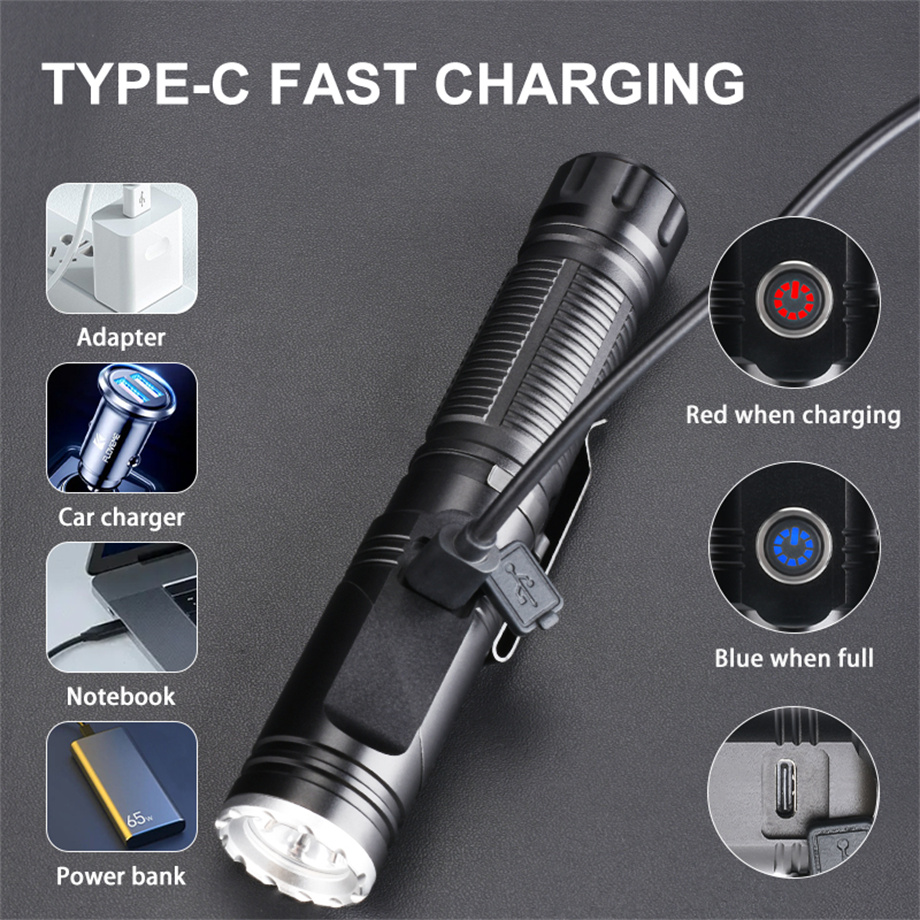
Modern flashlights now feature adjustable brightness settings, allowing you to customize energy use. Solar-powered models eliminate the need for disposable batteries, making them a green choice. Some even include Type-C charging for faster recharging and multi-functionality, such as emergency alarms or solar panels.
These innovations not only lower energy consumption but also extend the lifespan of flashlights. By choosing energy-efficient designs, you reduce your environmental impact while enjoying superior performance.
Eco-Friendly Packaging Solutions
Packaging plays a crucial role in reducing waste. Flashlight manufacturers are adopting sustainable packaging to minimize their environmental footprint. Many now use:
Recycled cardboard and biodegradable materials.
Mushroom packaging made from compostable mycelium.
Plant-based plastics and water-soluble packaging for single-use items.
Tip: Minimal and eco-friendly packaging not only reduces waste but also aligns with your green values.
By eliminating unnecessary packaging, companies are taking significant steps toward sustainability. When you choose products with sustainable packaging, you support these efforts and contribute to a cleaner planet.
Challenges in Building Sustainable Flashlight Supply Chains
Navigating Regulatory Requirements for Eco-Friendly Products
Building sustainable flashlight supply chains comes with its own set of challenges. Regulatory requirements play a significant role in shaping how manufacturers approach eco-friendly production. These regulations ensure that products meet environmental standards, but they also demand careful planning and execution.
You may not realize it, but directives like the Waste Electrical and Electronic Equipment (WEEE) and Restriction of Hazardous Substances (RoHS) are transforming the flashlight industry. These rules encourage manufacturers to design products that are easy to recycle and free from harmful materials. For example:
The WEEE directive pushes companies to create flashlights that can be disassembled and recycled efficiently.
The RoHS directive limits the use of hazardous substances, promoting safer and greener materials.
However, meeting these standards isn’t always straightforward. Manufacturers must navigate varying safety regulations across regions, which can complicate material sourcing and production. Early compliance with these rules, though, can boost consumer trust and open doors to international markets. By supporting brands that prioritize compliance, you help drive the adoption of sustainable practices.
Challenge | Description |
|---|---|
Regulatory Compliance | Adhering to varying regional safety standards. |
Material Selection | Ensuring materials are durable and environmentally safe. |
Design Constraints | Balancing performance with energy and thermal limitations. |
Balancing Costs and Sustainability in Production
Sustainability often comes with a price tag. Flashlight manufacturers face the challenge of balancing production costs with eco-friendly goals. You might wonder how they manage this. The answer lies in innovative strategies that reduce costs while maintaining green practices.
Circular economy practices are one such solution. By recycling components and designing flashlights for longevity, companies can cut operational costs by up to 20%. Advanced technologies also improve supply chain visibility, helping manufacturers optimize processes and reduce waste.
Strategy | Impact |
|---|---|
Circular economy models | Reduce operational costs by up to 20%. |
Advanced technologies | Improve supply chain visibility by 35%. |
Sustainable sourcing | Boost brand loyalty by 30%. |
Adopting renewable energy sources and energy-efficient manufacturing processes further reduces costs over time. While the initial investment in sustainable materials and technologies may seem high, the long-term savings are significant. Reduced utility bills, fewer penalties for non-compliance, and increased market share make these efforts worthwhile.
Your support for sustainable flashlight supply chains encourages companies to continue innovating. Together, we can create a future where green practices are the norm, not the exception.
Case Studies of Eco-Friendly Innovations
Leading Companies Adopting Sustainable Practices
You inspire companies to innovate with your demand for green products. Many flashlight manufacturers are leading the way by adopting sustainable practices that align with your values. These companies are setting benchmarks in sustainability:
BioLite uses recycled plastics and metals in its designs, reducing waste and conserving natural resources.
MPOWERD specializes in renewable energy-powered flashlights, like the solar-powered Luci series, which eliminates the need for disposable batteries.
One manufacturer has embraced 100% recycled aluminum for flashlight casings, cutting waste and conserving resources.
Another company operates solar-powered production facilities, significantly reducing carbon emissions.
These efforts showcase how innovation and sustainability can go hand in hand. By choosing products from these companies, you support a greener future and encourage others to follow their lead.
Lessons from Successful Eco-Friendly Flashlight Initiatives
The success of eco-friendly flashlight initiatives offers valuable lessons for the industry. Manufacturers have learned that using sustainable materials and energy-efficient designs not only benefits the planet but also meets your expectations as a consumer. For example, many companies now use recycled metals and biodegradable plastics to create durable and eco-friendly flashlights.
Consumer demand plays a powerful role in driving these changes. Your preference for green products motivates manufacturers to adopt sustainable practices across their product lines. Workshops and online resources also help spread awareness about the benefits of eco-friendly flashlights, empowering you to make informed choices.
Certifications like UL, eco-INSTITUT, and GreenGuard further ensure that products meet high standards for safety, quality, and environmental impact. These certifications verify low emissions, energy efficiency, and the use of non-toxic materials. Western European manufacturers have set an example by using 100% recycled aluminum and solar-powered production facilities, proving that sustainability and innovation can coexist.
Your support for these initiatives creates a ripple effect. It encourages more companies to prioritize sustainability, leading to a greener and more responsible flashlight industry.
Flashlight suppliers are transforming their practices to meet your demand for eco-friendly solutions. They are using sustainable materials, designing energy-efficient products, and adopting green packaging. These efforts reflect their commitment to reducing ecological footprints and aligning with your values.
Continued innovation is essential for sustainability. It drives the use of recycled plastics and bio-based polymers, enhances product efficiency, and meets your expectations for green products. Your choices play a powerful role in this transformation. When you prioritize sustainability, you inspire manufacturers to innovate and adopt greener practices.
You have the power to shape the future. By supporting sustainable flashlights, you encourage the industry to embrace green practices and create a brighter, greener world. Together, we can make sustainability the standard, not the exception.
FAQ
What makes a flashlight eco-friendly?
An eco-friendly flashlight uses sustainable materials, energy-efficient designs, and green packaging. These features reduce waste and conserve resources. By choosing such products, you help protect the environment while enjoying durable and reliable lighting solutions.
Are rechargeable flashlights better for the environment?
Yes! Rechargeable flashlights eliminate the need for disposable batteries, which often end up in landfills. They use less energy and last longer. This makes them a green choice for anyone looking to reduce their environmental impact.
How can I identify sustainable flashlight brands?
Look for certifications like GreenGuard or eco-INSTITUT. Check if the brand uses recycled materials or renewable energy in production. Many companies highlight their green initiatives on their websites, making it easier for you to make informed choices.
Do eco-friendly flashlights cost more?
Initially, they might. However, their durability and energy efficiency save you money over time. By investing in green products, you not only reduce costs but also contribute to a healthier planet.
Why is green packaging important for flashlights?
Green packaging minimizes waste and reduces pollution. Materials like recycled cardboard or biodegradable plastics decompose naturally, leaving no harmful residues. Choosing products with sustainable packaging supports a cleaner and greener future.
See Also
Essential Factors to Consider When Choosing Flashlight Suppliers
Boosting Revenue by Sourcing Flashlights from Wholesale Vendors
Selecting Top Quality Flashlights for Wholesale Buying