Innovative Flashlight Manufacturing Techniques Emerging in Western Europe


The flashlight industry in Western Europe is undergoing a remarkable transformation. You can see how innovative flashlight manufacturing techniques emerging in Western Europe are reshaping the market. Advancements in LED technology and a growing focus on sustainability are driving this change. For example:
The flashlight market in Western Europe is expected to grow at a CAGR of 6.43% from 2024 to 2031.
Countries like France are leading this growth due to technological innovation and shifting consumer preferences.
Sustainability also plays a key role. The European Green Deal promotes cleaner energy, influencing the future of flashlight technology and consumer choices.
Key Takeaways
Western Europe is creating new flashlights using better LED technology.
They use eco-friendly materials like biodegradable plastics and recycled metals.
These materials help protect the environment during flashlight production.
Flashlights now have modular designs, making them easy to fix or change.
This helps reduce waste and makes them more sustainable.
Smart features like Bluetooth and motion sensors make flashlights more useful.
Energy-saving manufacturing methods lower costs and improve product quality.
These methods are good for both people and the planet.
Current Trends in Flashlight Technology
Advancements in LED and Solid-State Lighting
High-efficiency LEDs for enhanced brightness and longevity
You’ve likely noticed how LEDs have revolutionized flashlights. Recent advancements in LED technology have improved their design, efficiency, and applications. Modern LEDs now offer enhanced brightness with a wider color range and better color stability. For example, LED streetlights can achieve outputs of 80 lumens per watt, significantly reducing maintenance costs. These high-efficiency LEDs also last longer, making them a reliable choice for both everyday and professional use.
Solid-state lighting for improved durability and energy efficiency
Solid-state lighting has become a game-changer in flashlight technology. Unlike traditional bulbs, solid-state lighting uses semiconductors to produce light, which makes it more durable and energy-efficient. This technology reduces energy consumption while providing consistent performance. You’ll find that flashlights with solid-state lighting are better equipped to handle rough conditions, making them ideal for outdoor adventures or emergency situations.
Sustainable Power and Energy Solutions
Rechargeable batteries and solar-powered flashlights
Rechargeable batteries have become a cornerstone of sustainable power solutions in flashlights. They reduce waste and lower pollution by minimizing the need for disposable batteries. Solar-powered flashlights take this a step further by harnessing energy from the sun. These flashlights provide a renewable energy solution, reducing reliance on non-renewable sources. They also eliminate ongoing operational costs, making them a practical choice for off-grid areas.
Energy harvesting and self-sustaining flashlight technology
Energy harvesting is another exciting development in flashlight technology. This innovation allows flashlights to generate power through motion or heat, creating self-sustaining devices. These flashlights not only reduce environmental impact but also ensure you always have a reliable light source, even in remote locations.
Smart and Advanced Features
Integration of Bluetooth, motion sensors, and adaptive lighting
Smart flashlights now come with features like Bluetooth connectivity, motion sensors, and adaptive lighting. Bluetooth allows you to control brightness levels and switch modes remotely. Motion sensors enhance usability by automatically adjusting the light based on movement. Adaptive lighting ensures optimal brightness for different environments, improving your overall experience.
Waterproofing, impact resistance, and advanced durability
Modern flashlights are designed to withstand harsh conditions. Waterproofing and impact resistance make them suitable for outdoor use, while advanced durability ensures they last longer. These features provide peace of mind, knowing your flashlight can handle tough situations without failing.
Innovative Flashlight Manufacturing Techniques
Eco-Friendly and Sustainable Materials
Use of biodegradable plastics and recycled metals
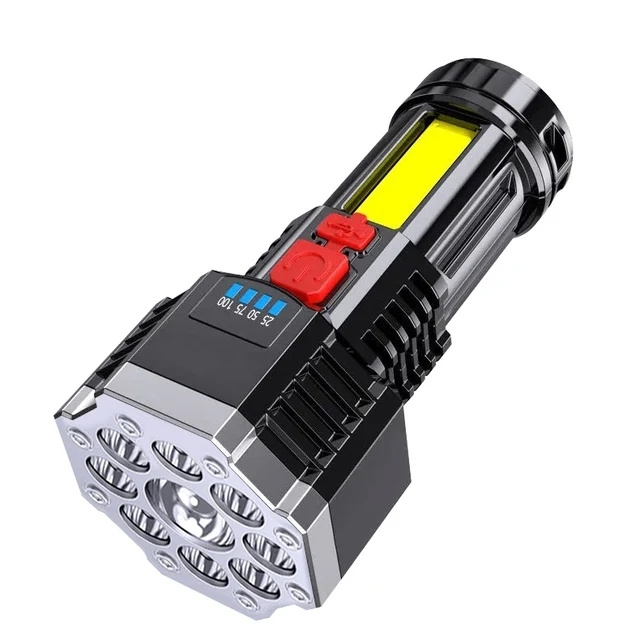
You might not realize it, but the materials used in flashlight manufacturing have a significant impact on the environment. Manufacturers are now turning to sustainable materials to reduce their ecological footprint. These include biodegradable plastics, which break down naturally over time, and recycled metals like aluminum, which minimize the need for new raw materials. Other eco-friendly solutions include bio-based polymers and bamboo-derived components. These materials not only support sustainability practices but also maintain the durability and performance you expect from modern flashlights.
Non-toxic coatings and finishes for safer production
Non-toxic coatings and finishes are becoming a standard in flashlight manufacturing. These coatings ensure that the production process is safer for workers and the environment. By eliminating harmful chemicals, manufacturers can adhere to sustainable practices while delivering high-quality products. You benefit from flashlights that are not only safe to use but also produced with minimal environmental harm.
Modular and Customizable Designs
Interchangeable components for user flexibility
Imagine owning a flashlight that adapts to your needs. Modular designs make this possible by offering interchangeable components. You can swap out parts like lenses, batteries, or even light sources to customize your flashlight. This innovation enhances user flexibility and ensures your flashlight remains functional for various tasks.
Simplified repair and upgrade processes
Modular designs also simplify repair and upgrade processes. Instead of discarding an entire flashlight, you can replace or upgrade specific components. This approach supports sustainability practices by reducing waste and extending the lifespan of your flashlight. It’s a win-win for you and the environment.
Energy-Efficient and Green Manufacturing Processes
Adoption of green manufacturing practices
Flashlight manufacturing is embracing energy-efficient production methods to combat climate change. Companies now conduct energy audits to identify waste and invest in energy-efficient technology to lower energy consumption. Some manufacturers even switch to renewable energy sources like solar or wind power. These steps not only reduce carbon emissions but also promote sustainability in the industry.
Minimizing waste and optimizing resource use
Minimizing waste is another key aspect of energy-efficient production. Manufacturers implement energy management systems to monitor and optimize resource use in real time. Practices like turning off unused machinery further enhance efficiency. These efforts ensure that flashlight manufacturing aligns with eco-friendly solutions, benefiting both the planet and consumers like you.
Role of Technology in Flashlight Manufacturing
Artificial Intelligence and Automation
AI-driven quality control and predictive maintenance
Artificial intelligence (AI) is transforming flashlight manufacturing by improving quality control and maintenance processes. AI systems analyze production line images to detect defects like scratches or dents faster and more accurately than human inspectors. These systems also monitor manufacturing processes in real time, ensuring immediate detection and correction of quality deviations. Predictive maintenance is another significant application. By analyzing historical data, AI predicts equipment failures, helping you prevent unexpected downtimes. Additionally, AI identifies anomalies in production processes, triggering alerts for further investigation. This data-driven approach ensures consistent quality and enhances decision-making for process improvements.
Robotics for precision and efficiency in assembly lines
Robotics plays a crucial role in modern flashlight manufacturing. Robots handle repetitive tasks with precision, reducing errors and increasing efficiency. They assemble components with accuracy, ensuring each flashlight meets high-quality standards. Automation also speeds up production, allowing manufacturers to meet growing demand without compromising quality. By integrating robotics, manufacturers can optimize resources and maintain a competitive edge in the industry.
Integrated Photonics and Sensor Technologies
Enhancing flashlight performance with light manipulation on a chip
Integrated photonics is revolutionizing the future of flashlight technology. This innovation uses light manipulation on a chip to enhance flashlight performance. It allows for more compact designs without sacrificing brightness or efficiency. You benefit from flashlights that are lightweight, portable, and powerful, making them ideal for various applications.
Integrated sensors for connected and digital manufacturing
Integrated sensors are transforming flashlight manufacturing processes. These sensors monitor equipment performance and detect issues early, ensuring consistent quality. They also track environmental factors like temperature and humidity, reducing waste and improving efficiency. By incorporating smart sensors, manufacturers create a more sustainable and connected production process.
Flashlight Supply Chain Management
Real-time tracking and inventory optimization
Real-time tracking is essential for effective flashlight supply chain management. IoT devices provide live updates on shipment locations and conditions, ensuring timely deliveries. Sensors in warehouses maintain optimal conditions, preserving product quality and minimizing losses. Cloud-based solutions centralize supply chain data, improving visibility and decision-making. These practices streamline operations and enhance overall efficiency.
Reducing lead times and improving distribution efficiency
Reducing lead times is critical for efficient flashlight supply chain management. Manufacturers improve production planning and scheduling to avoid delays. Lean manufacturing principles eliminate waste, while automation enhances efficiency. Just-in-Time inventory management minimizes stock costs, and strong supplier relationships ensure timely raw material deliveries. Real-time data monitoring identifies bottlenecks, helping you address delays and optimize distribution.
Tip: Embracing advanced technologies like AI, robotics, and IoT not only improves manufacturing efficiency but also ensures you receive high-quality flashlights faster.
Impact of Environmental Regulations on Flashlight Manufacturing
Compliance with European Union Standards
Adhering to RoHS and REACH directives
You may already know that European Union regulations like RoHS and REACH significantly impact flashlight manufacturing. RoHS restricts the use of hazardous materials in electronic devices, ensuring environmental protection. REACH focuses on identifying and managing Substances of Very High Concern (SVHCs) in supply chains. Manufacturers must test every component, even down to the material level, to meet these standards. This ensures that flashlights are safe for both users and the environment. However, adapting to constant updates in these directives can be challenging, especially for smaller companies.
Meeting energy efficiency and sustainability targets
The Eco-Design Directive and the European Green Deal push manufacturers to meet energy efficiency standards and reduce carbon emissions. These regulations encourage you to choose flashlights designed for lower energy use. Manufacturers must redesign products to align with these goals, promoting sustainability and reducing carbon footprints. By complying with these standards, companies contribute to a greener future while maintaining high-quality production.
Challenges and Opportunities
Balancing innovation with regulatory compliance
Balancing innovation with regulatory compliance presents unique challenges. For example, manufacturers must adhere to varying regional safety standards while ensuring materials are durable and environmentally safe. The table below highlights some of these challenges:
Challenge | Description |
|---|---|
Adhering to varying regional safety standards. | |
Material Selection | Ensuring materials are durable and eco-friendly. |
Design Constraints | Balancing performance with energy limitations. |
Cost | Managing high material costs and testing needs. |
Despite these hurdles, continuous improvement through innovation allows manufacturers to create better products while meeting regulations.
Costs and benefits of transitioning to eco-friendly practices
Transitioning to sustainable practices involves upfront costs, such as investing in recyclable designs and energy-efficient processes. However, these changes reduce waste and energy consumption, lowering long-term expenses. Manufacturers also gain a competitive edge by appealing to environmentally conscious consumers. For you, this means access to high-quality, eco-friendly flashlights.
Strategies for Sustainable Manufacturing
Partnering with green suppliers and adopting circular economy models
Partnering with eco-friendly suppliers strengthens the supply chain and enhances product quality. These collaborations reduce emissions and promote transparency. Manufacturers also adopt circular economy practices, such as recycling materials from old flashlights. This reduces waste and conserves energy, benefiting both the environment and consumers. Circular economy practices also lower production costs, making flashlights more affordable for you.
Investing in R&D for long-term sustainability
Research and development play a crucial role in sustainable flashlight manufacturing. Companies invest in innovative technologies to create energy-efficient designs and reduce environmental impact. These efforts not only improve product performance but also align with sustainability goals. By supporting these advancements, you contribute to a future where sustainable practices become the norm.
The flashlight industry in Western Europe is evolving rapidly, driven by groundbreaking manufacturing techniques. You’ve seen how eco-friendly materials, modular designs, and energy-efficient processes are reshaping the market. These innovations not only enhance product performance but also align with sustainability goals.
Smart technology and advanced manufacturing processes play a crucial role in this transformation. Features like AI-driven quality control and integrated sensors ensure high-quality products while reducing environmental impact.
🌟 Takeaway: Embracing these innovations gives manufacturers a competitive edge. As a consumer or industry stakeholder, supporting sustainable practices helps shape a brighter, greener future.
FAQ
What makes Western Europe a leader in flashlight innovation?
Western Europe excels due to its focus on sustainability, advanced technology, and strict environmental regulations. Countries like France and Germany invest heavily in research and development, ensuring cutting-edge designs and eco-friendly manufacturing processes. These efforts set a global standard for flashlight production.
How do modular flashlight designs benefit you?
Modular designs let you customize and repair flashlights easily. You can replace parts like batteries or lenses without discarding the entire device. This approach reduces waste, saves money, and ensures your flashlight adapts to various needs, whether for outdoor adventures or emergencies.
Why are eco-friendly materials important in flashlight manufacturing?
Eco-friendly materials, like biodegradable plastics and recycled metals, reduce environmental harm. They minimize waste and lower carbon footprints during production. By choosing flashlights made with these materials, you support sustainable practices and contribute to a healthier planet.
How does AI improve flashlight manufacturing?
AI enhances quality control by detecting defects faster and more accurately than humans. It predicts equipment failures, preventing production delays. These technologies ensure you receive high-quality flashlights while manufacturers optimize efficiency and reduce waste.
Are solar-powered flashlights reliable?
Yes, solar-powered flashlights provide a renewable energy solution. They store energy from sunlight, ensuring consistent performance even in remote areas. These flashlights eliminate the need for disposable batteries, making them both cost-effective and environmentally friendly.
🌟 Tip: Look for flashlights with modular designs and eco-friendly materials for a sustainable and long-lasting choice.
See Also
Understanding LED Technology and Flashlight Manufacturing Techniques
A Comprehensive Overview of Flashlight Production in China
Important Factors and Trends When Choosing Flashlight Suppliers
Exploring the Intriguing Aspects of Flashlight Manufacturing