Emergency Response Flashlights: The Backbone of Disaster and First-Aid Readiness

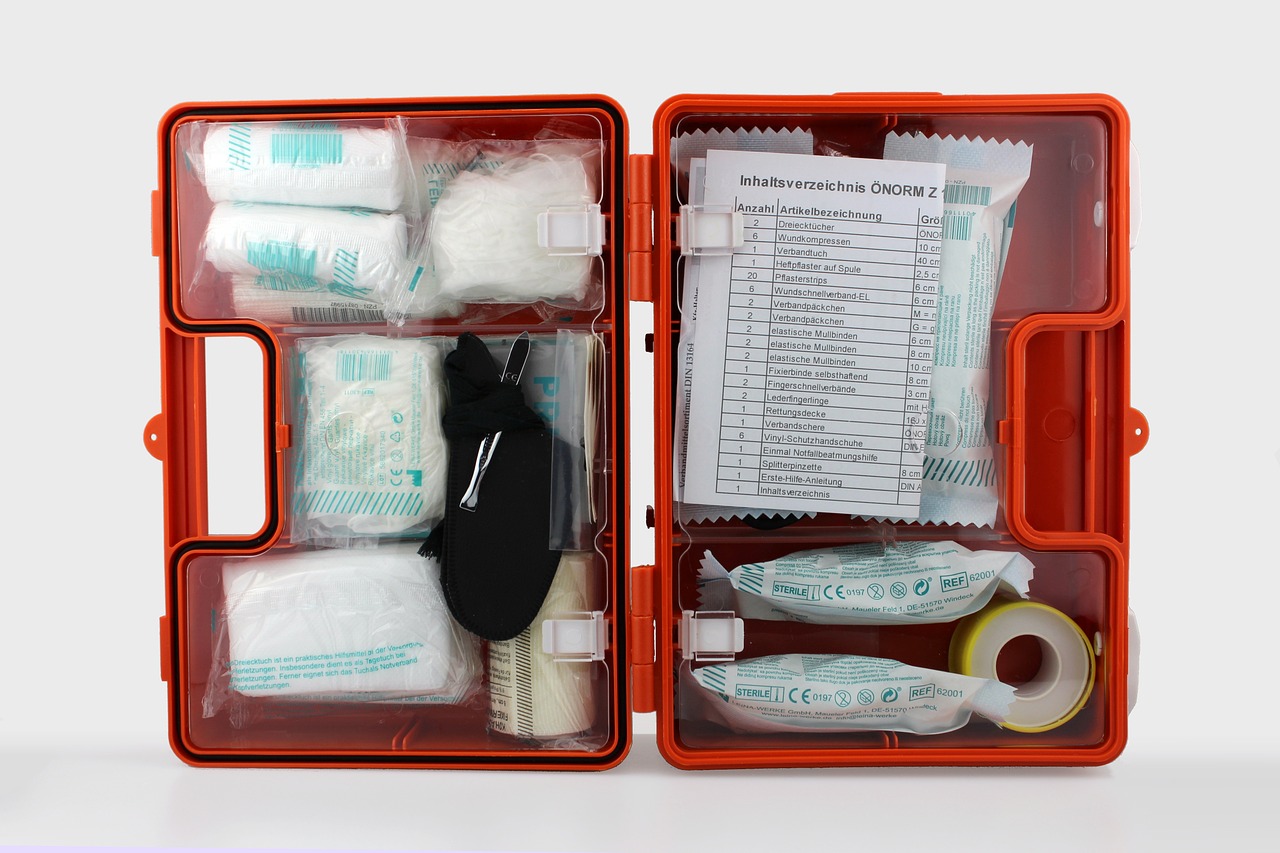
You need emergency flashlights to stay safe. They help you act fast during disasters. Most homes in the United States have a flashlight in their emergency kits. Studies show emergency flashlights give light right away. They save energy and help you see in smoke or darkness. Rechargeable and self-powered models give you light when you need it most. You should keep more than one good flashlight ready. Putting a flashlight in your first-aid kit helps you be fully prepared.
Emergency flashlights make things safer by:
Giving quick light in emergencies
Making paths easy to see when it is dark
Helping you spot dangers and find exits
Key Takeaways
Emergency flashlights give quick light in disasters. They help you move safely and see dangers.
Pick strong and trustworthy flashlights. Make sure they last long and work in bad weather. This helps you get ready for emergencies.
Put a flashlight in your first-aid kit. It helps with medical emergencies. You can find supplies fast when it is dark.
Check your flashlights often. Make sure they work well. Change the batteries every few years.
Keep more than one flashlight in your emergency kit. This way, you have extras for yourself and others.
Flashlights for Emergency Preparedness
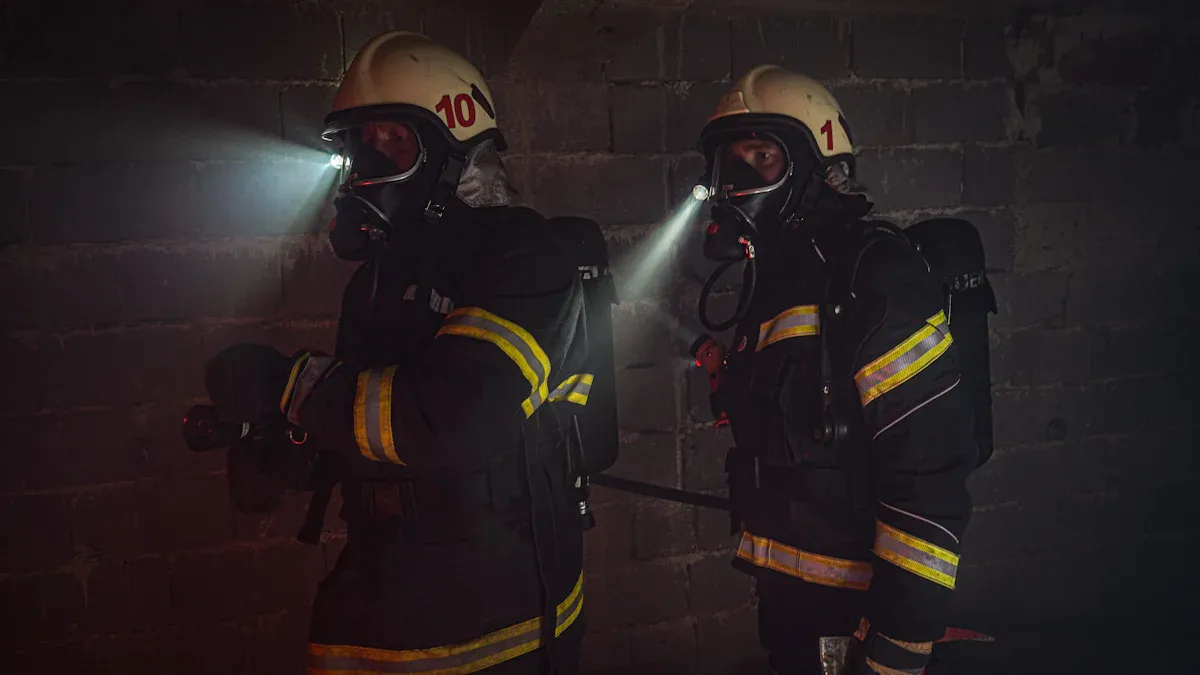
If there is a disaster or the power goes out, you need safe tools. Flashlights are very important for emergency preparedness. You use flashlights to see in the dark. They help you ask for help and stay calm when things get scary. Emergency flashlights help you find your way when the lights stop working. Fire departments and rescue teams use searchlights to find people and help during big emergencies. You need flashlights for natural disasters like blizzards, tornadoes, and hurricanes. These tools help you spot danger, find exits, and keep your family safe.
Key Features
Look for special features when picking a flashlight for your emergency kit. The best emergency flashlights have:
High reliability, so you can trust them anytime.
Strong durability and weather resistance, so they work in rain, snow, or dust.
Long battery life and easy ways to charge.
Brightness settings that let you change the light for different needs.
Multiple uses, so you can use them for emergencies and daily tasks.
Here is a table that shows the top features for emergency flashlights:
Feature | Description |
|---|---|
Reliability | Needed for emergencies; good brands are best. |
Durability and Weather Resistance | Made with strong materials; IP68 rating for dustproof and waterproof. |
Battery Life and Charging Capabilities | Lasts a long time; can be rechargeable or use AA batteries. |
Light Brightness and Intensity Levels | Very bright; can change settings for what you need. |
Multiple-Use Functionality | Good for emergencies and everyday use. |
Tip: Always keep more than one good flashlight in your emergency kit. This way you have a backup if one stops working or if you need to help someone else.
Battery and Power Options
You have different choices for powering your emergency flashlights. Each type has good and bad points. Here is a table to help you compare:
Flashlight Type | Advantages | Disadvantages |
|---|---|---|
Rechargeable | Uses lithium-ion batteries | Needs power to charge |
Battery-Powered | Ready to use right away | Costs more over time because you buy more batteries |
A rechargeable flashlight gives steady light and often has special modes for emergencies. Battery-powered flashlights are ready to use and easy to refill. Some flashlights use hand-crank or self-powered systems, so you can use them even if you do not have batteries or electricity. Most emergency flashlight batteries last up to 24 hours if you use them all the time. You can count on them during long power outages.
Durability
Durability is important when you pick a flashlight for emergencies. You want a tool that can handle drops, water, and rough use. Good flashlights use materials like aluminum or stainless steel. These metals make the flashlight strong but not heavy. Anodized aluminum does not get wet or rusty, and stainless steel works well in tough places. The lens should be made from strong glass or polycarbonate so it does not scratch or crack.
Here is a table showing what makes a flashlight tough:
Material/Method | Contribution to Durability |
|---|---|
Aircraft-Grade Aluminum (A6061-T6) | Handles drops, dents, and scratches but stays light. |
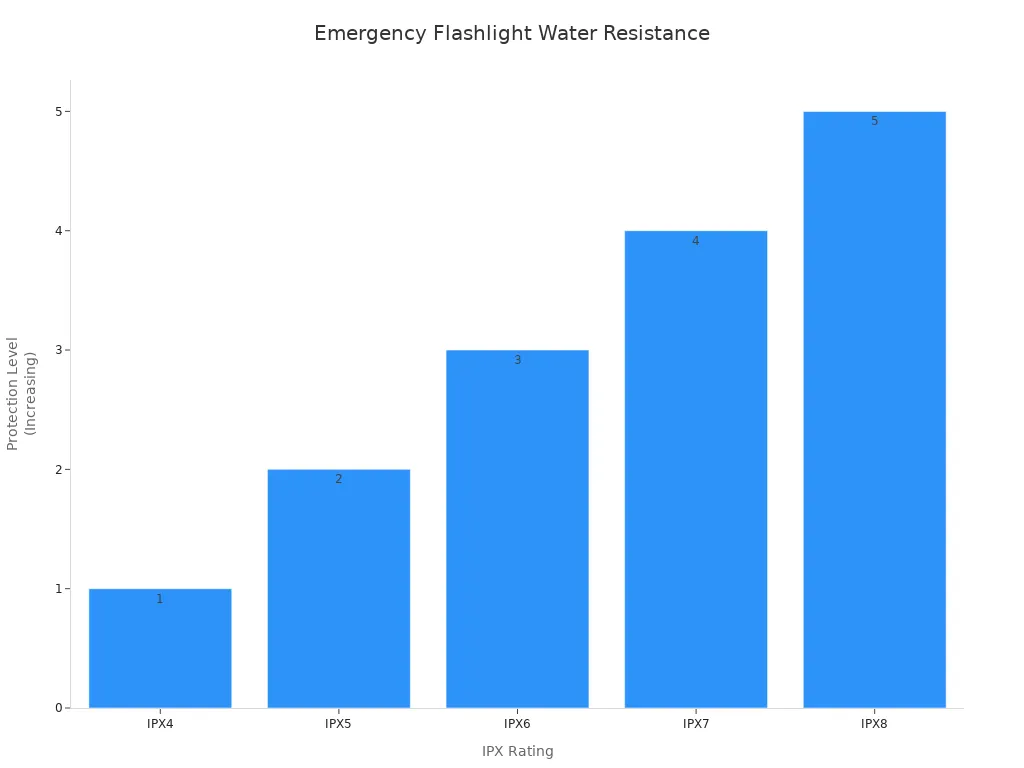
IP Ratings (IP66, IP67, IP68) | Keeps out water, dirt, and dust. |
Waterproof and Dustproof Seals | Stops moisture and dirt, making it last longer. |
Anodized Finish | Protects against rust and damage. |
Hardened Glass Lens | Stops scratches and cracks, keeps light bright. |
Reinforced Switch Design | Makes it strong for lots of use and accidents. |
You should check the IP rating of your emergency flashlight. This rating shows how well it keeps out water and dust. The chart below shows how different ratings protect your flashlight in bad weather:
Good materials like aluminum and stainless steel make flashlights strong and stop rust.
Careful building keeps out water and dirt.
Tough designs with O-ring seals and strong switches help your flashlight last longer.
When you get ready for emergencies, always pick flashlights that can handle hard use. This helps you stay safe and ready for any disaster.
Flashlight Use in First-Aid Kit
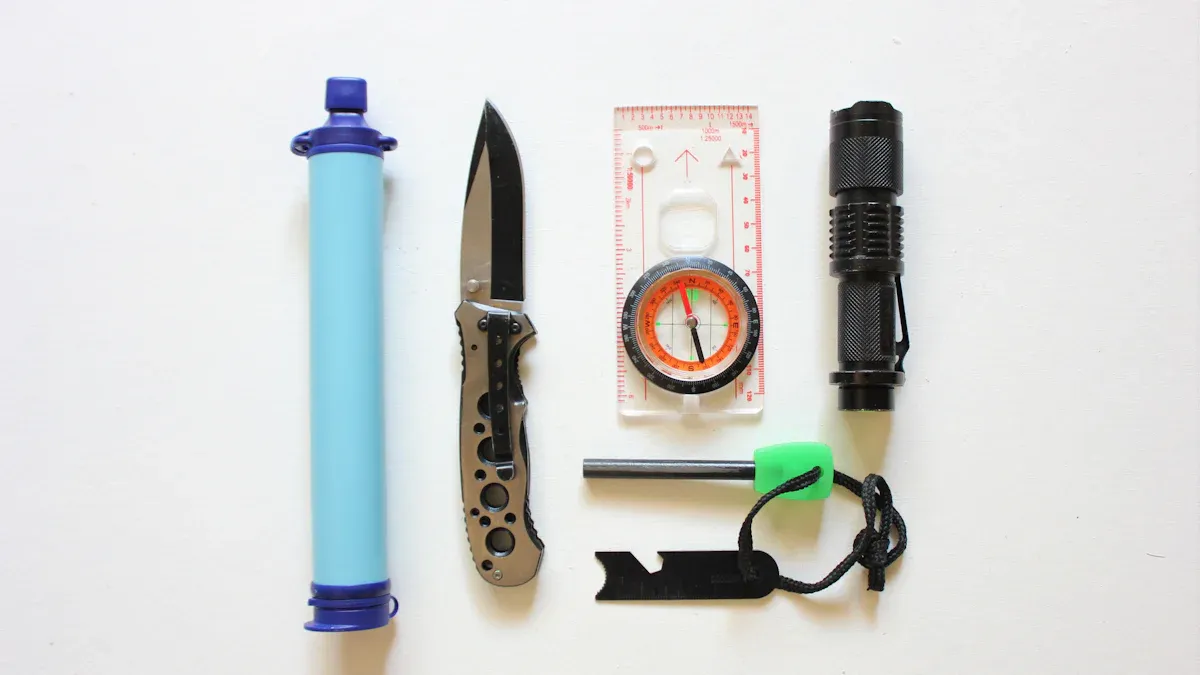
Medical Emergencies
Medical emergencies are hard, especially when it is dark. A flashlight in your first-aid kit helps you see wounds and check breathing. It lets you give care with more confidence. Good lighting helps you see injuries clearly and avoid mistakes. You can point the light at the hurt area and keep your hands free. Headlamps are helpful because you do not need to hold them. This makes it easier to treat injuries. Using a flashlight makes things safer in the dark and helps everyone feel less stressed.
Tip: Do not shine your flashlight in the injured person’s eyes. This keeps them comfortable and helps you work better.
Accessing Supplies
You need to find first-aid supplies fast in emergencies. Flashlights built into your kit help you see bandages, gloves, and other items. You do not waste time searching in the dark. You stay organized and act quickly. The table below shows how built-in flashlights help you find what you need:
Feature | Description |
|---|---|
Bright LED flashlight lights up hard-to-see places for search, rescue, and treatment. | |
Batteries Included | Lets you use the flashlight right away in emergencies. |
Here are some tips to get your first-aid supplies quickly:
Use a flashlight to light up your workspace and see what is happening.
Use any light you have to help you see better.
Keep a small flashlight or headlamp in your kit for easy use.
Let your eyes get used to the dark by not using very bright lights.
Know your first-aid steps so you can act fast in low light.
Use your sense of touch and hearing if you cannot see well.
Stay calm and talk clearly to the injured person.
Keep your supplies neat so you can grab them fast.
Emergency flashlights help you move around in the dark and stop mistakes when you need medical items quickly. You lower the chance of picking the wrong thing or missing something important.
Low-Light Situations
Emergencies often happen when it is hard to see. Flashlights in your first-aid kit give you the light you need to help others. You light up the area, check injuries, and keep people safe. You use a flashlight to focus on your job and do not shine it in someone’s eyes. Hands-free lights like headlamps let you use both hands for first-aid.
Use a flashlight to check what is happening safely.
Point the light at the hurt area or what you are doing.
Pick hands-free lights to work better.
Adding flashlights to your first-aid kit makes you more ready for emergencies. You make sure you have safe and steady light during disasters. You are ready to help others and keep yourself safe when it gets dark.
Choosing the Right Emergency Flashlight
Selection Criteria
When you make an emergency kit, you need a good flashlight. Pick one that works well in many situations. It should help during power outages and disasters. Consumer Reports tested many flashlights. They found battery life, brightness, and strong build are most important. You should get a flashlight that meets these needs. The table below shows what to look for before buying:
Criteria | Description |
|---|---|
Durability | Pick a strong body, like aircraft-grade aluminum, with water and dust resistance (IP4 or higher). |
Battery Life and Charging | Choose rechargeable flashlights with long battery life. Hybrid Dual-Core Power gives you more choices. |
Brightness | Look for at least 1,000 lumens for enough light in emergencies. |
Sustainability | Pick rechargeable flashlights and less packaging to help the environment. |
Price and Value | Make sure the flashlight has many uses and power options. A lifetime warranty is a good bonus. |
Always keep extra batteries in your survival kit. This makes sure your emergency flashlights work when you need them. If you want the best flashlight, look for SOS modes and adjustable brightness.
Maintenance Tips
You need to keep your emergency flashlights ready to use. Taking care of them helps them work well in emergencies. Follow these steps:
Clean your flashlight every month to get rid of dust.
Store it in a cool, dry place away from heat or cold.
Remove batteries if you do not use the flashlight for a long time so they do not leak.
Check battery contacts for rust and clean them if needed.
Test all buttons and light modes.
Check seals for damage and put oil on threads and o-rings.
Change batteries every two to four years, even if they still work.
Tip: Change all batteries at once for better safety and performance.
If you follow these tips, your emergency kit will be strong. Your flashlights will work when you need them and help keep you safe.
Integrating Flashlights with First-Aid Kit
Packing Strategies
Pack your flashlight so you can grab it fast. Put flashlights in outside pockets of your emergency kit. This makes them easy to reach when you need light. Use small boxes or bags to keep your supplies neat. Group things that are alike together. This helps you find what you need, even if you feel nervous. Keep your flashlight near the top of your kit. If you use a headlamp, put it with extra batteries in a clear bag. Write a label on the bag so you know what is inside. You can clip a mini flashlight to the zipper for quick use.
Tip: Check your flashlight every month. Make sure it works and the batteries are good.
Readiness Checklist
A good emergency plan keeps you safe. Check your kit often and make sure you have everything. Use this list to get ready for any emergency:
Water (one gallon per person each day; keep at least three days’ worth)
Food (nonperishable, easy to make, healthy; at least three days’ worth)
Flashlight and extra batteries
Radio (battery or hand-crank, plus a NOAA weather radio with alerts)
Cell phone with charger and backup battery
Multipurpose tool, manual can opener, wrench or pliers
Whistle to call for help
First aid kit
Medications (seven-day supply) and medical devices
Sanitation and hygiene items (garbage bags, wipes, toilet paper)
Copies of important papers (medication list, proof of address, insurance, passports)
Family and emergency contact info
Extra cash
Printed maps of your area
Special needs items (glasses, baby supplies, pet supplies)
More supplies (protective gear, matches, plastic sheets, tools for your home)
You stay safer when you keep flashlights in your kit and use this checklist. You can act fast and stay calm in any emergency.
You help keep your family safe in disasters. Flashlights let you see and act fast. They help you stay calm when things go wrong. Good flashlights give strong light and make your plan better. Sometimes flashlights stop working because of battery or wire problems. Not taking care of them can also cause trouble. You should get new flashlights and first-aid items often. Doing this helps you stay safe and ready for emergencies.
Look at your flashlights often to make sure they work.
Always have extra batteries and other supplies ready.
Change your emergency plan every year to stay prepared.
Feature | Benefit |
|---|---|
Durability | Works well in hard times |
Battery Life | Gives light for a long time |
Brightness | Helps you see and stay safe |
FAQ
What type of flashlight should you keep in your emergency kit?
Pick a flashlight that is tough and lasts a long time. It should work in rain or snow. Rechargeable flashlights or ones you can crank by hand are best for emergencies.
How often should you check your emergency flashlight?
Test your flashlight once a month. Change the batteries if needed. Look for any damage. Checking often makes sure your flashlight works when you need it.
Can you use a regular household flashlight for emergencies?
You can use a normal flashlight at home. But special emergency flashlights are stronger and last longer. They work better in tough situations.
What is the best way to store flashlights in your kit?
Put your flashlight in an outside pocket or on top of your kit. Keep extra batteries in a bag with a label. This helps you find them fast in an emergency.
Why do you need more than one flashlight in your emergency kit?
You need a backup if one stops working. Having more flashlights lets you help others and see more places. You will be ready for anything.
See Also
Selecting The Ideal Multi-Color Flashlight For Hunting And Emergencies
Understanding Various Scenarios For Flashlight Applications
Enhancing Business Reach With Custom Promotional Flashlights
Ultimate Guide To EDC Flashlights In The Wholesale Sector
Examining Future Trends In Demand For Various Flashlight Types