How a Changing World Economy Is Reshaping Global Trade Dynamics

Global Trade Dynamics are shifting significantly as the nature of global trade evolves. Transformations in the world economy, driven by new regulations, advanced technology, and international conflicts, are reshaping trade. Political challenges and trade policies, such as tariffs or restrictions, are altering trade routes and market access. As a result, businesses are strategizing innovative approaches to thrive amidst these complex Global Trade Dynamics.
Key Takeaways
Changes in world politics are affecting trade paths. Companies need to follow new rules and work with nearby regions to succeed.
Using digital tools makes global trade faster and easier. Businesses can use technology to ship goods better and find more buyers.
Being eco-friendly is important for today’s businesses. Green practices can make brands look good and keep customers happy.
Key Drivers of Change in Global Trade Dynamics
Geopolitical Shifts and Changing Global Power Dynamics
Geopolitical changes are altering how countries trade with each other. The world is becoming more divided, with new economic groups forming. Examples include China's Belt and Road Initiative and the U.S. Inflation Reduction Act. These plans are changing trade routes and supply chains, focusing more on regional teamwork than global connections. Nations like Mexico, Vietnam, and India are now key "connector economies," helping redirect trade during rising political tensions.
The global economy is also shifting in structure. Protectionist policies and one-sided actions are challenging older globalization methods. This change is not just temporary but signals a long-term shift in trade. For instance, new North-South economic groups are forming to exchange resources and gain influence. These changes mean businesses must quickly adjust to new trade rules and regulations.
Trade Policies and Economic Fragmentation
Changing trade policies are both causing and reflecting economic division. Countries in the Regional Comprehensive Economic Partnership (RCEP), especially in Southeast Asia, have seen faster economic growth due to more regional trade and investment. Similarly, trade reforms in Latin America, like those in Chile and Peru, have helped diversify exports and strengthen economies.
Open trade policies often lead to better economic performance. They attract foreign investments, spark innovation, and give consumers more choices at lower prices. But uncertainty in trade policies can hurt economies. For example, studies show that such uncertainty could reduce euro area business investment by 1.1% in the first year and slow GDP growth by 0.2 percentage points over time. Businesses need to stay informed about changing trade rules and ensure they follow compliance standards.
Evidence Type | Description |
|---|---|
Medium-term Impact | Trade policy uncertainty could reduce euro area business investment by 1.1%. |
Long-term Impact | Severe decoupling scenarios could lower global output by up to 9%. |
Historical Context | Higher tariffs often redirect resources into less productive sectors. |
Technological Advancements and Digital Trade
Technology is making global trade faster, safer, and more transparent. Artificial intelligence (AI) helps predict trade trends, while the Internet of Things (IoT) makes managing logistics easier. Blockchain ensures secure and clear transactions, and quantum computing could change how trade data is processed. However, cybersecurity risks remain a big problem, as data breaches can cause financial and reputation damage.
South Korea shows how digital services can boost innovation. Its growth in digital trade has supported new technology projects. Similarly, the U.S. uses its advanced IT and financial services to strengthen its role in trade talks. These examples show why embracing digital tools is important for staying competitive in global trade.
Technology | Impact on Global Trade |
|---|---|
AI | Makes trade processes faster and more predictable. |
IoT | Simplifies managing trade logistics. |
Blockchain | Improves security and transparency in transactions. |
Quantum Computing | Could transform how trade data is processed. |
Cybersecurity Risks | May cause data loss, revenue loss, and reputation damage. |
Sustainability and Climate-Driven Trade Changes
Concerns about sustainability are changing how countries trade. Many nations now focus on balancing economic growth with protecting the environment. Trade agreements often include stronger environmental rules to fight climate change and support renewable energy. This shift shows the growing importance of combining development with environmental care.
Research shows that richer countries usually score higher on sustainability than poorer ones. This imbalance has led to calls for fairer trade practices that focus on sustainability. Businesses should adopt eco-friendly methods and follow trade rules that promote environmental protection.
🌍 Tip: Adding sustainability to your trade strategy can meet rules and improve your brand's image in a market that values eco-friendly practices.
Impact of the Changing Global Economy on Trade
Changes in Supply Chains and Trade Patterns
The global economy is changing how goods are traded. Geopolitical issues and new rules are causing shifts. U.S. exports have dropped a lot recently. Ports like Portland and Tacoma saw a 51% drop in activity. Imports also fell by 43% during some weeks. Shipping companies, like Matson, lost 30% of their cargo. Stores are dealing with 15% to 20% fewer imports. Ending the de minimis rule raised prices by 40% to 100% for some brands. These changes show businesses must adjust supply chains to stay competitive.
Growth of Regional Trade Deals and Groups
Countries are making more trade deals to work together better. These deals help economies grow and bring political stability. In East Asia, trade reforms helped South Korea and Taiwan grow fast. Eastern Europe’s market changes improved living standards and economies. Countries like Vietnam and Bangladesh grew exports and reduced poverty with trade reforms. These examples show how regional trade groups shape global trade.
Role of Emerging Markets in Global Trade
Emerging markets are becoming very important in global trade. Countries like China, India, and Brazil are growing fast. They use their large populations and factories to change trade patterns. These countries export more and attract foreign investments. For example, China focuses on technology and building infrastructure to lead in trade. By working with these markets, businesses can find new chances and grow.
Building Stronger and Diverse Trade Plans
Having strong and varied trade plans is important now. Diversifying reduces reliance on one country or market. Local production lowers risks from tariffs. Financial tools like futures and options protect against money and price changes. The Herfindahl–Hirschman Index (HHI) shows that less concentration is better. Using these strategies helps businesses handle global trade challenges and follow new rules.
Regional and Sectoral Effects of Changing Global Power Dynamics
Asia-Pacific: Trade Growth and New Ideas
The Asia-Pacific region is leading in trade growth. This is due to new ideas and a growing population. India's working-age group will grow until the 2050s. This gives India an edge in building its economy. Countries like Vietnam, Indonesia, and the Philippines are growing fast. They may lead in trade volume in the next five years. This shows the region can handle challenges and use its factories and technology well.
Sector | Risk Level |
|---|---|
Leather and Textiles | At Risk |
Food and Beverages | At Risk |
Other Light Manufacturing | At Risk |
Electrical Equipment | At Risk |
Some sectors face risks, but the region stays strong. Using digital tools and following trade rules helps businesses succeed here.
Europe: Adjusting After Brexit
Europe is making changes after Brexit. Some trade barriers are gone, making food trade easier. A 12-year fishing deal lets EU boats fish in U.K. waters. These changes could add £9 billion ($12.1 billion) to the economy by 2040. The EU and U.K. also have a defense deal. It gives access to a €150 billion ($170 billion) loan program, helping stability.
Agreement Type | Details |
|---|---|
Trade Barriers | Easier food trade with fewer barriers. |
Fishing Agreement | EU boats can fish in U.K. waters for 12 years. |
Economic Impact | |
Defense Partnership | Access to a €150 billion ($170 billion) loan program. |
These changes show why adapting to new rules is key for trade in Europe.
North America: Moving Production Closer
North America is moving production closer to home. This avoids high tariffs and lowers risks in supply chains. Making goods nearby means faster delivery and lower costs. Being close to buyers helps businesses react quickly to changes. It also improves quality control and speeds up decisions.
Moving production avoids high tariffs with better trade deals.
Shorter delivery times save money and improve speed.
Being near buyers helps adjust to market needs faster.
This shift shows North America’s focus on staying strong and flexible.
Sector Changes: Technology, Factories, and Energy
Technology, factories, and energy are changing due to global trade. Digital tools are making factories use energy better. Clean energy projects, like batteries and solar panels, are growing. The Clean Economy Tracker tracks these investments.
Study Title | Focus Area | Date | Source |
|---|---|---|---|
PowerAmerica Energizes Innovation in the Semiconductor Industry | Clean energy and semiconductor progress | February 18, 2025 | PowerAmerica |
Reimagining Industrial Energy Use With Digital Technology | Digital tools for saving energy | February 1, 2024 | CESMII |
Reducing Industrial Emissions to Create an Equitable Clean Energy Future | Cutting emissions with clean energy | November 17, 2022 | America Makes |
Powering the Clean Economy | Energy use and factory impact | January 6, 2022 | America Makes |
Using digital tools and following trade rules helps these sectors grow while staying eco-friendly.
Strategies for Businesses to Navigate Global Trade Dynamics
Using Digital Tools in Trade
Digital tools are now key for global trade success. By using advanced tech, businesses can work faster and stay competitive. Big companies like Amazon and Alibaba show how this works. They use data and smart systems to improve shipping and grow their business. Smaller businesses also benefit by reaching more customers online. This proves digital tools help all business sizes.
Important ways digital tools are changing trade:
Cross-Border Teamwork: Tech companies and local sellers work together better now.
Growth in Online Payments: New payment systems make global buying easier.
More Digital Stores: Online markets help businesses find new customers worldwide.
💡 Tip: Use data to spot trends, follow trade rules, and adjust to changes. This keeps you ahead in the market.
Making Supply Chains Stronger and Flexible
Strong supply chains are vital during uncertain times. Businesses need to stay flexible to handle risks. Procter & Gamble (P&G) is a great example. They cut costs and improved their supply chain over 10 years. During COVID-19, they quickly made PPE for donations. This was possible with smart tools and teams that worked independently.
Other good supply chain ideas include:
A dairy company handled 5 billion gallons of milk yearly. They saved money and improved safety.
Companies making products locally to avoid tariffs and global issues.
🔍 Insight: Use diverse suppliers and digital tools to handle global changes and keep your business steady.
Taking Advantage of Regional Trade Deals
Regional trade deals open doors to new markets. By joining these, businesses can grow and innovate. For example, Tulsa used its tech strengths to get $38 million and $51 million in funding. Innovate Illinois used donations to support research, earning $51 million for tech and $500 million for quantum computing.
Key tips for businesses:
Find local strengths and plan to use them.
Work with local groups to grow and get funding.
Use trade deals to lower costs and follow rules easily.
🌍 Callout: Regional trade deals help economies grow and protect against global problems.
Focusing on Sustainability and ESG Goals
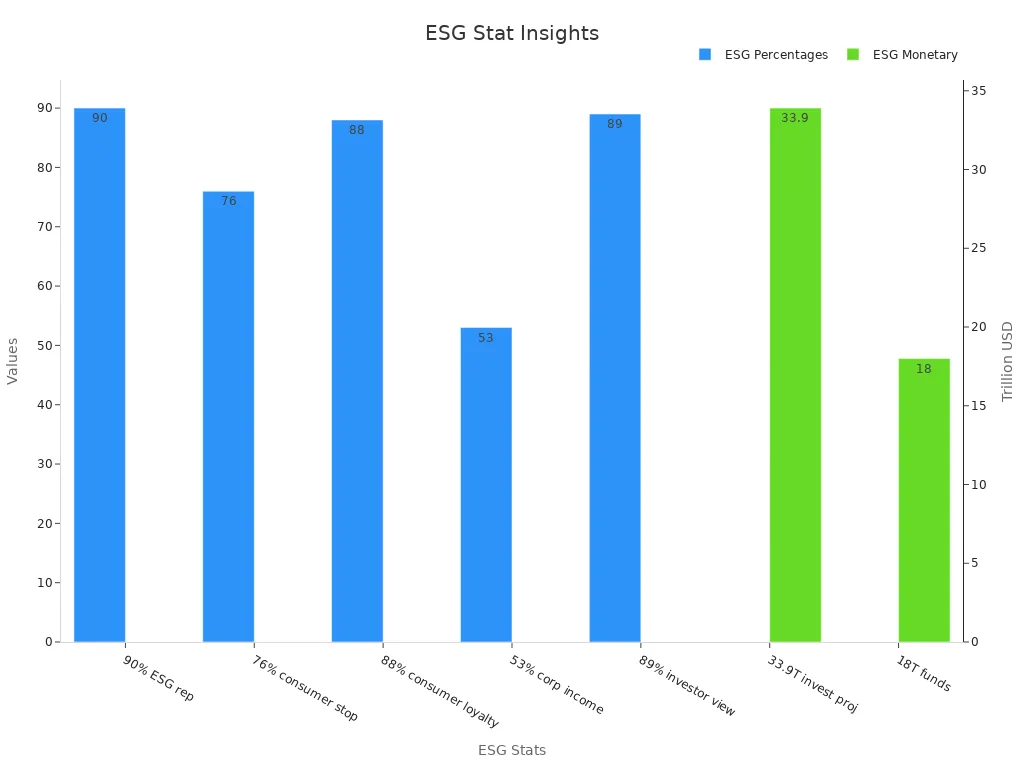
Sustainability and ESG goals are now must-haves for success. People want eco-friendly businesses, so companies must act. Recent facts show:
Fact | What It Means |
|---|---|
90% of big U.S. companies share ESG reports. | Most companies care about ESG practices. |
ESG investments may reach $33.9 trillion by 2026. | ESG is becoming very important in finance. |
76% of buyers avoid companies ignoring ESG. | ESG affects what people buy. |
88% of buyers stay loyal to companies supporting social causes. | ESG builds trust and loyalty. |
53% of top U.S. company income comes from SDG-related work. | Sustainability helps businesses earn more. |
89% of investors check ESG before investing. | ESG attracts more investors. |
ESG-focused funds hold over $18 trillion. | Sustainable investing is growing fast. |
To focus on sustainability:
Use green methods and cut pollution.
Follow the United Nations' Sustainable Development Goals (SDGs).
Share your ESG efforts clearly to gain trust.
🌱 Note: Adding sustainability to your trade plans helps follow rules and boosts your brand in eco-friendly markets.
The changing world economy requires businesses to stay flexible and ready. Companies that adapt succeed by using strategies like better supply chains, digital tools, and working closely with suppliers.
📈 Tariff questions have grown by nearly 1000% since 2025, showing the need to adjust.
🌍 Apple moving production to India shows why strong supply chains matter.
Watching global changes and investing in new ideas helps businesses handle trade challenges and succeed over time.
FAQ
What causes changes in global trade?
Changes happen due to politics, new trade rules, technology, and eco-friendly goals. These affect how goods move, trade deals, and market access.
How can companies handle changing trade patterns?
Companies can use different suppliers, try digital tools, and join local trade groups. These ideas help businesses stay strong and adjust to changes.
Why does sustainability matter in trade?
Being eco-friendly follows rules, builds a good image, and meets customer needs. It also helps businesses make money and protect the planet.