Balancing Price and Performance in flashlight production and helius flashlight

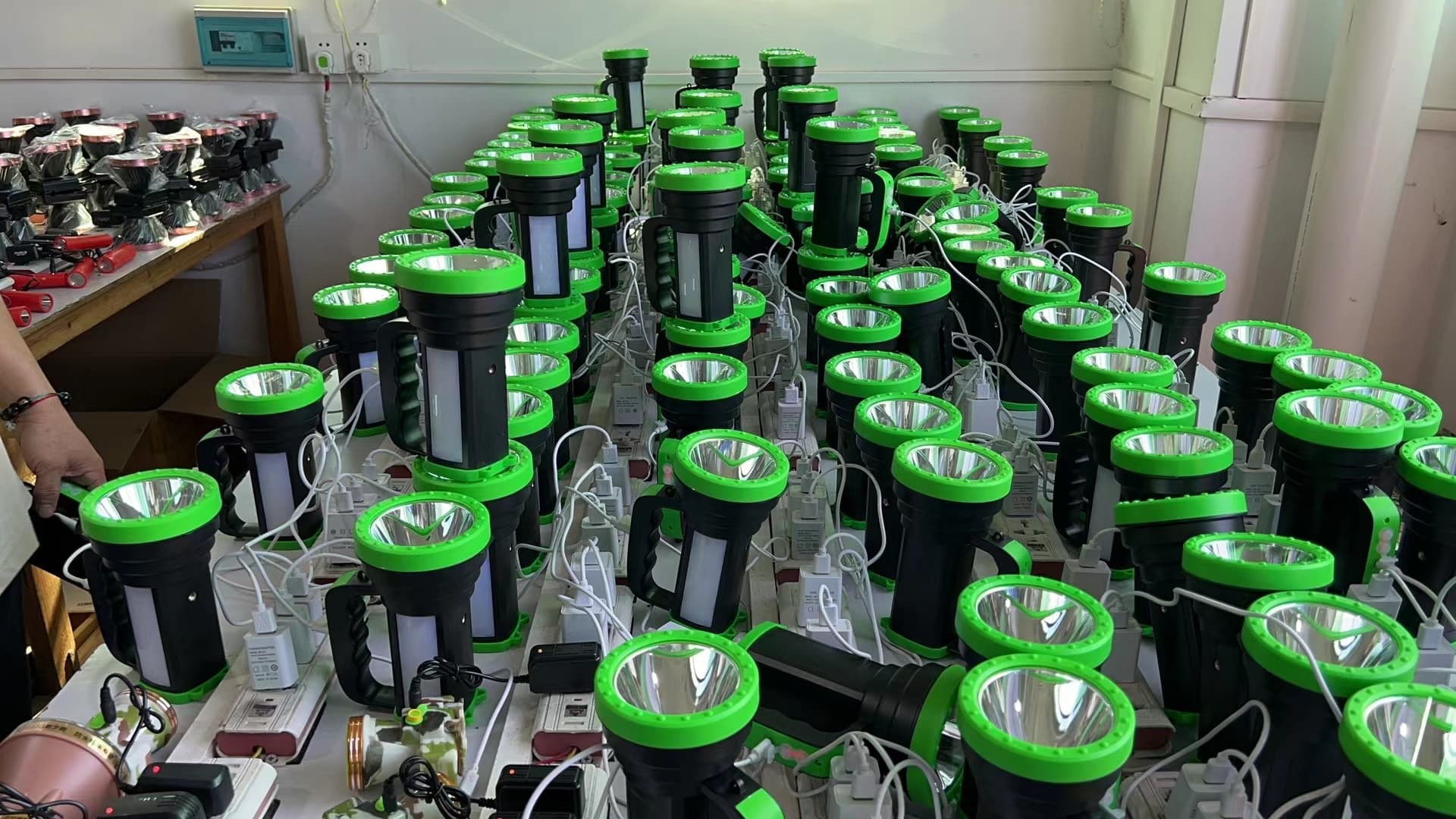
You want a flashlight that fits your needs and budget. Manufacturers use smart automation and strong materials to keep costs low while boosting performance. Custom circuit designs, like those in Helius flashlights, help you get better light and longer battery life. The global flashlight market keeps growing. Check out the numbers below:
Year | Market Size (USD Million) |
|---|---|
2024 | 1,828.8 |
2034 | 3,525.6 |
Knowing your flashlight needs and comparing product features can help you make the right choice in flashlight production.
Key Takeaways
Know what you need in a flashlight. Think about how bright it is, how long the battery lasts, and how strong it is. This helps you pick the best one for what you do.
Try to find a good balance between price and performance. Expensive flashlights are not always better. Look for the features you really need.
Pick the best materials for your flashlight. Aluminum and titanium are strong. Plastic is lighter and costs less. Choose what works best for you.
Check the IP rating before you buy. A higher number means it keeps out water and dust better. This is very important if you use it outside.
Make sure it uses LED technology. LED flashlights use less power, last longer, and shine brighter than old types.
Price vs. Performance
Price Factors
Flashlight prices can be very different. The flashlight supply chain is a big reason for this. Battery technology is a main cause of price changes. Many flashlights use lithium-ion or solid-state batteries now. These batteries last longer and give more power. LED technology is also important. LEDs make flashlights brighter and save energy. If you want a flashlight for outdoor trips or emergencies, it may cost more. This is because of special features. The flashlight supply chain also has costs for materials, shipping, and packaging. When more people want flashlights, prices usually go up.
Performance Factors
You want your flashlight to work every time. The flashlight supply chain can change how well it works. Here are some things to look for:
Lumen output (how bright it is)
Beam distance (how far the light goes)
Water resistance and impact resistance
Durability and extra features like strobe modes
Metric | Description |
|---|---|
Lumen Output | Measures brightness |
Beam Distance | Shows how far the light goes |
Battery Type | Impacts runtime and convenience |
Water Resistance | Tells if the flashlight can handle water |
Durability | Shows how tough the flashlight is |
Extra Features | Includes modes like strobe or SOS |
Different flashlights have different uses. Tactical, camping, and everyday carry flashlights are not the same. You may want a strong, waterproof flashlight for hiking. But you might want a small, light one for your backpack.
Why Balance Matters
It is important to balance price and performance. The flashlight supply chain tries to keep costs low but still make good products. If you pay too little, your flashlight may break or lose power fast. If you pay too much, you may not get more value. Manufacturers try to make flashlights that work well and are not too expensive. They use smart designs and good materials. This helps them stay ahead in the flashlight supply chain. When you find the right balance, you get a flashlight that lasts, shines bright, and fits your budget.
Flashlight Production

Materials and Build
When you look at flashlights, you might ask why some are stronger or lighter. The answer is the materials used to make them. Getting these materials is a big part of the flashlight supply chain. Many flashlights use aluminum or aluminum alloy. These metals are strong and help move heat away from the light. Some expensive flashlights use titanium or stainless steel. Titanium is light and strong, but it costs more. Stainless steel is very strong but also heavy. If you want a cheaper flashlight, you might see plastic or ABS. These are light and cheap, but not as strong as metal.
Here’s a quick look at how different materials change cost and performance:
Material Type | Properties | Cost Impact |
|---|---|---|
Aluminum | Durable, good heat control | Low to moderate |
Aluminum Alloy | Strong, resists rust | Moderate |
Titanium | Super tough, very light | High |
ABS Plastic | Good impact resistance, affordable | Moderate |
Polystyrene | Very light, low cost | Low |
Stainless Steel | Hard, long-lasting, heavy | Moderate to high |
Choosing the right material is important in flashlight production. The main materials decide how long your flashlight lasts and how much it costs.
Automation in Manufacturing
Automation has changed how flashlights are made, especially in China. Many factories use machines to shape metal and drill holes. This makes the flashlight supply chain faster and better. Automated systems help lower costs and keep quality high. For example, CNC lathes cut the flashlight body. Robots put in the LED and circuit board. These steps mean fewer mistakes and faster work.
Here’s how automation helps in flashlight production:
Production Step | Description |
|---|---|
Body Formation | Machines shape the metal quickly |
Interior Development | Drills make space for batteries and circuits |
Feature Integration | Threads and grooves added for better fit |
Surface Finishing | Machines polish and check for defects |
Component Integration | Robots install LEDs and electronics |
Buying materials in large amounts gives discounts. If you buy more flashlights, you pay less for each one. This is why the flashlight supply chain in China can offer lower prices. Automation and smart buying help you get a good flashlight for less money.
Flashlight Performance
Light Output
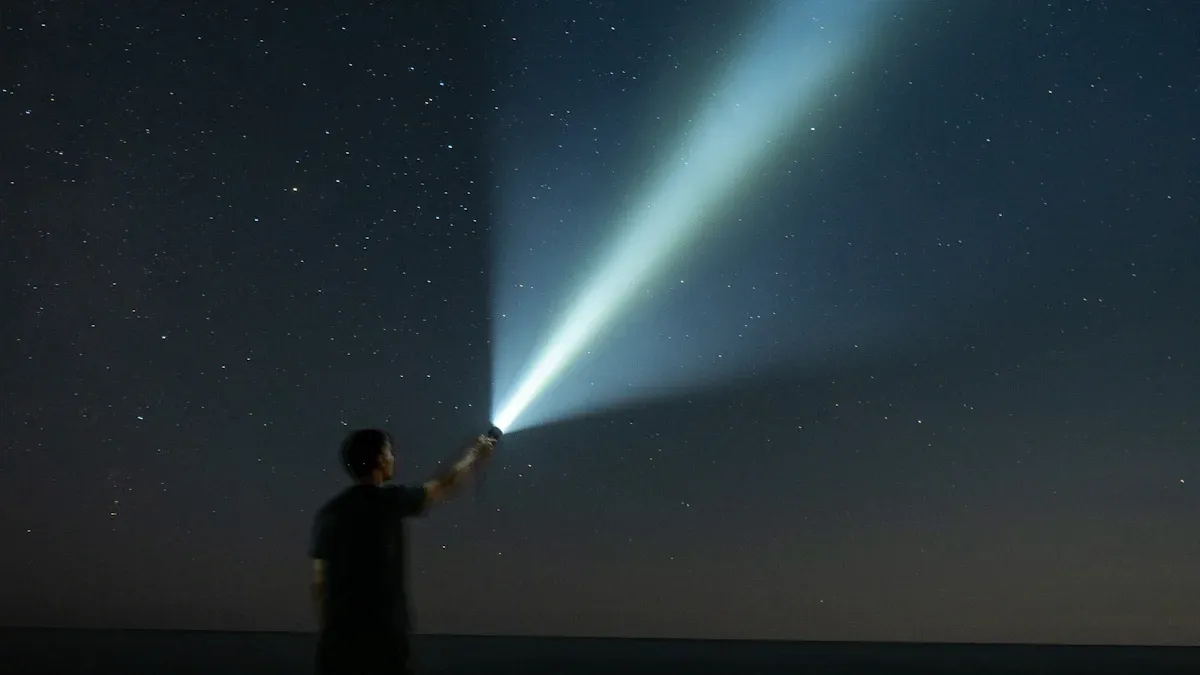
When you look at flashlights, you notice how bright they are. Brightness is measured in lumens. More lumens means a brighter flashlight. People measure lumens 30 seconds after turning it on. This makes it fair to compare different flashlights. Some brands make the light very bright at first. But what matters is how long it stays bright.
Aspect | Definition |
|---|---|
Lumen Output | Measured 30 seconds after turning on; only this number counts for rating. |
Runtime | Time until the light drops to 10% of its rated brightness. |
Exploitation Risk | Some brands make flashlights look brighter at first, which can trick buyers. |
LED technology has made flashlights better. LED flashlights use less power and last longer than old ones. You get more light and save energy. Here’s how LED and incandescent flashlights are different:
Characteristic | LED Torch | Incandescent Torch |
|---|---|---|
Efficiency | 80-90% | 10-15% |
Lifespan | 10,000-50,000 hours | 1,000-2,000 hours |
Heat production | Very low | High |
Durability | Very high | Low |
Environmental impact | Low | High |
You want a flashlight that stays bright and does not waste power. LED chips help you get strong light and save battery.
Battery Life
Battery life is important when you use flashlights outside or in emergencies. Bigger batteries like 18650 last longer and shine brighter. Smaller batteries, like AAA or AA, make flashlights lighter but do not last as long.
Aspect | Larger Batteries (e.g., 18650) | Smaller Batteries (e.g., AAA, AA) |
|---|---|---|
Runtime | Lasts longer because it holds more power | Does not last as long because it holds less power |
Brightness | Gives more light and a stronger beam | Gives less light and a weaker beam |
Compatibility | Must fit the flashlight you have | Must fit the flashlight you have |
Portability | Heavier and harder to carry | Lighter and easier to carry |
If you use flashlights a lot, rechargeable batteries can save money. Always check your flashlight’s details before buying batteries. Look at voltage, power use, and battery type. This helps you get the best light and battery life.
Durability
You want a flashlight that can handle drops, rain, and rough use. Durability is important for camping, hiking, or underwater trips. The IP rating shows how well a flashlight keeps out water and dust. IPX4 flashlights can handle splashes. IPX7 flashlights can go in water for a short time. IPX8 flashlights work even when fully underwater.
IP Rating | Description | Suitable Scenarios |
|---|---|---|
IPX4 | Handles splashes from any side | Good for daily use and some rain |
IPX7 | Can go in water for 30 minutes up to one meter | Good for boating or water fun |
IPX8 | Works underwater deeper than one meter | Good for diving or lots of water |
Manufacturers drop flashlights from one meter to test them. They also run tests to see how long they last. These tests make sure your flashlight is strong and works well. If you need a flashlight for outdoor trips, pick one with a high IP rating and tough build.
Tip: Always check the IP rating and drop test results before you buy a flashlight for tough places.
Achieving Balance
For Manufacturers
You want to make flashlights that people love and can afford. The flashlight supply chain gives you many ways to do this. You can use smart strategies to keep costs low and quality high. Here are some steps you can take:
Adopt lean manufacturing principles. Cut out waste and focus on what adds value for your customers.
Use automation and robotics. Machines can handle boring jobs and help you make flashlights faster.
Try advanced manufacturing technologies. Tools like 3D printing and laser machining help you save money and boost performance.
Optimize your workflow and layout. Set up your factory so workers and materials move easily.
Enhance quality control. Regular checks and automated systems catch problems early.
Invest in employee training. Skilled workers use machines better and fix issues quickly.
Improve supply chain management. Make sure you get materials on time and avoid delays.
You need to watch what buyers want. Many people look for energy-efficient and multi-use flashlights. The flashlight supply chain must keep up with these trends. You also see more people asking for eco-friendly products. This pushes you to use better materials and designs. If you make flashlights with new features, you must think about price sensitivity. Some buyers want the latest tech, but others care more about cost. You need to find the right mix.
Tip: Listen to your customers. Their feedback helps you design flashlights that balance price and performance. The flashlight supply chain works best when you match your products to real needs.
For Consumers
You want a flashlight that works well and does not break the bank. The flashlight supply chain offers many choices, so you need to know what matters most. Here is a table to help you compare flashlights:
Criteria | Description |
|---|---|
Light output | Measured in lumens; shows how bright the flashlight is. |
Beam distance | Measured in meters; tells you how far the light reaches. |
Impact resistance | Shows how tough the flashlight is if you drop it. |
Water resistance | Rated by IPX; tells you how well the flashlight handles water. |
Run time | How long the flashlight works on one charge or set of batteries. |
You can spot high-value flashlights by checking a few things:
Look for good quality control. Cheap flashlights sometimes have problems, so check reviews and ratings.
Pick LED flashlights that use two AA batteries. These give you a nice balance of brightness and battery life.
Try rechargeable flashlights with 18650 batteries. They shine brighter and are easy to recharge, but may not work during power outages.
Choose reflector lights over zoom lights. Reflector flashlights give you a steady beam and better water resistance.
You should always check the details before you buy. The flashlight supply chain can offer great deals, but you need to make sure you get a reliable product. Ask yourself how you will use your flashlight. Do you need it for camping, emergencies, or daily tasks? Pick flashlights that fit your needs and budget.
Note: If you want a flashlight for outdoor adventures, look for high impact and water resistance. The flashlight supply chain has many options, so take your time and choose wisely.
Helius Flashlight Case
Design Features
When you pick up a Helius flashlight, you notice the difference right away. The design stands out because it mixes power, safety, and smart technology. You get a flashlight that feels solid and works in tough places. Helius flashlights use custom circuit designs, so you see better brightness and longer battery life. You don’t have to worry about your flashlight dying when you need it most.
Here’s a table showing what makes Helius flashlights special:
Feature | Description |
|---|---|
High-Performance Illumination | 8×P70 LED beads deliver up to 45,000 lumens for ultra-bright, long-range light output. |
Safety & Durability | Child safety lock, IP65 waterproof rating, and rugged anodized aluminum construction. |
Multi-Function Interactive Design | Customizable modes with tactile controls and battery level indicator for ease of use. |
Exceptional Brightness | 45,000 lumens output illuminates areas 3x farther than standard flashlights. |
Rechargeable Lithium Battery | Built-in battery with AC compatibility for prolonged use, outlasting disposable models by 80%. |
Child Safety Lock & Global Certifications | Ensures family safety with certifications like RoHS, PSE, FCC, and CE. |
You get more than just a bright beam. The custom circuit design gives you stable performance. Your flashlight works every time, even if you use it for hours. You save money because the battery lasts longer and you don’t need to buy replacements often.
Feature | Benefit |
|---|---|
Better brightness | You see more and use your flashlight in more places. |
Longer battery life | You use your flashlight longer without charging. |
Stable performance | Your flashlight works when you need it. |
Helius flashlights also come with IPX8 durability. You can drop your flashlight in water or use it in the rain, and it keeps working. Factory direct pricing means you pay less for high-quality flashlights. You get top features without spending too much.
Some models fit special needs. The DV06 P70 gives you huge brightness for search and rescue or outdoor adventures. The Sigma IX Tritium is small and stylish, perfect for your nightstand or pocket. It glows in the dark, so you always find it. You can switch modes for different uses. The design and machining look unique, so your flashlight stands out from the crowd.
Tip: If you want a flashlight that works in any weather and lasts for years, Helius flashlights are a smart choice.
User Feedback
You hear a lot of good things from people who use Helius flashlights. They talk about how bright and focused the beam is. The Sigma VI helps campers see in the dark and lights up dim places. The 1800 Lumen Flashlight covers large areas and lasts a long time with its rechargeable battery. Divers trust the Professional Diving Flashlight because it stays bright and clear underwater.
Here’s what users say about Helius flashlights:
You get a flashlight that is tough and water-resistant. It works outdoors and in rough spots.
The flashlights meet standards like ANSI/NEMA FL-1 and IP ratings. You can drop them, bump them, or use them in the rain.
The Sigma IX Tritium is compact and looks cool. You use it as a nightstand light because it glows in the dark.
You switch between modes for different jobs. The design and quality make your flashlight feel special.
People like that their flashlight does not break easily. You can trust it for camping, hiking, or diving. The machining and design make you proud to own a Helius flashlight.
Note: If you want a flashlight that stands up to drops, shocks, and water, Helius flashlights get the job done. You get value and performance every time you use one.
Practical Tips
For Producers
You want your flashlights to stand out in a crowded market. Quality control helps you keep your flashlight reliable and safe. You can run different tests to make sure each flashlight works well and lasts long. Here’s a table showing some important tests you should use:
Test Name | Purpose |
|---|---|
Luminous Intensity Test | Measure how bright your flashlight shines in a certain direction. |
Shakeout Test | Check if the flashlight’s surface resists scratches and damage. |
Bending Test | See if the flashlight keeps shining after being bent. |
Salty Spray Test | Test how well the flashlight fights rust in salty, wet places. |
Ultraviolet Radiation Test | Find out if sunlight changes the color or brightness of your flashlight. |
Environmental Test | Make sure your flashlight works in hot or cold weather. |
Vibration Test | See if the flashlight breaks after shaking or dropping. |
Switch Test | Test the button by pressing it many times to check for problems. |
Temperature Test | Use a thermal camera to see how well your flashlight handles heat. |
You should also do these things:
Inspect flashlights before shipping to catch problems early.
Test samples from each batch to make sure they meet your standards.
Check for certifications so your flashlight follows safety rules.
Tip: When you focus on quality control, you build trust with your customers. They know your flashlights will work when they need them most.
For Buyers
You want to get the best value when you buy a flashlight. You can use smart techniques to compare flashlights and pick the right one. Here’s a table to help you understand how to judge value:
Technique | Description |
|---|---|
Value-based pricing | Look at what features matter most to you and see if the price matches the benefits. |
Competitive analysis | Compare flashlights from different brands to find the best mix of price and quality. |
Customer behavior analysis | Think about which features you use most and choose a flashlight that fits your needs. |
You can follow these steps:
Read reviews from other buyers to see which flashlights last longer and shine brighter.
Check if the flashlight has passed important tests and has safety certifications.
Try to match the price with the features you really need, like battery life or water resistance.
Note: If you take your time and compare flashlights carefully, you will find one that gives you great value and performance.
You can pick a good flashlight by watching new trends. The flashlight market is getting bigger every year. LED flashlights use less power and last longer. Many flashlights now have USB-C charging for easy power. Some flashlights have batteries you can take out. This is because of new rules in the EU. Helius flashlights use smart designs and strong metals. They use aluminum alloy and titanium to make them tough. If you want a flashlight that lasts, look for sealed parts. Pick ones that can handle drops and save energy with LEDs. You can also choose custom flashlights to fit your style or needs.
Material | Benefit |
|---|---|
Aluminum Alloy | Lightweight, strong |
Titanium | Tough, corrosion-proof |
Tip: Choose flashlights that give you good value, work well, and last a long time.
FAQ
How do you choose the right flashlight for camping?
You want a flashlight with high lumens, long battery life, and strong water resistance. Look for an IPX7 or IPX8 rating. Pick a model that feels comfortable in your hand and fits easily in your backpack.
What makes Helius flashlights different from regular flashlights?
Helius flashlights use custom circuits for brighter light and longer battery life. You get tough materials like aluminum alloy or titanium. Factory direct pricing helps you save money while getting top features.
Can you use rechargeable batteries in all flashlights?
Not every flashlight works with rechargeable batteries. Always check the battery type listed in the product details. Some flashlights need special batteries, while others use standard AA or AAA rechargeable cells.
How do you know if a flashlight is waterproof?
Check the IP rating in the product description. IPX4 means splash-proof. IPX7 handles short dips in water. IPX8 works underwater for longer periods. You want a higher rating for outdoor or diving use.
Why does my flashlight get hot after a few minutes?
High-powered LEDs create heat when you use them. Your flashlight uses metal parts to move heat away from the LED. If it gets too hot, turn it off for a few minutes. This helps protect the battery and LED.
See Also
Enhancing Efficiency: Selecting Premium Batteries for Bulk Flashlights
Mastering Price Negotiations for Household Flashlight Purchases
Benefits of XHP360 LED Flashlights for Bulk Buyers
Brighten Your Journeys: Helius Lighting Solutions for Wholesale
Boosting Revenue: Finding Flashlights Through Wholesale Vendors